
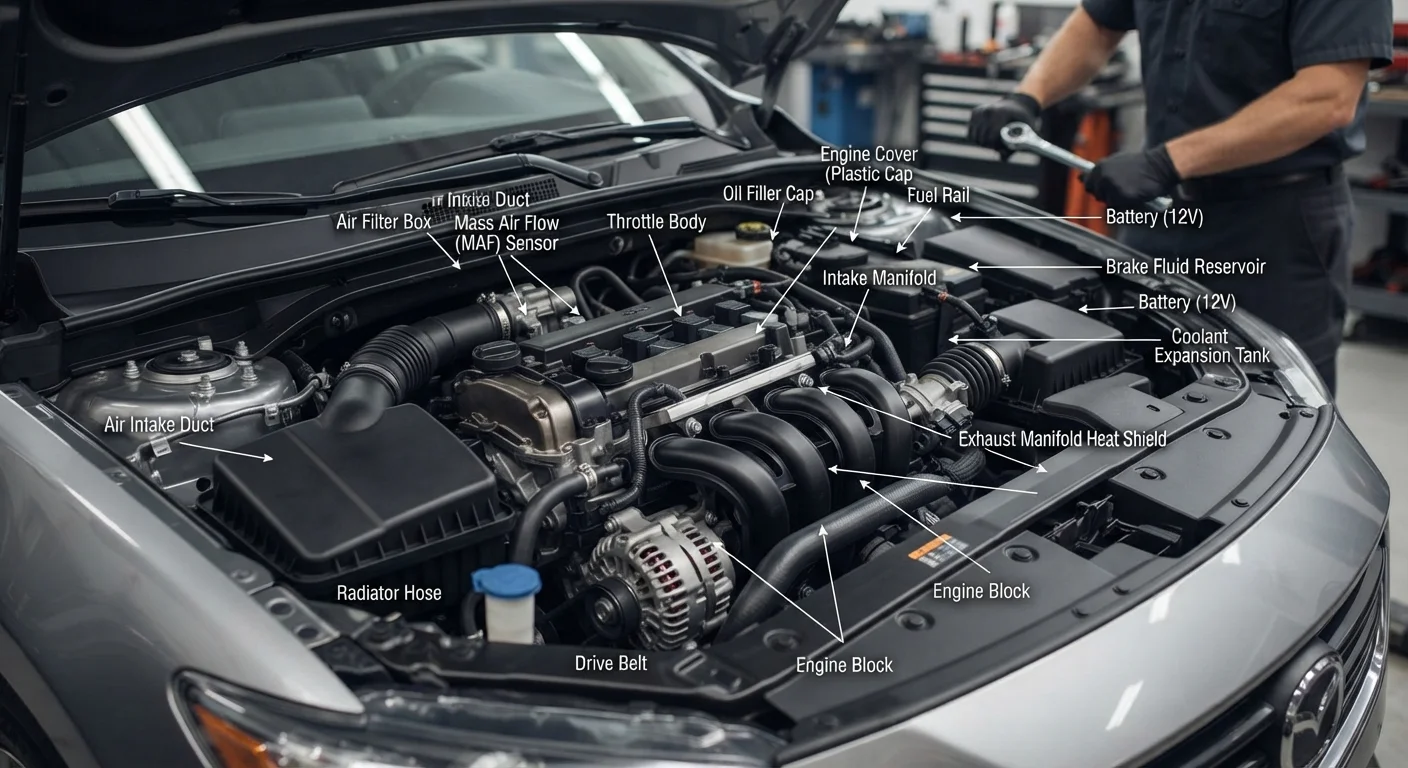
How to Use This Glossary
Whether you've just picked up your first car or you've been driving for years without knowing what your mechanic actually means, this glossary is your quick-reference guide. Terms are grouped by system so you can find what you need fast - no automotive background required.
If you want a broader picture of how these systems connect, our introduction to how cars work is a solid starting point. For hands-on upkeep, the first-timer's maintenance overview builds directly on the vocabulary here.
| Systems covered | Engine, electrical, braking, suspension, safety |
| Total terms defined | 40 key automotive terms |
| OBD-II standard adopted | Mandatory in US vehicles from 1996 (US Environmental Protection Agency) |
| Audience | Non-mechanics and first-time car owners |
| Format | Lookup-style reference, grouped by system |
Engine & Powertrain Terms
The engine converts fuel into motion. These terms describe how that process works and how power reaches your wheels.
For a deeper look at combustion, the four-stroke engine cycle explained walks through every phase without the technical overload.
Electrical, Braking & Safety Terms
Modern cars rely on sophisticated electrical and safety systems working in concert. Recognising these terms helps you understand dashboard warnings, service reports, and how your car protects you.
4-6 sec
ABS activation response time window during emergency braking
ABS systems can pulse the brakes many times per second - far faster than a human foot can react - to maintain control during a skid.
~14.7:1
Ideal air-to-fuel ratio for gasoline engines (stoichiometric ratio)
The ECU continuously adjusts fuel delivery to maintain this ratio for efficient combustion and reduced emissions.
1996
Year OBD-II diagnostics became mandatory in US passenger vehicles
Standardized by the EPA, OBD-II allows any compatible scanner to read fault codes across virtually all modern vehicles.
The alternator is one of the most misunderstood components - learn why your car needs more than just a battery. On the safety side, seatbelts, airbags, and crumple zones work as a coordinated system - understanding the terms makes that coordination clearer.
Fluid health ties directly into both electrical and braking performance. Learn to identify the key fluids under the hood so you can spot problems early. For a full maintenance routine, the complete car care guide covers everything from fluids to service schedules.
Dashboard Warning Lights and These Terms
Many warning lights correspond directly to the systems described here - a battery icon often points to the alternator, while a wrench symbol may indicate an ECU fault code. If a warning light appears and stays on, have the car scanned at a shop rather than ignoring it. Early diagnosis almost always means a simpler, less expensive fix.
For suspension-specific vocabulary - springs, dampers, control arms - this suspension explainer goes into full detail. And the Car Care Basics hub keeps all essential maintenance guidance in one place.