
Why Car Maintenance Matters From Day One
Owning a car comes with a responsibility that goes beyond filling the gas tank. Vehicles are complex machines that rely on dozens of interacting systems - and those systems gradually wear down with use. The good news is that most of the deterioration that leads to breakdowns is predictable and preventable.
Routine maintenance isn't just about avoiding costly repairs, though that's a real benefit. It's also about safety. Worn brake pads, underinflated tires, and low coolant are among the most common contributors to roadside emergencies - and all three are easy to catch early with regular checks. Think of maintenance the same way you might think of looking after any major investment: a little attention on a regular schedule pays dividends over time.
For a broader look at how your car's core systems work together, the How Cars Work hub is a great place to build your foundational knowledge before diving into the maintenance specifics.
Key Terms Every New Driver Should Know
Car maintenance has its own vocabulary. Understanding a handful of terms will make service appointments less confusing and help you spot problems earlier.
Engine oil
A lubricating fluid that reduces friction between moving metal parts inside the engine. Without sufficient clean oil, engine components wear down rapidly.
Coolant
A liquid (usually a mix of water and antifreeze) that circulates through the engine to prevent it from overheating. It also protects against freezing in cold weather.
Tire pressure (PSI)
The amount of air inside a tire, measured in pounds per square inch. Proper pressure affects fuel efficiency, handling, and how evenly the tire wears.
Service interval
The manufacturer-recommended mileage or time period between scheduled maintenance appointments, such as oil changes or filter replacements.
Dipstick
A long metal rod you pull out to check the engine oil level. It has two marks indicating the acceptable range - oil should sit between them.
Owner's manual
The booklet provided with your vehicle that contains manufacturer-specific guidance on maintenance schedules, fluid types, and operating limits.
Once these basics are familiar, reading your owner's manual - the book in your glove compartment that came with the vehicle - becomes much more straightforward. That manual is your single most reliable maintenance reference.
The Essential Checks You Can Do Yourself
Several maintenance checks require no tools, no mechanical experience, and no more than ten minutes. Making these part of your monthly routine puts you well ahead of most drivers.
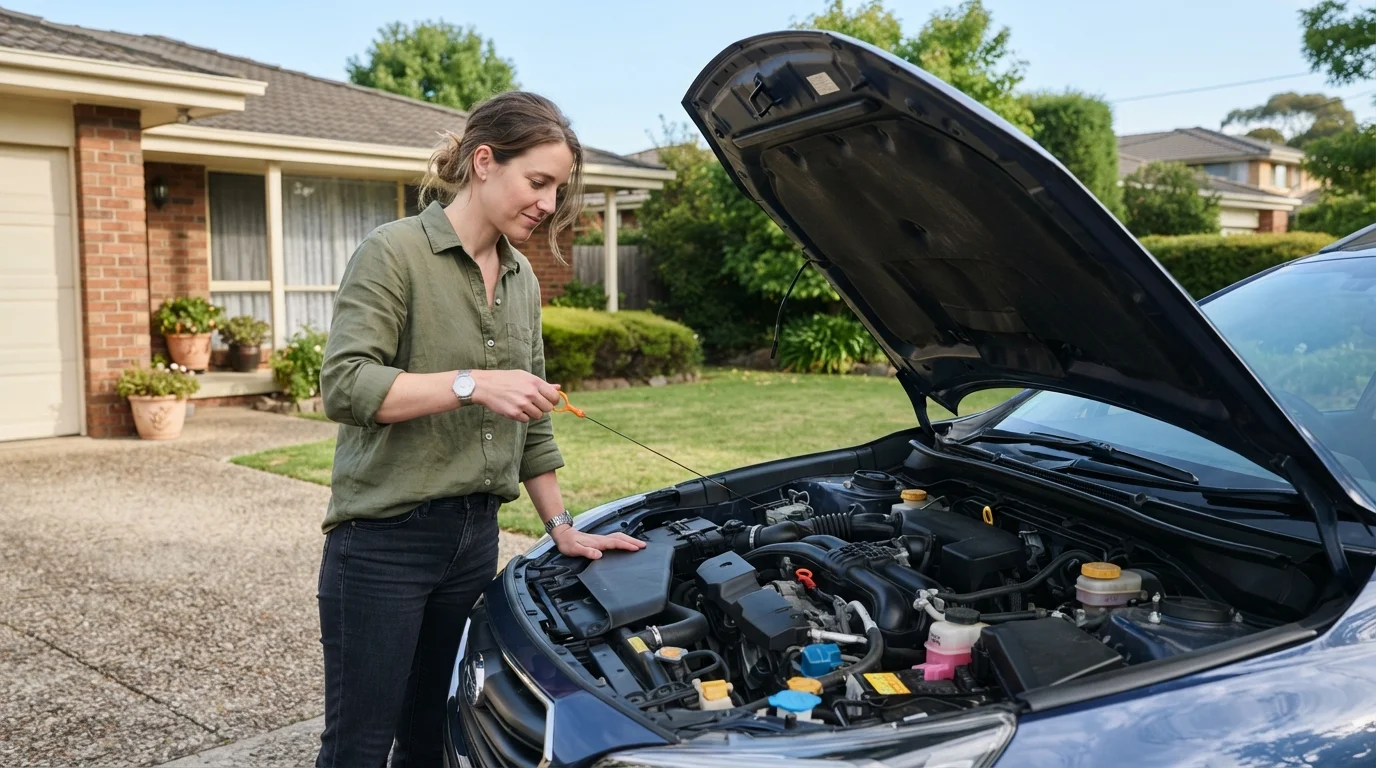
- Engine oil: Pull out the dipstick (usually marked with a bright handle), wipe it clean, reinsert it fully, then pull it out again. The oil level should sit between the two marks. Oil that looks black and gritty is overdue for a change.
- Tire pressure: Check each tire's PSI (pounds per square inch - a measure of air pressure) using an inexpensive gauge. The correct pressure for your car is on the sticker inside the driver's door, not on the tire itself.
- Lights: Walk around your car with the lights on to confirm all headlights, tail lights, and turn signals are working. A burned-out bulb is a quick fix and a legal requirement.
- Coolant reservoir: With the engine cold, check that the coolant (the liquid that prevents your engine from overheating) sits between the min and max lines on the translucent reservoir.
- Windshield wipers and washer fluid: Test your wipers for streaking or skipping, and top off the washer fluid reservoir as needed.
Snap a Photo Each Time You Check
After checking your oil or coolant level, take a quick photo on your phone. This gives you a visual record of the level and condition over time, making it easy to spot gradual changes. It takes seconds and can save you from expensive surprises down the road.
Before every journey, it's worth running through a quick visual check. The pre-drive safety checklist walks you through exactly what to look for in under two minutes.
When to See a Mechanic
Knowing your limits is a genuine skill - not a shortcoming. Some tasks are straightforward for anyone; others involve systems where an error could cause injury or expensive damage.
Tasks best handled by a qualified mechanic include brake servicing, timing belt replacements, suspension repairs, and anything involving the fuel system or high-voltage components in hybrid or electric vehicles. If a warning light comes on and you're unsure what it means, having a mechanic read the diagnostic code is usually fast and inexpensive.
Don't Ignore Dashboard Warning Lights
Warning lights are your car's way of communicating that something needs attention - they're not designed to be cleared and forgotten. Ignoring an oil pressure or engine temperature light even briefly can result in permanent engine damage. When in doubt, pull over safely and consult a mechanic before continuing to drive.
For a clear breakdown of what's realistic to tackle at home versus what genuinely warrants a professional, see the DIY versus garage guide. It's also worth understanding what a full service interval actually involves so you know what you're paying for at each appointment.
Building a Simple Maintenance Habit
Consistency matters more than perfection. A useful approach is to tie maintenance checks to events you already do regularly - such as checking oil every time you fill up with gas, or inspecting your tires on the first of each month.
Keep a simple log - even a notes app on your phone - recording the date, mileage, and what was checked or replaced. This record becomes invaluable when selling the vehicle and helps you stay ahead of service intervals.
Weather changes are another reliable prompt: different seasons place different demands on your car's battery, tires, and fluids. The seasonal car maintenance guide outlines what to check as temperatures shift.
When you're ready to go deeper, the complete car care guide covers the full scope of routine upkeep - from brakes and electrics to full service schedules - in the same plain-language style.