
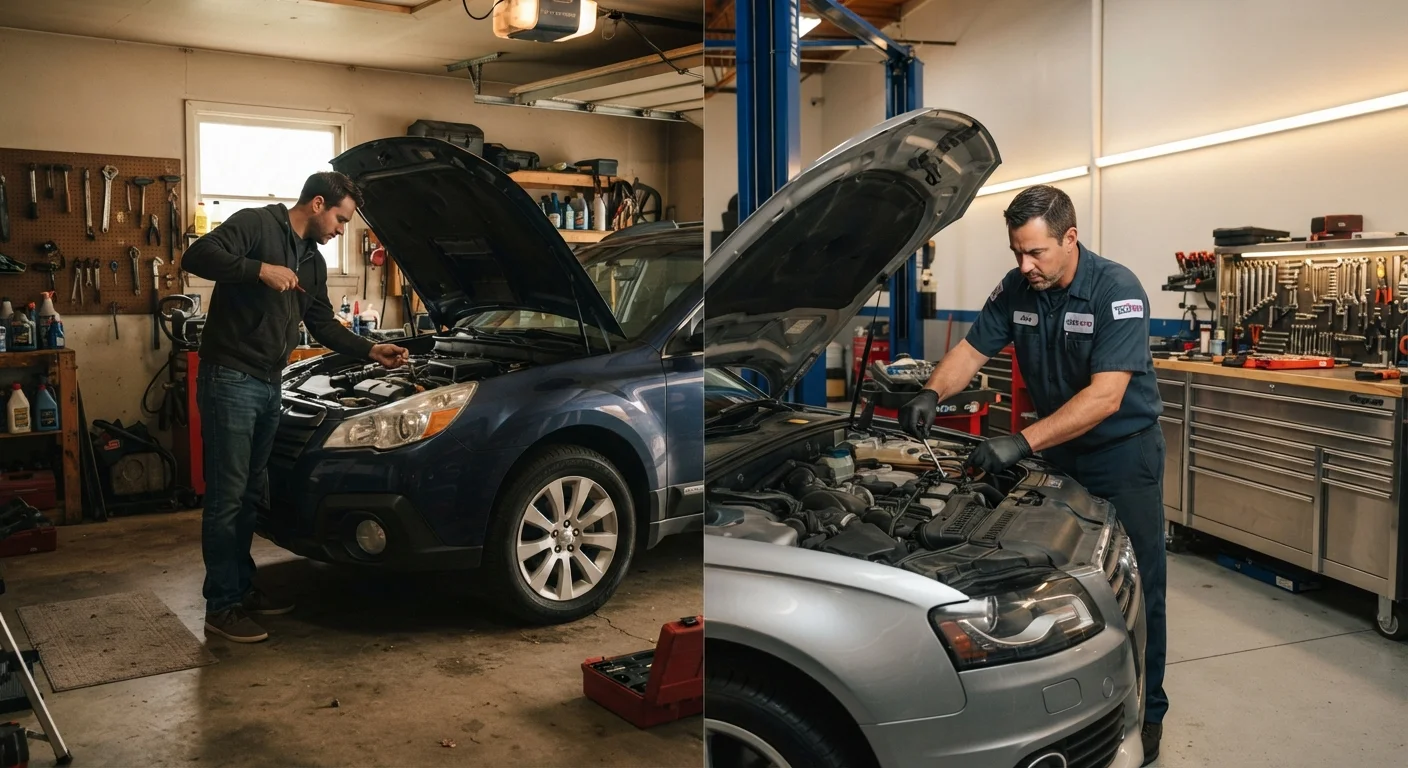
Why This Decision Matters More Than You Might Think
Car maintenance sits at the intersection of safety, cost, and confidence. Skipping it entirely - or getting it wrong - can turn a small problem into an expensive repair or, in serious cases, a safety hazard. But reflexively handing every task to a garage also means paying labor costs for jobs that are genuinely straightforward.
The goal isn't to choose one approach forever. It's to build a clear picture of what falls into your wheelhouse and what doesn't. For a broader foundation, see our first-timer's guide to car maintenance, which covers the essential checks and habits every driver should know.
Your Owner's Manual Is Your Best Starting Point
Before attempting any maintenance task, consult your vehicle's owner's manual. It specifies the correct fluid types, service intervals, and any model-specific cautions for your exact vehicle. Many drivers overlook this resource, but it's the most accurate guide available - and it's already in your glove box.
What You Can Realistically Do at Home
Several routine maintenance tasks require little more than a clean workspace, basic tools, and the patience to read your owner's manual. These include:
- Checking and topping up fluids - engine oil, coolant reservoir, windshield washer fluid, and brake fluid level checks (not bleeding or replacing) are all visual or simple pour tasks.
- Replacing wiper blades - most clip on and off in under five minutes.
- Swapping the cabin or engine air filter - typically involves removing a panel secured by clips, no tools required.
- Checking tire pressure - a basic tire gauge costs a few dollars and gives you immediate, actionable data.
- Replacing a battery - on most modern vehicles, this involves two bolts and a careful sequence; your owner's manual will flag any reset procedures needed.
These tasks are low-risk because they're reversible, don't involve pressurized systems, and don't require specialized diagnostics. Staying consistent with them is one of the easiest ways to keep a car running well. Our complete guide to car care covers the full scope of routine checks worth building into your schedule.
Saves money on labor for straightforward tasks
Simple jobs like air filter swaps, wiper replacements, and fluid checks carry minimal labor overhead at a shop. Doing them yourself eliminates that markup entirely.
Builds useful knowledge of your own vehicle
Regularly checking under the hood helps you notice changes - unusual fluid color, worn belts, or low levels - before they become costly problems.
Flexible timing without scheduling delays
Home maintenance can happen on your schedule, without booking appointments or waiting for a service slot, which is particularly useful for quick routine checks.
Sense of confidence and self-reliance
Understanding what your car needs and being able to handle basic upkeep reduces anxiety around ownership and helps you communicate more clearly with mechanics when you do need professional help.
Where DIY Maintenance Runs Into Trouble
The line between a manageable home repair and a job that needs professional equipment isn't always obvious. Tasks that look approachable can quickly become problematic without the right tools or knowledge. Areas where mistakes carry real consequences include:
- Brake system work - bleeding brakes, replacing pads and rotors, or diagnosing ABS faults involves hydraulic systems where errors directly affect stopping ability.
- Suspension and alignment - replacing struts or control arms changes how a vehicle handles; without an alignment rack, you can't verify the outcome safely.
- Electrical diagnostics - modern vehicles have interconnected electronic control units (ECUs); without an OBD-II scanner and knowledge of how to interpret codes, guessing at electrical faults wastes money and time.
- Timing belt or chain service - a mistimed engine can cause severe internal damage; this job requires precision and torque specifications most home setups can't meet.
It's also worth noting that some repairs void warranties or require documented service records for insurance purposes. When the stakes involve safety systems or major mechanical components, professional accountability matters.
Risk of costly mistakes on complex systems
Errors on brakes, suspension, or engine components can cause additional damage or create safety hazards that cost significantly more to fix than the original repair would have.
Upfront tool and equipment investment
A basic toolkit, jack stands, torque wrench, and OBD-II scanner can add up quickly. For infrequent repairs, renting or paying a shop may be more economical.
No professional liability or warranty coverage
When a garage completes a repair incorrectly, you have recourse. A DIY mistake is entirely your responsibility, with no warranty on parts or labor.
Modern vehicles are increasingly complex
Advanced driver assistance systems (ADAS), hybrid powertrains, and software-integrated components mean that many repairs now require dealer-level diagnostic tools unavailable to most home mechanics.
Potential impact on service records
For leased vehicles or those under powertrain warranties, undocumented self-service may complicate warranty claims or create disputes with lenders about maintenance compliance.
The Real Cost Comparison
DIY maintenance looks cheaper at first glance - and often is for simple tasks. But the calculation is more nuanced than parts cost versus labor cost.
~35%
Share of car repairs suitable for DIY
Industry estimates suggest roughly a third of common maintenance tasks - filters, fluids, wipers, batteries - are within reach of an informed home mechanic with basic tools.
$100-$150
Typical shop labor rate per hour (US)
Labor rates at independent garages in the US commonly range from $80 to $150 per hour, with dealership rates often higher, making labor cost a significant factor in repair decisions.
Consider the full picture: tools have upfront costs, mistakes can lead to additional damage, and your time has value. An oil change done incorrectly - with a filter not fully tightened, or the wrong oil weight - can cost far more in engine wear than the $80-$120 a shop would charge. Conversely, paying a garage to replace a cabin air filter that costs $20 and takes three minutes to swap yourself is difficult to justify.
A useful mental framework: if the worst-case outcome of a DIY mistake is an inconvenience, the task is probably DIY-friendly. If the worst case involves a safety failure or major component damage, it's worth paying for professional work. This is a similar logic to what applies in home repair decisions - see DIY vs. hiring a tradesperson for common home jobs for a parallel framework.
One final thought: overlooked maintenance - whether DIY or professional - is almost always the most expensive option. As our article on car maintenance myths shows, some popular beliefs about service intervals and vehicle care can lead drivers to spend unnecessarily - or to neglect what actually matters.