
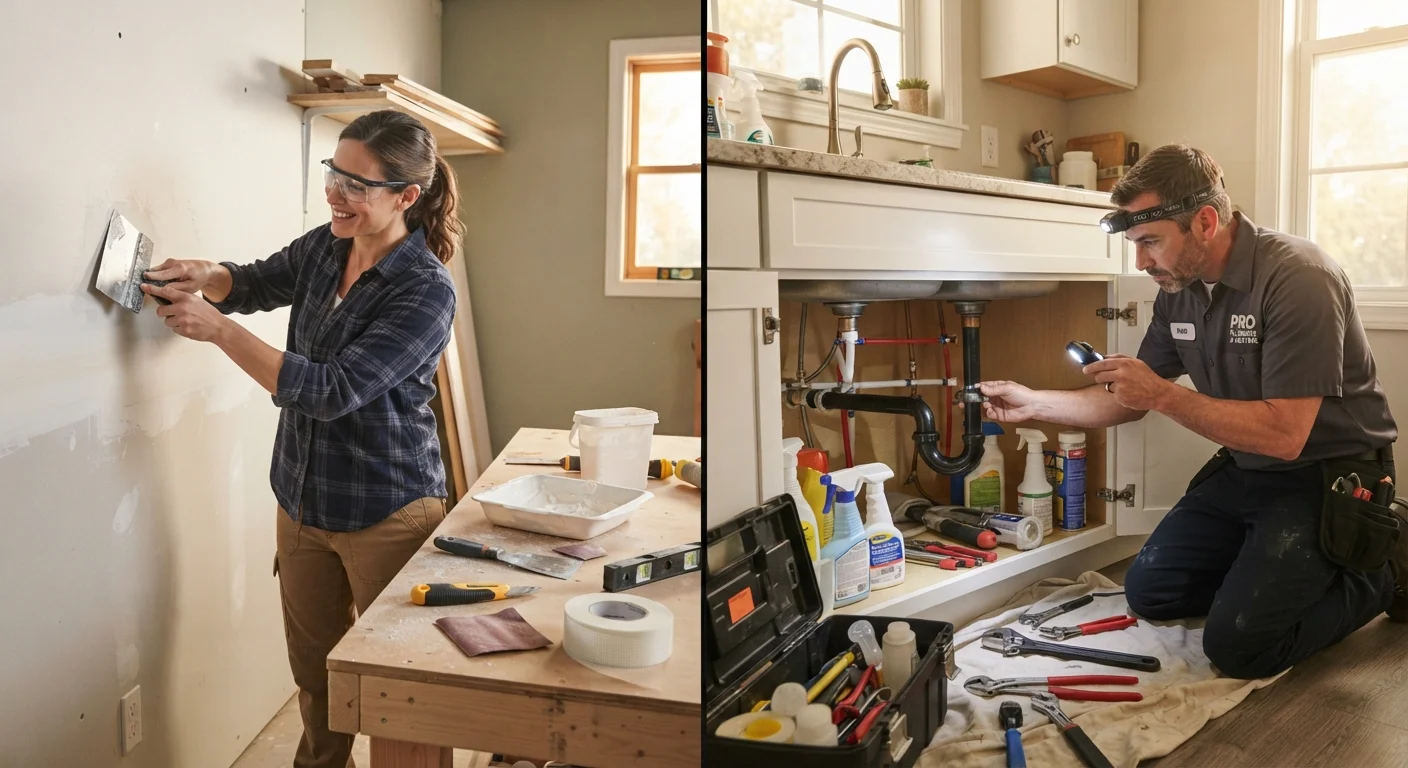
The Core Question: What Actually Makes a Job DIY-Friendly?
Not every home repair is a toss-up. Most jobs fall clearly into one camp once you ask the right questions. Before picking up a tool or calling a contractor, work through this short checklist:
- Is there a safety risk if something goes wrong? Jobs involving electricity, gas, or structural elements carry consequences that go well beyond a cosmetic fix.
- Does the work require a permit or licensed contractor by law? Many jurisdictions in the US require permits for electrical panel upgrades, HVAC work, and additions. Unpermitted work can create problems when you sell or insure the home.
- Do you have - or can you realistically learn - the skill required? Watching a tutorial is a starting point, not a qualification. Be honest about your experience level.
- What does a mistake cost? A botched paint job is easy to redo. A botched plumbing joint behind a wall can mean mold and water damage.
See our guide to home improvement basics if you're just getting started and want a clearer sense of what tools and tasks to begin with.
DIY vs. Hiring Out: A Job-by-Job Breakdown
The table below covers some of the most common home repair scenarios. Use it as a starting point, not a substitute for checking your local codes and your own comfort level.
| Job Type | DIY | Hire a Tradesperson | |
|---|---|---|---|
| Interior painting | Yes - low risk, easy to learn | Rarely necessary | |
| Patching small drywall holes | Yes - beginner-friendly | Not needed for minor repairs | |
| Replacing a light fixture | Sometimes - if power is off and confident | Advisable if wiring is unfamiliar | |
| Electrical panel or wiring | No - permit and license required | Yes - licensed electrician needed | |
| Unclogging a drain | Yes - plunger or auger works well | Only if blockage is deep or repeated | |
| Gas line repair or connection | No - serious safety risk | Yes - licensed professional only | |
| Removing a load-bearing wall | No - structural risk | Yes - requires engineer and permit | |
| Caulking or weatherstripping | Yes - straightforward maintenance | Not necessary |
For renters, the decision isn't always yours to make. Your lease may restrict modifications entirely, and your landlord may be responsible for certain repairs. Review our renter's guide to maintenance responsibilities for a clearer picture of what typically falls to tenants versus landlords.
When DIY Makes Sense
DIY is a reasonable path when the task is cosmetic, the stakes are low, and reliable instructions are widely available. Good candidates include:
- Painting interior walls and trim
- Patching small drywall holes
- Replacing light switch covers, outlet plates, or cabinet hardware
- Unclogging a drain using a plunger or hand auger
- Caulking around a tub or window
- Weatherstripping doors and windows
These tasks share a common trait: if you make a mistake, the fix is straightforward and affordable. Building these skills also gives you a better sense of your home's systems, which pays off over time.
Start Small to Build Confidence
If you're new to home repairs, begin with low-stakes tasks like caulking, painting, or replacing hardware. Each successful repair builds your familiarity with tools and materials, making future decisions easier. Document what you've done - a simple home maintenance log helps you track what's been repaired and when.
When to Hire a Licensed Tradesperson
Some jobs genuinely belong with a professional - not because homeowners can't learn the basics, but because the risk of error is simply too high and regulations exist for good reason.
- Electrical work beyond fixtures: Rewiring circuits, upgrading a panel, or adding new outlets typically requires a permit and a licensed electrician in most US states. Our article on DIY electrical myths breaks down where the line really falls.
- Gas lines and appliances: Any work involving natural gas supply lines should be handled by a licensed plumber or gas fitter. The consequences of an error include fire and carbon monoxide risk.
- Structural changes: Removing a wall (load-bearing or not), adding a room, or altering the roofline typically requires both engineering input and permits.
- Main plumbing connections: Replacing a fixture is often DIY-safe; re-routing supply lines or drain stacks is a different matter.
If you've decided to hire out, take care selecting the right person. Our guide to hiring a tradesperson walks through what credentials to look for and what questions to ask before anyone starts work.
Permits Aren't Optional - They Protect You
Skipping a required permit to save time or money can backfire significantly. Unpermitted work may need to be torn out and redone by a licensed contractor to pass inspection, and it can complicate home sales or insurance claims. Always check with your local building department before starting any significant project.
The Hidden Cost of Getting It Wrong
One of the most common DIY mistakes isn't choosing the wrong technique - it's underestimating what a failed attempt will cost. A leaking pipe joint that wasn't properly soldered, drywall mud applied without proper feathering, or a circuit wired incorrectly can each trigger expensive remediation. In some cases, insurance companies may decline claims if unpermitted or improper work is found to be a contributing factor.
The same logic applies in reverse: not every job needs a professional. Paying a tradesperson to unclog a toilet or replace a cabinet door handle is an unnecessary expense for most capable adults. The goal is calibration - matching your effort and investment to the actual complexity and risk of the task.
For a parallel look at this kind of decision-making outside the home, see how similar trade-offs play out in DIY car maintenance vs. using a garage. The framework is remarkably similar.
Many routine home improvement decisions also have a financial dimension worth thinking through carefully. The Everyday Money Tips hub offers practical guidance on making smarter spending choices - including when it's worth investing in professional work upfront to avoid larger costs later.