
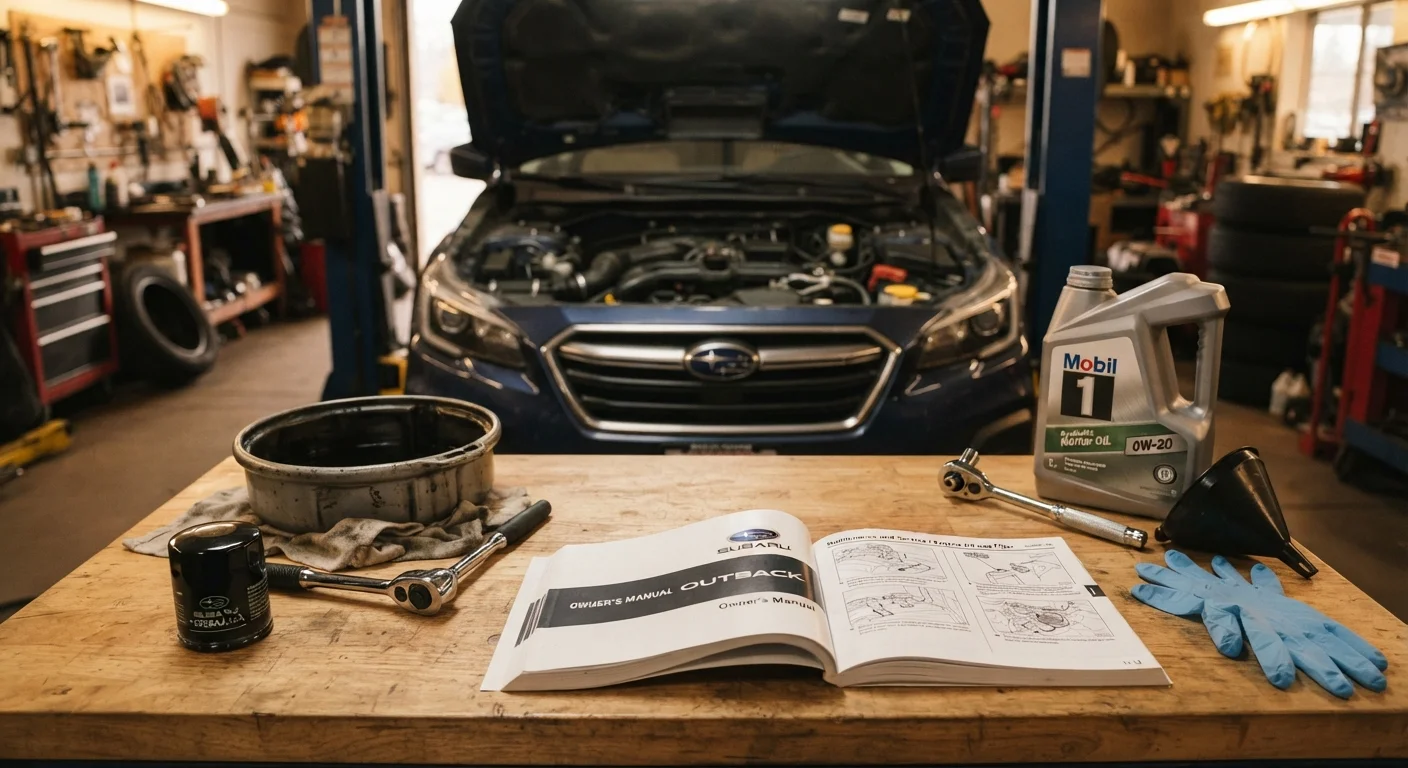
Why Car Maintenance Myths Persist
Car care advice has been passed down through generations - from parents, mechanics, and well-meaning neighbors. The problem is that much of it was accurate for older vehicles and has never been updated to reflect modern engine technology, improved lubricants, and smarter onboard diagnostics. Following outdated rules doesn't just waste money; it can sometimes create unnecessary wear by over-servicing parts that don't need it yet.
Our complete guide to car care basics covers the full landscape of routine maintenance. This article focuses specifically on the myths that are most likely to cost everyday drivers unnecessary time and expense.
Myth
You need to change your engine oil every 3,000 miles, no matter what.
Fact
Most modern vehicles with conventional oil are rated for 5,000-7,500 miles between changes; many synthetic oil vehicles go 10,000 miles or more.
The 3,000-mile rule made sense for engines and motor oils manufactured decades ago. Today's synthetic and synthetic-blend oils are formulated to maintain viscosity and protective properties far longer. More importantly, your engine's requirements are documented in your owner's manual - that figure, not a sticker placed by a service center, is the authoritative interval. Changing oil more often than necessary doesn't harm the engine, but it does cost money and generates unnecessary waste oil. For a full comparison of oil types, see synthetic vs. conventional oil explained.
Myth
You should let your engine idle for several minutes to warm it up before driving in cold weather.
Fact
Modern fuel-injected engines warm up more efficiently by being driven gently - extended idling wastes fuel and can wash cylinder walls with unburned fuel.
Carbureted engines of the past did benefit from warm-up idling because carburetors struggled to atomize fuel in cold air. Virtually all cars on the road today use electronic fuel injection, which adjusts the fuel mixture automatically regardless of temperature. A brief 30-second idle to let oil circulate is reasonable, but beyond that, gentle driving warms the engine faster and more evenly. Extended idling in cold weather can actually push unburned fuel past piston rings, temporarily thinning the oil film on cylinder walls. For seasonal preparedness, the seasonal maintenance checklist covers what actually matters as temperatures drop.
Myth
Using premium fuel in any car makes the engine run better and cleaner.
Fact
Premium fuel only benefits engines specifically engineered to require or recommend it - in most standard engines, it provides no performance or efficiency advantage.
Premium gasoline has a higher octane rating, which resists "knock" (premature combustion) in high-compression or turbocharged engines designed around it. If your owner's manual says premium is "required," use it. If it says "recommended," you can use regular with a modest efficiency trade-off. If the manual makes no mention of premium, you're paying extra for no measurable benefit. Using regular fuel in an engine that only recommends (not requires) premium is generally safe - modern knock sensors adjust ignition timing automatically.
Myth
Dark or black engine oil means it needs to be changed immediately.
Fact
Engine oil darkens quickly through normal operation - color alone is not a reliable indicator of whether an oil change is due.
Oil darkens as it picks up combustion byproducts and microscopic particles, which is actually part of its job. Detergent additives in modern oils are designed to suspend these contaminants and carry them to the filter. A quick visual check is useful for spotting milky or gritty oil (potential signs of coolant contamination or metal particles), but oil turning dark brown or black within a few hundred miles of a fresh change is completely normal. Trust the mileage interval in your manual, or use an oil-life monitoring system if your vehicle has one.
Myth
Servicing your car at an independent garage voids your manufacturer's warranty.
Fact
Under the Magnuson-Moss Warranty Act, manufacturers generally cannot void a warranty solely because you used an independent mechanic, as long as the work meets specifications.
This myth keeps many drivers paying dealership labor rates out of fear. The Magnuson-Moss Warranty Act provides federal protection that prevents manufacturers from making warranty coverage conditional on using their dealerships for routine maintenance - provided the service is performed correctly and with parts that meet the required specifications. Keep all service records, receipts, and documentation of parts used. If a warranty claim arises, documented proof that maintenance was performed to spec is your protection. Consult the warranty documentation specific to your vehicle for any exceptions or requirements.
Myth
Tire pressure should match the maximum PSI printed on the tire's sidewall.
Fact
The correct inflation pressure is listed on the sticker inside your driver's door jamb (or in your owner's manual) - not on the tire itself.
The number stamped on a tire's sidewall is the maximum pressure the tire can hold safely - it is not a target inflation figure. Inflating to that number typically results in overinflation for most passenger vehicles, which reduces traction, causes uneven tread wear in the center of the tire, and creates a harsher ride. The vehicle manufacturer determines the correct pressure based on the car's weight distribution and intended handling characteristics. That figure appears on the door-jamb placard and is the number to follow - front and rear may differ.
What to Trust Instead of Folklore
The single most reliable source for your car's maintenance schedule is the owner's manual - not a quick-lube shop's sticker or a well-worn saying. Manufacturers specify intervals based on engineering testing for your exact engine, climate category, and driving conditions. If your manual says every 7,500 miles for an oil change under normal driving, that interval is appropriate.
5,000-10,000
Typical miles between modern oil changes
Many vehicle manufacturers now specify 7,500-mile or longer oil change intervals for standard driving conditions, with synthetic oil extending that further.
~30 sec
Recommended cold-weather idle time for modern engines
Automotive engineers generally suggest a brief idle before driving gently, rather than the multi-minute warm-ups common with older carbureted vehicles.
32 PSI
Common recommended passenger car tire pressure
Actual recommended pressure varies by vehicle - always check the door-jamb sticker, which often differs significantly from the tire's maximum sidewall rating.
"Severe" driving conditions - frequent short trips under five miles, dusty environments, stop-and-go city traffic, or extreme temperatures - may justify shorter service intervals. Your manual will define these conditions and provide adjusted recommendations.
Dashboard warning lights are another underused resource. Many drivers ignore them or assume the worst. In reality, a light can signal anything from a loose gas cap to a sensor needing attention. See what your dashboard warning lights actually mean before drawing conclusions.
If you're weighing which tasks to handle yourself versus which to leave to a professional, the DIY vs. garage trade-offs guide offers a grounded breakdown. For a deeper dive on oil specifically, common engine oil misconceptions unpacks several beliefs that go beyond what's covered here.
Your Owner's Manual Is the Authority
No tip, sticker, or rule of thumb overrides the maintenance schedule written into your vehicle's owner's manual. It reflects the engineering specifications for your exact engine, oil type, and operating conditions. If you've lost your physical copy, most manufacturers provide downloadable versions on their official websites.