
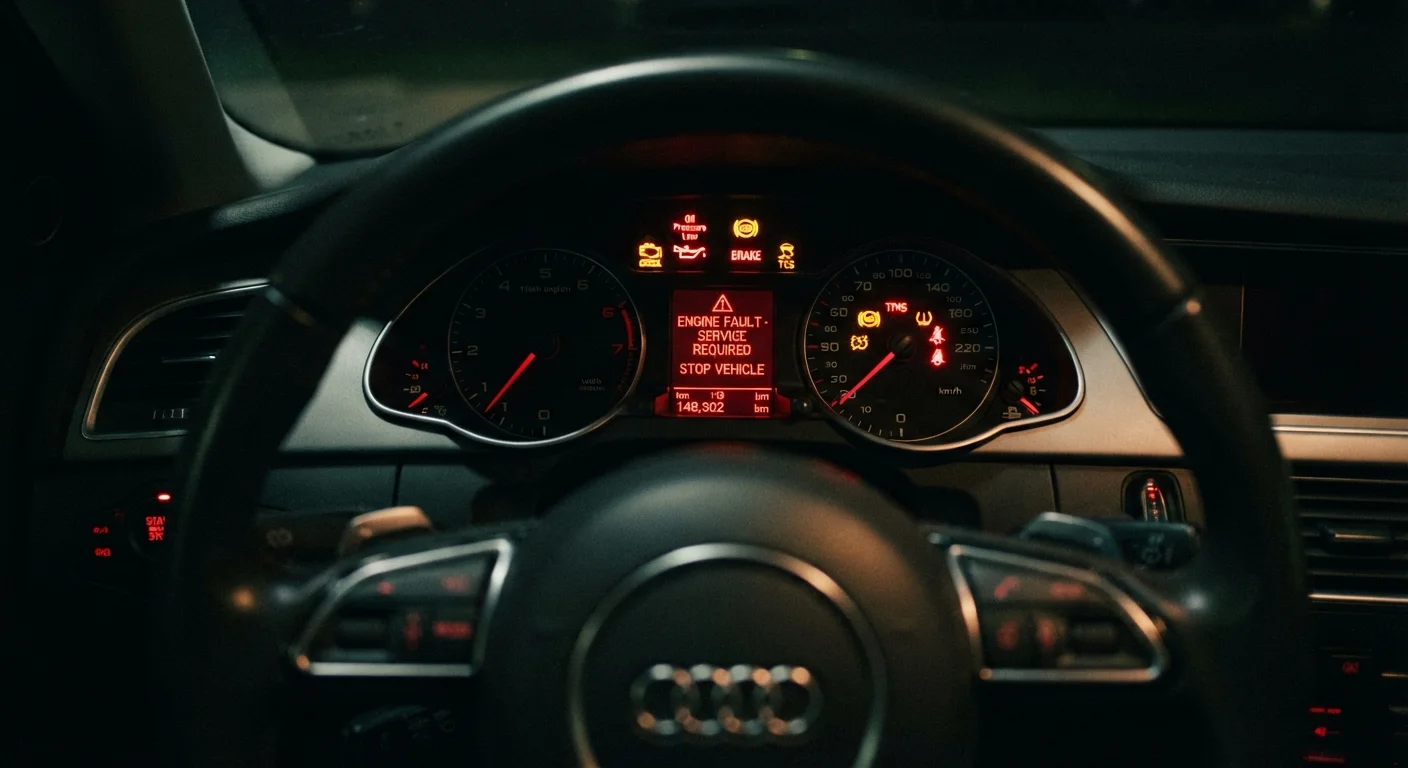
The Color Code: What Red, Amber, and Green Actually Mean
Your dashboard communicates through a color-coded system that most drivers have never been formally taught. Once you understand the logic, it becomes far less intimidating.
| Red light meaning | Stop or act immediately - serious fault |
| Amber light meaning | Service soon - non-emergency fault detected |
| OBD-II required since | 1996 (all US passenger vehicles) (US EPA/CARB mandate) |
| TPMS required since | 2008 (all new US passenger vehicles) (TREAD Act, NHTSA) |
| Most common dashboard light | Check engine / Malfunction Indicator Lamp |
| Flashing vs. steady check engine | Flashing = active misfire, pull over; Steady = stored fault, schedule service |
- Red lights signal an immediate or serious problem - stop driving when it is safe to do so and investigate before continuing. Examples include oil pressure loss and engine overheating.
- Amber (yellow/orange) lights indicate a system fault that needs attention soon but is rarely a reason to pull over instantly. Your check engine light typically falls here.
- Green and blue lights are informational - they confirm that a system is active (headlights on, high beams engaged, cruise control set). No action needed.
Some manufacturers also use white lights for driver-assistance features. When in doubt, your owner's manual is the definitive reference for your specific vehicle. For a broader foundation in automotive terminology, see the Car Systems Glossary for plain-language definitions.
The Most Common Warning Lights, Explained
Here are the lights drivers encounter most often, what they mean, and how seriously to treat them.
Malfunction Indicator Lamp (MIL)
The formal name for the check engine light. It illuminates when the vehicle's onboard diagnostic system (OBD-II) detects a sensor reading outside normal parameters. A steady light usually indicates a stored fault; a flashing light signals an active, potentially damaging condition.
OBD-II
On-Board Diagnostics, second generation - a standardized system required on all US vehicles since 1996 that monitors engine and emissions performance. When a fault occurs, it stores a diagnostic trouble code (DTC) that a scanner can read.
Catalytic Converter
An emissions control device in the exhaust system that converts harmful gases into less harmful ones. Engine misfires can push unburned fuel into this component, causing it to overheat and fail - one reason a flashing check engine light is treated urgently.
TPMS
Tyre Pressure Monitoring System - a sensor-based system that alerts the driver when one or more tyres drop below a threshold pressure, typically around 25% below the recommended level. Required on all new US passenger vehicles since 2008.
Oil Pressure
The force at which the oil pump circulates engine oil through the moving parts of the engine. Low oil pressure - distinct from low oil level - means lubrication is not reaching critical components, which can cause rapid mechanical damage.
Alternator
A generator driven by the engine that converts mechanical energy into electrical energy to charge the battery and power the vehicle's electrical systems while running. A failing alternator will drain the battery and eventually stall the car.
Check Engine (Malfunction Indicator Lamp)
This is the light people fear most - and misunderstand most. It can range from a loose fuel cap to a misfiring cylinder. A steady amber light usually means a non-emergency fault stored in the car's computer; a flashing check engine light often signals an active misfire that can damage the catalytic converter. Pull over safely if it flashes continuously.
Oil Pressure Warning
A red oil can symbol means the engine is not receiving adequate oil pressure - not simply that oil is low, but that circulation has dropped dangerously. Stop the engine promptly. Running an engine with low oil pressure for even a few minutes can cause permanent internal damage. Check the oil level once the engine is off; if it's at the correct level, do not restart without professional diagnosis.
Temperature Warning
A red thermometer icon means the coolant temperature is critically high. Pull over safely, turn off the engine, and let it cool. Do not open the radiator cap on a hot engine. Low coolant is a common cause - see our guide to identifying car fluids for what to look for under the hood.
Battery / Charging System
A battery symbol during driving usually means the alternator is not charging the battery, not that the battery itself has died. The car may continue running for a short time on battery reserve. Turn off non-essential electronics, avoid short trips, and head to a mechanic promptly.
Tyre Pressure Monitoring System (TPMS)
An exclamation mark inside a tyre cross-section indicates one or more tyres have dropped below the recommended pressure threshold. Check all four tyres with a gauge - temperature changes alone can trigger this light. Understanding pressure matters: even a few PSI off can affect handling and tyre life.
Brake Warning Light
If the parking brake is released and this light stays on, it may indicate low brake fluid or a fault in the braking system. Do not dismiss this light. If your brakes feel spongy or unresponsive alongside it, stop driving immediately. Unusual brake behavior - including noise - is worth understanding: learn what brake noises signal.
What To Do When a Light Comes On
The right response depends on which light appears and whether other symptoms accompany it.
When To Pull Over Immediately
Any red warning light combined with unusual smells (burning, fuel), visible smoke, or a sudden change in how the car steers or brakes is a reason to pull off the road safely and stop the engine. Continuing to drive can turn a repairable fault into a significantly more expensive or dangerous situation. If you are unsure, err on the side of caution and call for roadside assistance rather than risk further damage.
- Stay calm and note the color. Red demands prompt action; amber means schedule attention soon.
- Check for accompanying symptoms. Unusual sounds, smells, vibrations, or changes in handling alongside any warning light elevate urgency significantly.
- Consult your owner's manual. Every symbol in your specific vehicle is documented there. Many libraries and manufacturer websites also offer digital versions.
- Use an OBD-II reader for amber lights. Most auto parts stores can read the stored fault codes for free. This gives you a starting point before any mechanic conversation.
- Don't ignore a light hoping it resolves. Some lights do extinguish on their own (a loose fuel cap, for example), but masking a problem rarely fixes it.
Building basic vehicle awareness into your routine is the simplest way to catch problems early. The pre-drive safety check is a practical habit that complements what your dashboard tells you.
1 in 4
US vehicles on the road with an active check engine light
Estimates from automotive diagnostic service providers suggest a significant portion of vehicles are driven with unresolved dashboard faults at any given time.
~25%
Pressure drop that triggers a TPMS warning
NHTSA regulations require TPMS systems to alert drivers when tyre pressure falls 25% or more below the vehicle manufacturer's recommended level.