
Why Knowing Your Car Fluids Matters
Your car depends on several fluids to keep its systems running safely and efficiently. When any one of them drops too low, degrades, or leaks, the effects can range from reduced performance to a breakdown on the side of the road. The good news: you don't need mechanical training to check them - just a few minutes and the knowledge to know what you're looking at.
This guide covers the six fluids every driver should be able to identify, where to find them, what they should look like when healthy, and what warning signs mean it's time for attention. If you're starting from scratch on how car systems connect, see our introduction to how cars work before diving in.
The Six Essential Car Fluids
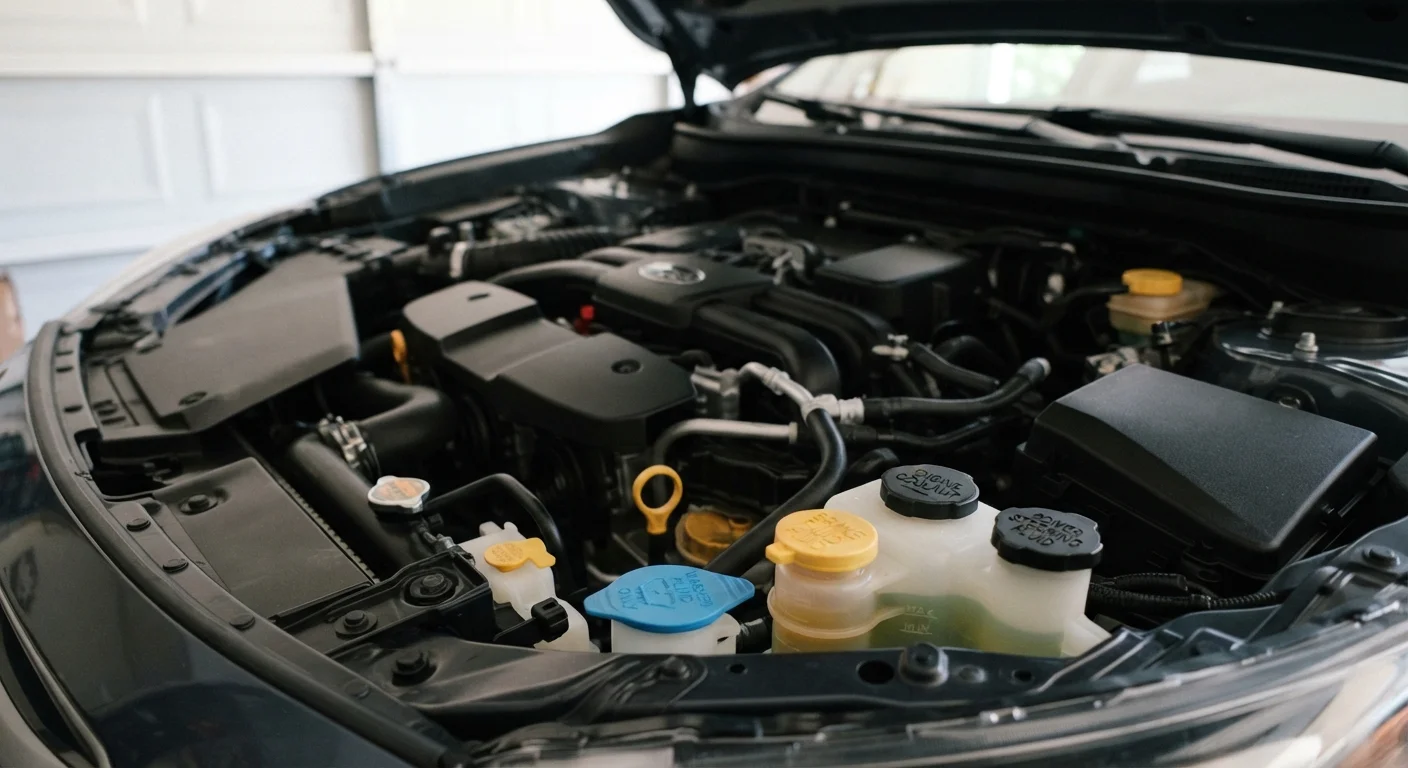
Open your hood and you'll typically see several capped reservoirs clustered around the engine. Here's what each one does:
1. Engine Oil
Location: Checked via a dipstick; reservoir capped with an oil-can icon.
Healthy colour: Amber to light brown when new; darker brown with use.
Warning signs: Black, gritty oil signals it's overdue for a change. Milky or frothy oil may indicate coolant contamination - have it inspected by a qualified mechanic promptly.
2. Coolant (Antifreeze)
Location: A translucent plastic reservoir, usually near the radiator.
Healthy colour: Bright green, orange, pink, or blue depending on type.
Warning signs: Cloudy, oily, or rust-coloured coolant needs flushing. A sweet smell under the hood or puddles of coloured fluid beneath the car are common leak indicators. Never open the coolant reservoir cap when the engine is hot - pressurised coolant can cause serious burns.
3. Brake Fluid
Location: A small reservoir on the firewall, near the back of the engine bay on the driver's side.
Healthy colour: Pale yellow to clear.
Warning signs: Dark brown fluid is absorbing too much moisture and losing effectiveness. A low level can also signal worn brake pads or a leak - both require immediate professional attention. If a dashboard warning light triggers alongside a low reading, see our guide to dashboard warning lights for context.
4. Power Steering Fluid
Location: A small reservoir, often labelled with a steering wheel icon.
Healthy colour: Clear to light amber (pink or red in some vehicles).
Warning signs: Dark, burnt-smelling fluid or a whining noise when turning are red flags. Note: many newer vehicles use electric power steering and have no fluid reservoir.
5. Transmission Fluid
Location: Some vehicles have a dipstick; others are sealed and require a mechanic to check.
Healthy colour: Bright red.
Warning signs: Dark brown or burnt-smelling fluid, or difficulty shifting gears. Transmission repairs are among the most costly, so early detection matters.
6. Windshield Washer Fluid
Location: A blue-capped reservoir, usually clearly labelled.
Healthy colour: Blue, green, or clear.
Warning signs: Running empty is a safety issue in poor visibility. Never use plain water in freezing conditions - it can crack the reservoir. This is the one fluid you can top up yourself without any mechanical knowledge.
Coolant (Antifreeze)
A liquid mixture - typically water and ethylene glycol - that circulates through the engine to regulate temperature. It prevents overheating in summer and freezing in winter.
Brake Fluid
A hydraulic fluid that transmits force from the brake pedal through the braking system to the wheels. It is hygroscopic, meaning it absorbs moisture over time, which reduces its effectiveness.
Transmission Fluid
A lubricant that keeps the gears, bearings, and clutch components inside the transmission operating smoothly. It also acts as a hydraulic fluid in automatic transmissions.
Dipstick
A long, thin metal rod inserted into the engine or transmission that lets you measure the fluid level and inspect its condition without disassembling anything.
Hygroscopic
A property of certain fluids - including brake fluid - that causes them to absorb moisture from the surrounding air over time. Moisture lowers the boiling point of brake fluid and reduces its effectiveness.
Firewall
The metal partition separating the engine bay from the passenger cabin. Several fluid reservoirs, including the brake fluid reservoir, are typically mounted on or near it.
How to Check Fluids Safely and Regularly
Most fluid checks take under five minutes and should be done on a flat surface with a cold or fully cooled engine (except for transmission fluid on some vehicles, which is checked warm - consult your owner's manual).
- Park on level ground and turn off the engine.
- Wait at least 10-15 minutes after driving before opening any reservoir cap.
- Locate each reservoir using your owner's manual if needed - layouts vary by make and model.
- Check levels against the MIN/MAX markers on dipsticks or reservoir walls.
- Note the colour and smell of each fluid as you check it.
A good habit is to do a quick fluid check once a month and before any long road trip. If you're unsure what a dashboard symbol means when levels are low, our dashboard warning lights guide can help you decode it. For a deeper look at how each fluid system connects to your car's broader mechanics, our complete car care guide covers the full picture.
When to Call a Mechanic Instead
Topping up washer fluid is always a safe DIY task. However, if you notice a significant drop in brake fluid, oily or milky engine oil, or any fluid pooling under your parked car, these are signs that require professional diagnosis rather than a simple top-up. Low brake fluid in particular should be treated as an urgent safety issue - do not delay having it inspected.