
Not All Brake Noise Means Danger - But None of It Should Be Ignored
That high-pitched squeal when you slow to a stop is unsettling, but it doesn't always mean your brakes are failing. Brake noise is your car's way of communicating - the challenge is learning to read the message correctly. Some sounds are brief and benign; others signal that a safety-critical component is close to failure.
Understanding the difference can save you money, protect your vehicle, and - most importantly - keep you and others safe. Below, we break down the most common mistakes drivers make when dealing with brake noise, and what to do instead.
Assuming all brake squealing is normal and waiting it out.
Why it happens: Drivers often hear that a brief squeal after rain is harmless - which is true - and apply that logic to all brake noise, even when it persists.
Ignoring the brake pad wear indicator - the built-in warning system most cars already have.
Why it happens: Many drivers don't know this indicator exists. Brake pads contain a small metal tab designed to contact the rotor and squeal when pad thickness drops to a minimum safe level.
Delaying a mechanic visit because the brakes still "feel fine."
Why it happens: Drivers trust the brake pedal feel as a primary gauge. But pedal feel can remain normal even when pads are dangerously thin or a caliper is beginning to stick.
Confusing brake dust or glazed pads with a serious fault and over-reacting - or doing nothing at all.
Why it happens: Glazed brake pads (hardened from excessive heat) can cause a squeal or squeak that sounds alarming but doesn't always indicate worn material. Drivers either panic or dismiss it.
Not accounting for how braking system health affects overall stopping performance.
Why it happens: Drivers think about brakes in isolation, overlooking how tyre condition, brake fluid age, and ABS function all influence how safely a car stops.
When Brake Noise Demands Immediate Action
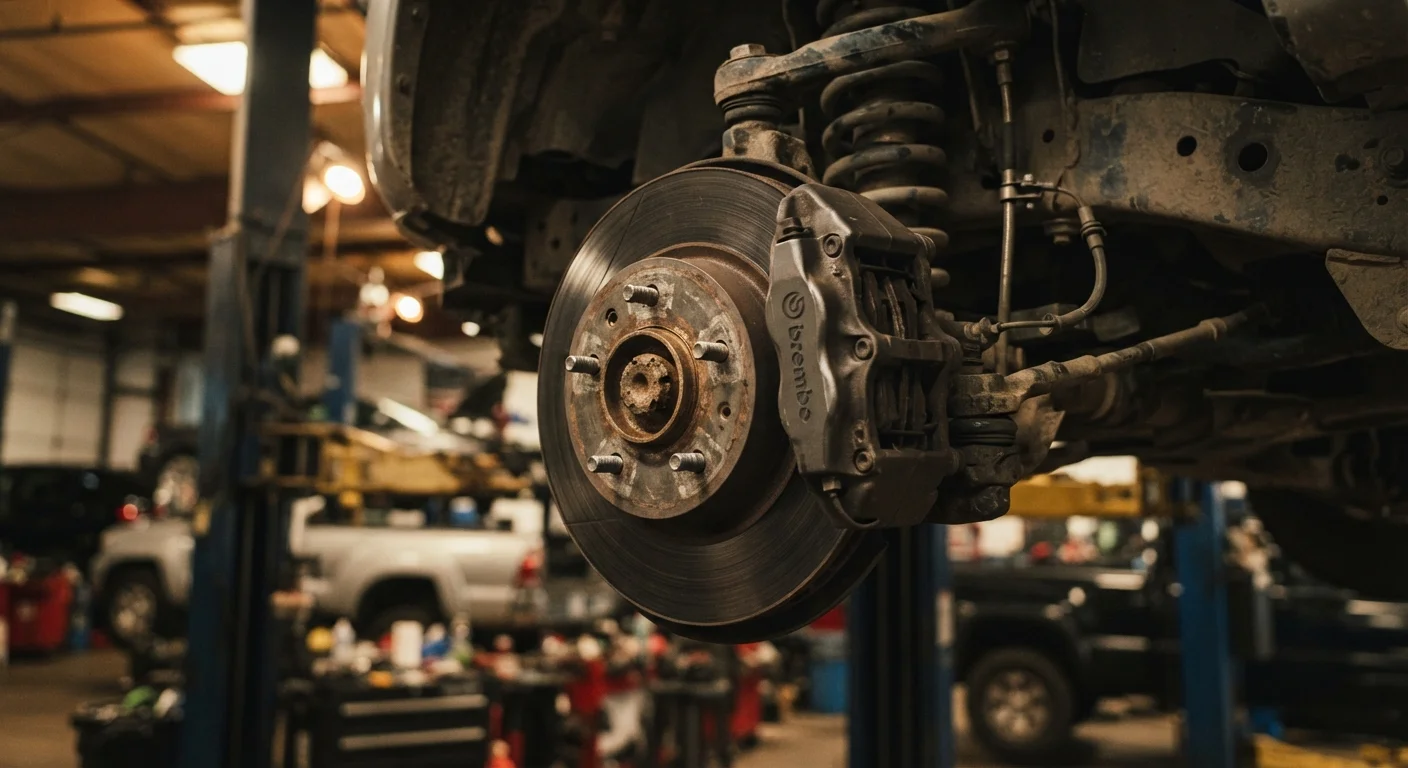
While some squealing is normal, certain sounds require you to stop driving and call a mechanic before taking the car out again. A deep metallic grinding sound when braking usually means the friction material on your brake pads is completely gone, and bare metal is now pressing against your rotor. At this stage, stopping distance increases significantly, and every mile driven compounds the damage.
Grinding Sounds Mean Stop Driving Soon
A grinding or growling noise under braking is not a "monitor it" situation. It typically means metal-to-metal contact is occurring, which damages rotors rapidly and reduces braking effectiveness. Have the vehicle inspected by a mechanic as soon as safely possible - avoid high-speed driving or long trips until it has been assessed.
A pulsing sensation in the brake pedal combined with noise often points to warped rotors - the disc has developed uneven thickness from excessive heat. Warped rotors reduce the consistency of your braking force, which matters most in emergency stops. If you also notice your vehicle pulling to one side under braking, a stuck caliper (the clamp that applies pressure to the rotor) may be the cause.
Any brake concern that affects your ability to stop reliably should be evaluated by a qualified mechanic promptly. Brakes are not a system to troubleshoot by feel alone. For a broader look at how warning signals connect to your car's systems, see what your dashboard warning lights actually mean.
~30%
Of brake-related crashes linked to poor maintenance
The National Highway Traffic Safety Administration (NHTSA) has attributed a significant share of brake-related crashes to vehicle maintenance issues, including worn friction components.
2-3×
Cost increase when rotors need replacing alongside pads
Automotive service data consistently shows that waiting until brake pads are fully worn often leads to rotor damage, multiplying repair costs compared to timely pad replacement.
It's also worth remembering that brake performance works in tandem with tyre condition. If your stopping distances feel longer than expected, tyre pressure and grip may also be a factor worth checking.