
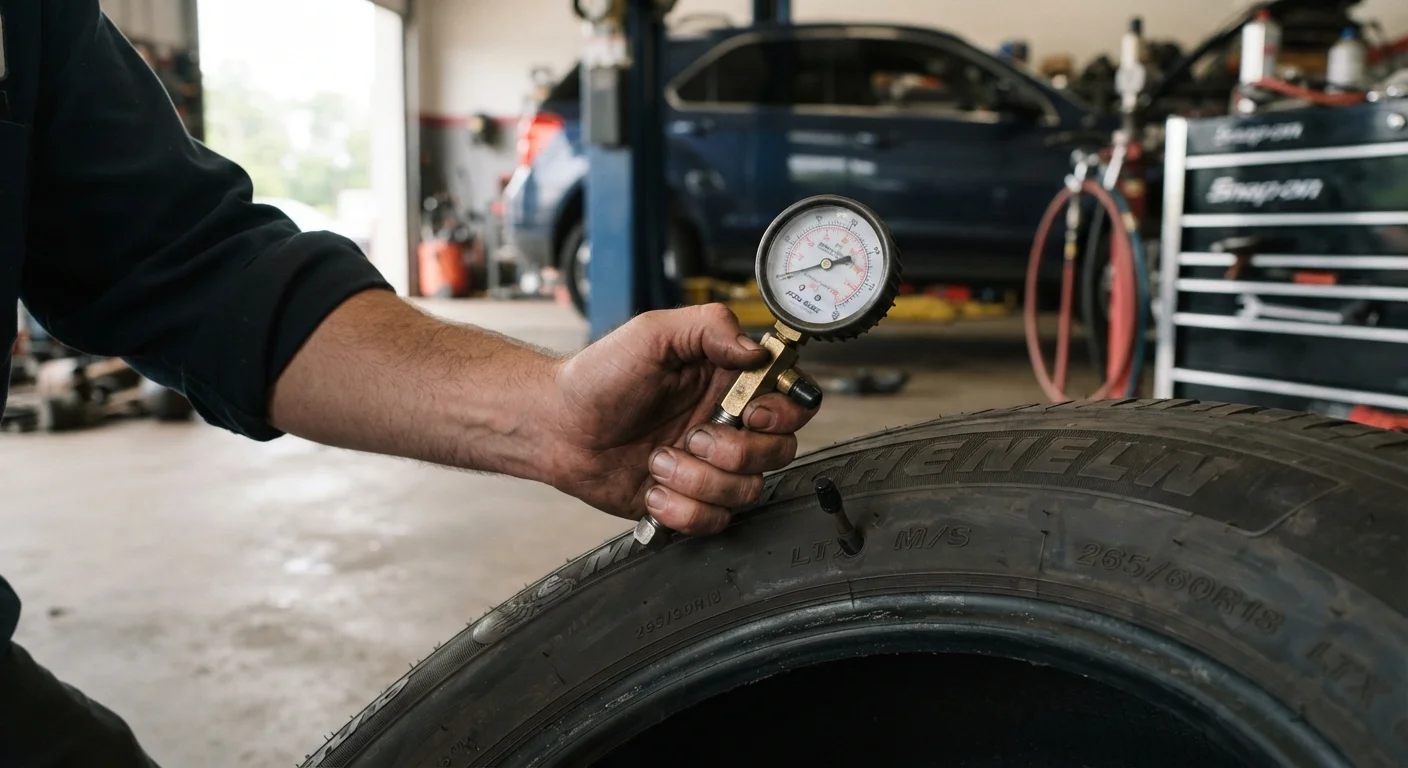
Why Tyre Pressure and Grip Are Inseparable
Tyres work by maintaining a specific contact patch - the footprint of rubber that actually touches the road. When pressure is correct, that patch is the right size and shape, and the tyre flexes as designed. When pressure is wrong, the contact patch distorts, and with it goes much of your vehicle's ability to steer, brake, and corner safely.
Underinflation causes the tyre to bulge outward at the sides. This shifts weight toward the tyre's edges and away from the centre of the tread, reducing the effective grip zone. Steering feels vague or heavy, and braking distances increase. Underinflated tyres also build up more heat from flexing, which raises the risk of a sudden blowout - particularly at motorway speeds. The effect on stopping distance becomes especially pronounced on wet roads, where every metre counts.
Overinflation has the opposite effect on the contact patch: it becomes too narrow and concentrated at the centre of the tread. This reduces grip in cornering and braking, makes the ride harsher, and accelerates wear at the centre of the tyre. An overinflated tyre is also more vulnerable to impact damage from potholes because there is less air cushioning the blow.
Tread depth and pressure work together - even a tyre with good tread depth loses much of its wet-weather drainage ability when overinflated. For a full picture of tread-related safety, see our guide on tyre tread depth and legal minimums.
Check Pressure Monthly, Not Just Seasonally
Tyres naturally seep roughly 1 PSI of air per month even without a puncture. Temperature swings accelerate this - tyre pressure drops approximately 1 PSI for every 10°F fall in ambient temperature. Building a monthly check into a routine task (like the first weekend of each month) keeps pressure consistently in the safe range. Pair it with the pre-drive safety check for a well-rounded habit.
What You Need and How to Check Correctly
Checking tyre pressure is one of the simplest and most high-value maintenance tasks a driver can do, requiring only a few minutes and minimal equipment. Here is what to gather before you start:
What you will need
Tyre Pressure Gauge
Measures the air pressure inside each tyre in PSI or bar so you can compare it to the manufacturer's specification.
Air Compressor or Pump
Used to add air to underinflated tyres; available at most petrol stations or as a portable 12V unit.
Valve Stem Caps
Protect the valve stem from dirt and moisture; replace any that are cracked or missing while you have the gauge out.
Sidewall Numbers Are Not Your Target
The number moulded into the tyre sidewall (e.g. 'Max. Press. 51 PSI') is the maximum pressure the tyre can safely hold - not the pressure your vehicle needs. Using that figure will overinflate your tyres significantly. Always use the manufacturer's recommended pressure found on the door jamb sticker or in your owner's manual.
Find Your Vehicle's Recommended Pressure
Open the driver's door and look for a sticker on the door jamb or door edge. It lists the recommended cold tyre pressure in PSI (pounds per square inch) for both front and rear tyres - these figures can differ, so note both. If you cannot find the sticker, check your owner's manual. Do not use the number on the tyre sidewall as your target.
Check Tyres When Cold
Park the vehicle and confirm the tyres have not been driven on for at least three hours, or check first thing in the morning before any journey. Driving heats the air inside the tyre, raising the pressure reading and making it inaccurate for comparison against the cold specification.
Remove the Valve Cap and Attach the Gauge
Unscrew the small rubber or metal valve cap from the tyre's valve stem - the short tube protruding from the wheel rim. Press the gauge firmly and squarely onto the valve stem. A hissing sound means the seal is not airtight; reposition and try again. Read the pressure value displayed on the gauge.
Compare the Reading to the Specification
Note the reading for each tyre and compare it to the manufacturer's recommended figure. A tyre more than 3-5 PSI below the target is meaningfully underinflated. A tyre more than 3-5 PSI above the target is overinflated. Both conditions affect handling and wear - check all four tyres, plus the spare if your vehicle has a full-size spare.
Inflate or Deflate to the Correct Pressure
To add air, attach the air compressor nozzle to the valve stem and add air in short bursts, re-checking with the gauge between each burst. To release air, use the small pin inside the gauge head (or a pen tip) to briefly press the centre of the valve stem. Work gradually - it is easy to overshoot in either direction.
Replace Valve Caps and Record the Date
Screw the valve caps back onto each stem finger-tight. Make a note of today's date - a sticky note in the glovebox, a phone reminder, or a note in your car maintenance log all work. Aim to repeat this check in four weeks, or before any long trip.
Tyre pressure is just one part of a broader pre-journey habit. The pre-drive safety check covers mirrors, lights, and fluid levels alongside tyre condition - worth bookmarking as a regular routine. For a wider view of keeping your vehicle in good shape, the complete car care guide brings all the essentials together in one place.
Never Deflate a Hot Tyre to Hit Target Pressure
If you check pressure after a long drive, the reading will be higher than cold pressure because heat expands air inside the tyre. Do not release air to bring it down to the cold target - you will actually underinflate the tyre. Wait at least three hours after driving, or check before the first journey of the day.