
Why Tread Depth Matters More Than You Think
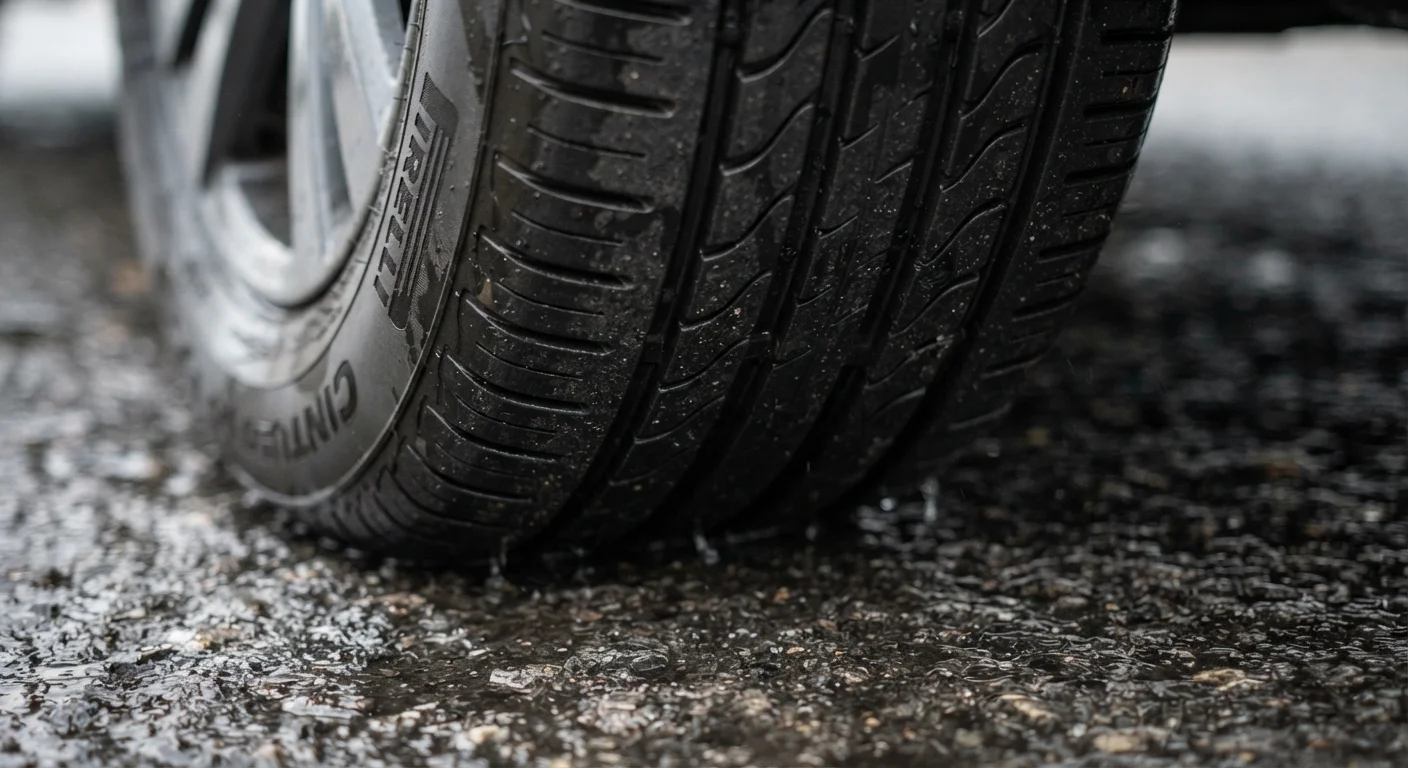
Tyre tread is not just a pattern stamped into rubber for aesthetics. Those grooves perform a specific engineering function: they evacuate water from beneath the tyre at speed. On a dry road, a slick tyre would actually grip better - but roads are rarely perfectly dry. When tread depth is insufficient, a thin film of water can form between the tyre and the road surface, a phenomenon called hydroplaning. When hydroplaning occurs, the driver loses meaningful steering and braking control.
Research from the National Highway Traffic Safety Administration (NHTSA) and tyre industry safety bodies consistently shows that stopping distances increase substantially as tread wears down. A vehicle traveling at highway speed with tyres near the legal minimum needs considerably more distance to stop than the same vehicle with new tyres - a gap that can be the difference between a near-miss and a collision.
Tread depth also affects handling in snow and on gravel, where grooves bite into loose surfaces to create traction. Keeping an eye on tread is one of the simplest and most impactful car safety habits you can build. For a complete picture of tyre health, pair this knowledge with correct inflation - see our guide to tyre pressure for practical steps.
Check All Four Tyres, Not Just One
Tread wear can differ significantly between front and rear tyres, and even across the width of a single tyre. Measure tread depth in at least three spots per tyre - inner edge, centre, and outer edge - to catch uneven wear patterns early.
What the Legal Minimum Actually Means
Every US state sets a legal minimum tread depth of 2/32 of an inch. Driving on tyres below this threshold is a traffic violation in every jurisdiction and can expose you to fines, failed vehicle inspections, and liability complications if you are involved in an accident.
However, it is important to understand that legal does not automatically mean safe. The 2/32-inch threshold is the floor below which tyres are clearly unsafe by any measure. Many automotive safety experts and tyre engineers recommend considering replacement at 4/32 of an inch - particularly for drivers who regularly encounter rain - because wet-road braking performance degrades meaningfully before the tyre technically becomes illegal.
Bald Tyres Are a Legal and Safety Risk
Driving on tyres at or below the 2/32-inch legal minimum is illegal in every US state and significantly increases your risk of losing control, especially in rain. Law enforcement can issue citations, and your auto insurance may deny claims if a worn-tyre condition contributed to an accident. Do not delay replacement if your tyres are at or near the limit.
Tread wear is also rarely perfectly uniform. A tyre may be well above the limit in the centre but worn to the edge in the shoulder - or vice versa. This is why checking multiple points across each tyre matters. Uneven wear patterns are also a signal worth investigating: they often point to low or inconsistent tyre pressure or misaligned wheels. Understanding how pressure and tread interact is covered in detail in our article on tyre pressure and grip.
Penny
Used to perform a quick field check - if Lincoln's head is fully visible, tread is at or below 2/32 inch.
Quarter
Used for the 4/32-inch threshold check - if Washington's head is visible, consider replacement soon.
Tread Depth Gauge
Provides a precise numeric reading of tread depth in 32nds of an inch; more accurate than the coin method.
Flashlight or Work Light
Helps illuminate tread grooves clearly when checking in low-light conditions.
How Often Should You Check Tread Depth?
A good rule of thumb is to check tread depth once a month as part of a quick tyre inspection, and always before long road trips or ahead of a season change - especially when transitioning from dry to wet or winter conditions. New tyres typically start with 10/32 to 11/32 of an inch of tread, and average driving wears them down roughly 1/32 of an inch for every 7,000 to 10,000 miles, though this varies by driving style, road surface, and whether wheels are properly aligned and inflated.
If you notice your vehicle taking longer to stop than usual, pulling to one side, or feeling less planted in corners, worn or uneven tyres could be a contributing factor - and a check is warranted immediately. A qualified mechanic can identify wear patterns and recommend whether rotation, alignment, or replacement is the right next step.
What you will need