
What a Service Interval Actually Means
When your dashboard shows a wrench icon or your mileage hits a round number, your car is telling you it's time for a service interval. But what does that actually involve? For many drivers, a service is something that happens behind closed doors and produces a bill - the details remain a mystery.
Understanding the anatomy of a service interval puts you in control. You can verify that work was completed, ask informed questions, and recognize when something is being oversold. If you're new to car ownership, our first-timer's overview of car maintenance covers the foundational habits that make routine servicing straightforward.
Service intervals are split into two broad categories: minor services, which happen more frequently and cover the essentials, and major services, which occur at longer intervals and include a deeper inspection of wear-prone systems.
The Core Tasks: Oil, Filters, and Fluids
The centerpiece of virtually every service interval is the engine oil change. Engine oil lubricates moving metal parts, absorbs heat, and suspends contaminants. Over time, it degrades and thickens, reducing its ability to protect the engine. Fresh oil restores that protection.
Alongside the oil, the oil filter is replaced. The filter traps particles that would otherwise circulate through the engine and cause abrasive wear. A clogged filter can allow unfiltered oil to bypass it entirely - so replacing it is non-negotiable.
Most services also include an inspection - and where needed, a top-up - of other essential fluids:
- Coolant (antifreeze): Regulates engine temperature and prevents freezing or boiling.
- Brake fluid: Hydraulic fluid that transmits the force from your brake pedal to the calipers. It absorbs moisture over time, which lowers its boiling point.
- Power steering fluid: Keeps steering effort light and consistent (on vehicles without electric power steering).
- Windshield washer fluid: Simple but important for visibility.
Check Your Owner's Manual First
Every vehicle has a maintenance schedule tailored to its specific engine and design. Before accepting any service recommendation, cross-reference it with your owner's manual. This prevents you from paying for work that isn't due yet, and ensures nothing genuinely overdue gets missed.
Air filters - both the engine air filter and the cabin air filter - are typically replaced at longer intervals, often every 15,000 to 30,000 miles, but a technician will inspect them at each service and flag them if they're clogged.
The Visual Inspection: Catching Problems Early
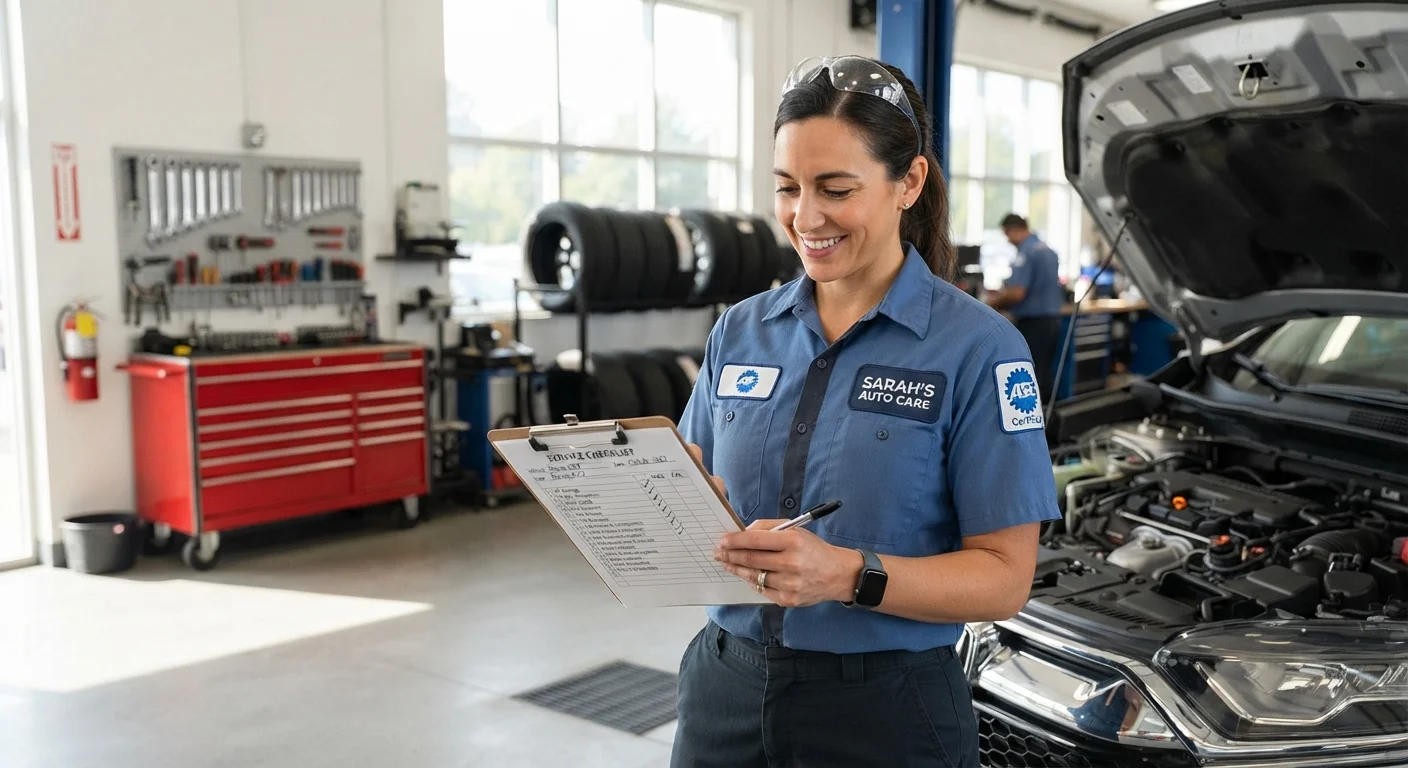
A quality service interval includes a multi-point visual inspection - a systematic walk-around of your vehicle's key systems. This is where a good technician earns their value, because many developing faults produce no noticeable symptoms until they fail.
A standard inspection covers:
- Brakes: Pad thickness, rotor condition, and brake line integrity.
- Tires: Tread depth, sidewall condition, and inflation pressure.
- Belts and hoses: Checking for cracking, fraying, or softening - especially the serpentine belt, which drives the alternator, power steering pump, and air conditioning compressor.
- Lights: Headlights, taillights, and turn signals.
- Suspension and steering components: Looking for worn bushings, loose joints, or leaking shock absorbers.
- Battery terminals: Checking for corrosion or loose connections.
Preventive Care Works the Same Way Everywhere
Routine inspections - whether for a car or a pet - follow the same principle: catching small problems early is almost always cheaper and safer than waiting for a failure. A service interval is not just a box to tick; it's an opportunity to identify wear before it becomes a breakdown.
Just as a vet's annual exam catches health problems before they become serious - something explored in our piece on why annual vet visits matter - a vehicle inspection follows the same preventive logic. Small issues found during a service are nearly always cheaper to fix than the failures they prevent.
Major Service Milestones: What Changes at Higher Intervals
At certain mileage milestones - typically every 30,000 miles or every two to three years - a major service adds several tasks to the standard checklist:
- Spark plug replacement: Worn plugs cause misfires, rough idling, and reduced fuel economy.
- Transmission fluid change: Protects gearbox components from heat and wear.
- Coolant flush: Replaces degraded coolant that can cause corrosion inside the cooling system.
- Timing belt inspection or replacement: On vehicles with a timing belt (rather than a chain), this is one of the most critical interval tasks - a snapped timing belt can cause catastrophic engine damage.
The specific tasks at each interval are listed in your owner's manual under the maintenance schedule. Following that schedule - not generic advice - is the most reliable approach for your specific vehicle. Pair this knowledge with seasonal awareness; our guide on seasonal car maintenance checks explains which systems need extra attention as temperatures shift.
If you're weighing whether to handle any of this yourself, our article on DIY maintenance versus using a garage lays out the honest trade-offs. For a broader look at all aspects of keeping a car in good shape, see our complete car care guide for everyday drivers.
~$80-$150
Typical cost of a minor service (oil change + inspection)
Costs vary by vehicle type, oil specification, and region; synthetic oil services typically cost more than conventional.
5,000-10,000 mi
Common oil change interval for modern vehicles
Vehicles using full synthetic oil and modern engines can often go longer between changes; always confirm with your owner's manual.
~30,000 mi
Typical milestone for a major service
Major service intervals vary significantly by manufacturer and model; some vehicles follow 30k/60k/90k schedules, others differ.