
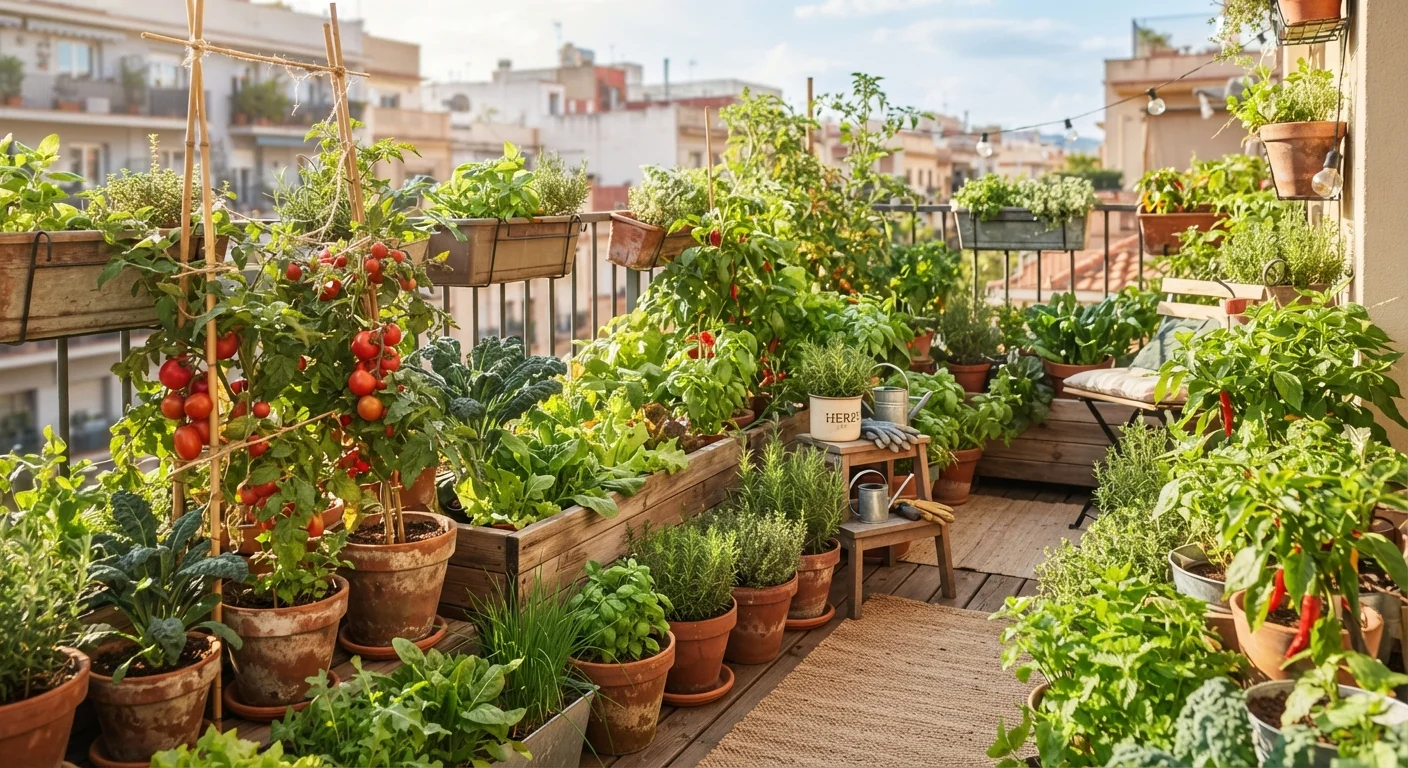
Why Small-Space Vegetable Gardening Works
The idea that you need a sprawling backyard to grow your own food is one of the most persistent myths in home gardening. In reality, many vegetables evolved to produce abundantly even under crowded conditions - and with intentional planning, a 6-by-4-foot patio, a sunny balcony railing, or a narrow strip beside a fence can yield fresh produce from late spring through fall.
Small-space gardening also tends to be more manageable for beginners. Fewer plants mean fewer variables to track, easier problem-solving, and a lower financial stake while you learn. If you're just getting started, our beginner's roadmap to starting a garden walks you through foundational steps before you invest in containers or seeds.
35M+
U.S. households growing food at home
According to the National Gardening Association, food gardening participation has grown steadily, with tens of millions of households now growing at least some of their own produce.
5 gal
Minimum pot size for cherry tomatoes
Horticultural guidance from cooperative extension programs consistently recommends a minimum 5-gallon container for compact tomato varieties to ensure adequate root development.
6 hrs
Daily sun most vegetables require
Most fruiting and root vegetables need a minimum of six hours of direct sunlight per day, according to standard guidance from university extension programs across the U.S.
Choosing the Right Vegetables
Not every vegetable adapts equally well to confined spaces. The most reliable performers share a few traits: relatively shallow root systems, short days-to-harvest, and compact above-ground growth.
- Leafy greens - Lettuce, spinach, arugula, and Swiss chard are among the easiest. They have shallow roots, tolerate partial shade better than most crops, and can be harvested leaf by leaf over weeks (a technique called cut-and-come-again).
- Radishes and beets - Radishes mature in as few as 25 days and occupy very little space. Beets need a slightly deeper pot (at least 12 inches) but deliver both edible roots and greens.
- Bush beans - Unlike pole beans, bush varieties stay compact and don't require staking. They produce well in an 8-to-10-inch-deep container.
- Cherry tomatoes - Dwarf or patio-bred varieties such as those labeled 'compact' or 'bush' produce heavily in 5-gallon or larger containers. Standard-sized tomatoes generally need at least 10-gallon pots and sturdy staking.
- Herbs - Basil, parsley, chives, and cilantro complement any vegetable container and use almost no extra space. They also attract beneficial insects that help with pollination.
Pairing certain plants together can stretch your space further. Our guide on companion planting combinations covers pairings that improve yields and naturally deter pests in tight quarters.
When growing in containers, prioritize varieties labeled 'dwarf,' 'patio,' 'bush,' or 'compact' - these are specifically bred for restricted root zones and tend to produce far better than standard varieties crammed into a pot.
Standard varieties are bred assuming unrestricted root spread; without enough room to establish a full root system, they allocate energy to survival rather than fruit production.
Sow a new small batch of fast-maturing crops like radishes or lettuce every two to three weeks rather than all at once - this 'succession planting' keeps you harvesting continuously instead of facing a glut followed by nothing.
Many beginners plant everything at the same time and end up with a single harvest window. Staggered sowing is the most effective way to extend productivity in a limited space.
Containers, Raised Beds, and Vertical Options
Your growing vessel matters as much as your plant choice. Here's a practical breakdown:
- Containers and pots
- Match container size to root depth. Leafy greens do fine in 6-8 inch depths. Tomatoes, peppers, and eggplants need at least 12-14 inches. Ensure every container has drainage holes - sitting water is the leading cause of root rot in potted vegetables.
- Raised beds
- Even a 2-by-4-foot raised bed gives you significantly more planting area than an equivalent number of individual pots, and soil temperature warms faster in spring. If you're weighing a raised bed against in-ground planting, our comparison of raised beds vs. in-ground planting clarifies the key trade-offs.
- Vertical growing
- Trellises, ladder planters, wall-mounted pocket planters, and railing-mounted boxes turn vertical surface area into productive growing space. Cucumbers, pole beans, and compact squash varieties climb readily when given support, freeing floor space for lower-growing crops beneath them.
Soil, Watering, and Feeding in Tight Quarters
Standard garden soil compacts in pots and drains poorly. Use a quality potting mix (not garden soil) for containers - these are formulated to stay loose and drain well while holding enough moisture for roots. For raised beds, a blend of topsoil, compost, and coarse material like perlite works well.
Add Perlite to Potting Mix for Better Drainage
Mixing in roughly 20% perlite (a lightweight volcanic mineral) to standard potting mix improves drainage and prevents the soil from becoming compacted over the season. It also slightly reduces the weight of large containers - a practical advantage on a balcony or rooftop. Look for it sold in bags alongside other soil amendments at garden centers.
Container plants dry out much faster than in-ground plants because the walls of a pot allow heat to transfer directly to the soil. During warm weather, small containers may need watering once or even twice daily. Push a finger an inch into the soil - if it feels dry at that depth, water thoroughly until it drains from the bottom.
Fertilizing matters more in containers because nutrients leach out with each watering. A balanced, slow-release granular fertilizer worked into the potting mix at planting gives plants a foundation. Follow up every three to four weeks with a liquid fertilizer during the growing season. If your plants look pale or growth stalls, nutrient deficiency is a common culprit. For drought-resilient strategies that also apply to container gardening, our article on drought-resilient gardening offers useful soil and mulching techniques.
Making the Most of Your Light
Sunlight is the resource you can least easily supplement. Before choosing what to grow, observe your space at different times of day and note how many hours of direct sun it receives.
- 6+ hours of direct sun: You can grow tomatoes, peppers, beans, cucumbers, and most fruiting vegetables.
- 4-6 hours: Stick with leafy greens, herbs, and root vegetables. Fruiting crops will likely underperform.
- Fewer than 4 hours: Even shade-tolerant crops will struggle. Consider supplemental grow lights for an indoor windowsill setup instead.
Reflective surfaces - a white wall, a light-colored fence - can bounce additional light onto plants placed nearby, which is worth factoring in when arranging your containers.
Check Weight Limits on Balconies and Rooftops
Wet potting soil is surprisingly heavy - a single 15-gallon container can weigh 60-80 pounds when watered. If you're gardening on an elevated structure such as a balcony or rooftop deck, check the load-bearing capacity before placing multiple large planters. When in doubt, consult a structural engineer or your building manager rather than guessing.
Common Mistakes and How to Avoid Them
A handful of predictable errors account for most small-space gardening disappointments:
- Overcrowding - The temptation to pack in as many plants as possible is understandable, but crowded plants compete for water, nutrients, and light. Follow spacing guidance on seed packets or plant tags - it exists for good reason.
- Inconsistent watering - Letting containers dry out completely and then drenching them stresses plants and causes problems like blossom end rot in tomatoes. Aim for consistent, moderate moisture.
- Skipping germination troubleshooting - If seeds aren't sprouting, temperature, moisture, and seed depth are usually the culprits. Our guide on why seeds fail to germinate pinpoints the most common fixable causes.
- Ignoring seasonal transitions - Small containers are vulnerable to early frosts. Plan your last harvest and container cleanup as temperatures drop, and consider what steps to take before winter arrives. Our article on preparing your garden for winter covers end-of-season container care.
Small-space vegetable gardening rewards observation and consistency more than elaborate technique. Start with two or three crops you genuinely enjoy eating, pay attention to water and light, and expand gradually as you gain confidence.