
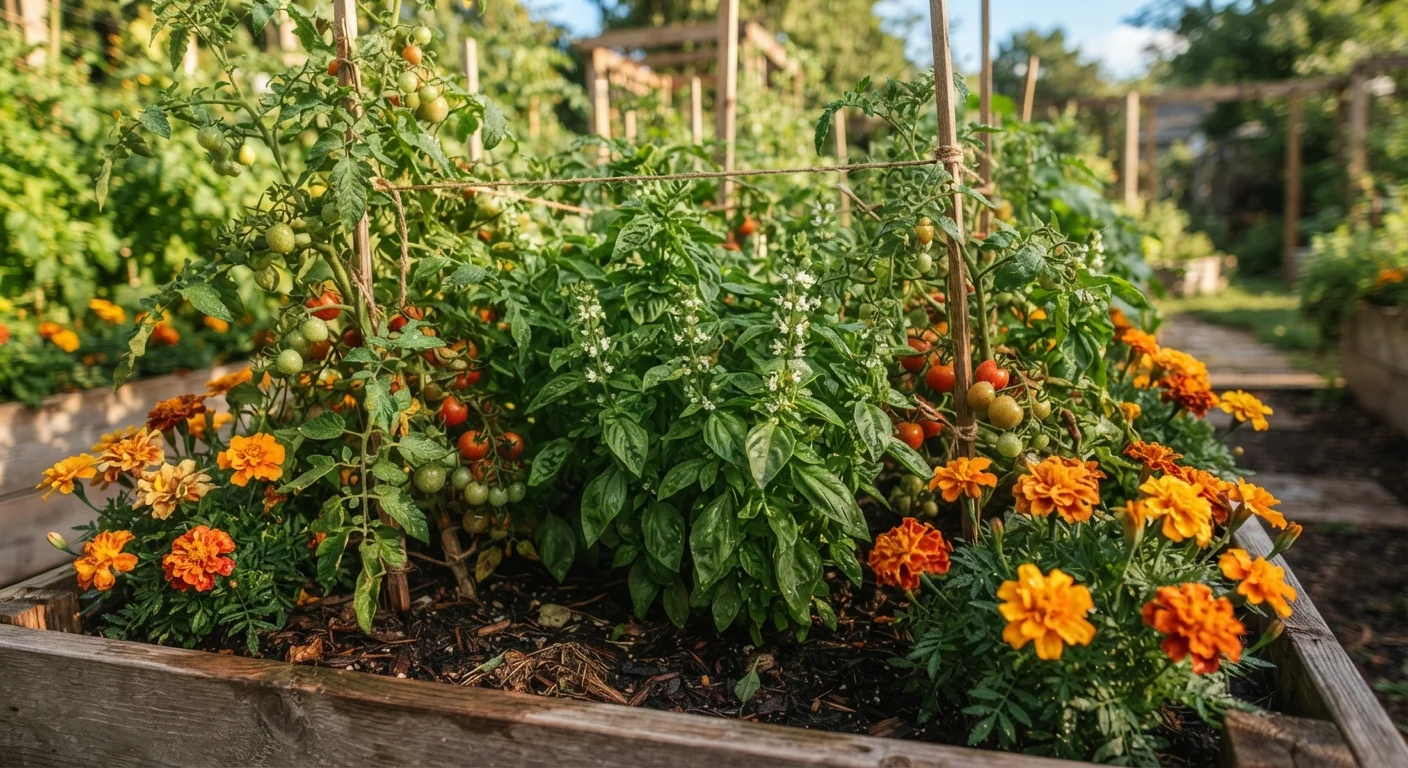
Why Plant Pairings Actually Matter
Companion planting is the practice of growing certain plants near each other to take advantage of naturally beneficial relationships. Some plants repel insects that damage their neighbors; others attract pollinators, fix nitrogen in the soil, or provide helpful shade. The approach is rooted in observation and long-standing agricultural tradition, and while results can vary depending on your soil, climate, and specific varieties, many of these pairings have earned their reputation through consistent real-world performance.
If you're just getting started, our beginner's garden roadmap covers soil prep and layout basics that will make companion planting even more effective. The pairings below are among the most reliable and are well-suited to both in-ground beds and container setups.
Tomatoes and Basil
This is one of the most widely used companion pairings in home vegetable gardens. Basil is believed to repel thrips and aphids - two insects that regularly damage tomato plants - and may also deter the tomato hornworm. Planting basil at the base of tomato plants is simple: space a few basil plants about 10-12 inches from each tomato stem, keeping them close enough to benefit but not so tight that they crowd the roots.
Both plants prefer similar growing conditions - full sun and regular watering - which makes managing them together straightforward. As a bonus, harvesting fresh basil alongside ripe tomatoes is a natural combination in the kitchen as well.
Basil planted near tomatoes may help deter aphids, thrips, and hornworms naturally.
The Three Sisters: Corn, Beans, and Squash
Used for centuries by Indigenous farmers in North America, the Three Sisters combination demonstrates how three plants can support one another structurally and nutritionally. Corn grows tall and provides a natural trellis for climbing beans. Beans fix atmospheric nitrogen into the soil, feeding both the corn and the squash. Squash spreads low across the ground, shading the soil to retain moisture and suppress weeds.
This trio works best in a dedicated garden bed with enough space for all three to grow fully. Plant corn first, then beans around the stalks once the corn is about 6 inches tall, followed by squash on the outer edges.
Each plant in the Three Sisters trio actively supports the growth of the other two.
Carrots and Onions
Carrots and onions are often planted together because each appears to deter a pest that troubles the other. The strong scent of onions is thought to confuse carrot flies, while carrot foliage may help mask the smell of onions from onion flies. This mutual masking effect makes the pairing a smart choice in beds prone to both pests.
Both crops are root vegetables and don't compete much above ground, making them practical neighbors in narrow or structured beds. If you want to explore key gardening terms like succession planting, this pair is a great test case.
Onions and carrots may mutually mask the scents that attract each other's common pests.
Roses and Garlic
Garlic planted at the base of rose bushes is a traditional strategy for managing aphids, one of the most persistent problems for roses. The sulfur compounds in garlic are thought to repel aphids and may also help reduce the incidence of fungal diseases like black spot when garlic is planted close to the rose's root zone.
Plant garlic cloves 3-4 inches deep around the drip line of rose bushes in fall for a spring harvest, or plant in early spring where winters are mild. Garlic is unobtrusive and won't compete significantly with established roses for water or nutrients.
Garlic's sulfur compounds may help protect roses from aphids and some fungal problems.
Marigolds and Almost Everything
French marigolds (Tagetes patula) are perhaps the most versatile companion plant in the garden. Their roots produce a substance that suppresses certain soil nematodes - microscopic pests that damage root systems. Above ground, their scent deters whiteflies and aphids, and their bright flowers attract beneficial insects like hoverflies and parasitic wasps that prey on common garden pests.
Plant marigolds as a border around vegetable beds or tuck them between rows of susceptible crops like tomatoes, peppers, and brassicas. For best nematode suppression, allow marigolds to grow densely for a full season before turning them into the soil.
Marigold roots suppress harmful nematodes while their flowers attract beneficial pest-eating insects.
Cucumbers and Dill
Dill attracts beneficial insects - particularly parasitic wasps and hoverflies - that help keep cucumber beetle populations in check. It also draws in pollinators, which cucumbers rely on heavily for fruit production. Planting dill nearby (but not directly touching) cucumber vines creates a more insect-friendly environment that works in your favor.
One important note: avoid planting dill directly next to fennel, as the two can cross-pollinate and affect flavor. Also keep dill at a moderate distance from mature tomato plants - while young dill benefits tomatoes, mature dill can inhibit their growth. This kind of nuance is part of what makes companion planting an ongoing learning process.
Dill near cucumbers attracts beneficial insects and supports pollination for better fruit set.
Putting It All Together
Companion planting works best when you think of your garden as an interconnected system rather than isolated rows. Group compatible plants thoughtfully, leave adequate space for air circulation, and observe how your specific plants respond over a season. Results can differ by region, so keep notes and adjust year to year.
Start Small and Observe Results
If you're new to companion planting, try one or two pairings in a single bed rather than redesigning your entire garden at once. Track what you plant where, and note any changes in pest pressure or plant health over the season. Real conditions vary by region and microclimate, so your own observations over time are the most reliable guide you have.
For gardeners working with limited space, many of these pairings translate well to containers and raised beds - see our guide on growing vegetables in a small space for layout ideas. Pairing companion planting with good soil management - covered in our article on compost, mulch, and fertiliser - gives your plants the strongest possible foundation.