
Why the Confusion Exists
Walk into any garden center and you'll find bags of compost, mulch, and fertiliser stacked side by side - often without much explanation of what makes each one different. All three are sold as ways to help plants grow, which is technically true, but they work through completely different mechanisms and serve different stages of plant health.
Understanding those differences saves you money, prevents over-application, and means your garden actually gets what it needs. Think of it this way: compost feeds the soil, mulch protects it, and fertiliser feeds the plant directly. Each job matters, but they're not interchangeable. For more context on what healthy soil is made of in the first place, see our guide to garden soil composition.
Compost: Building Soil from the Ground Up
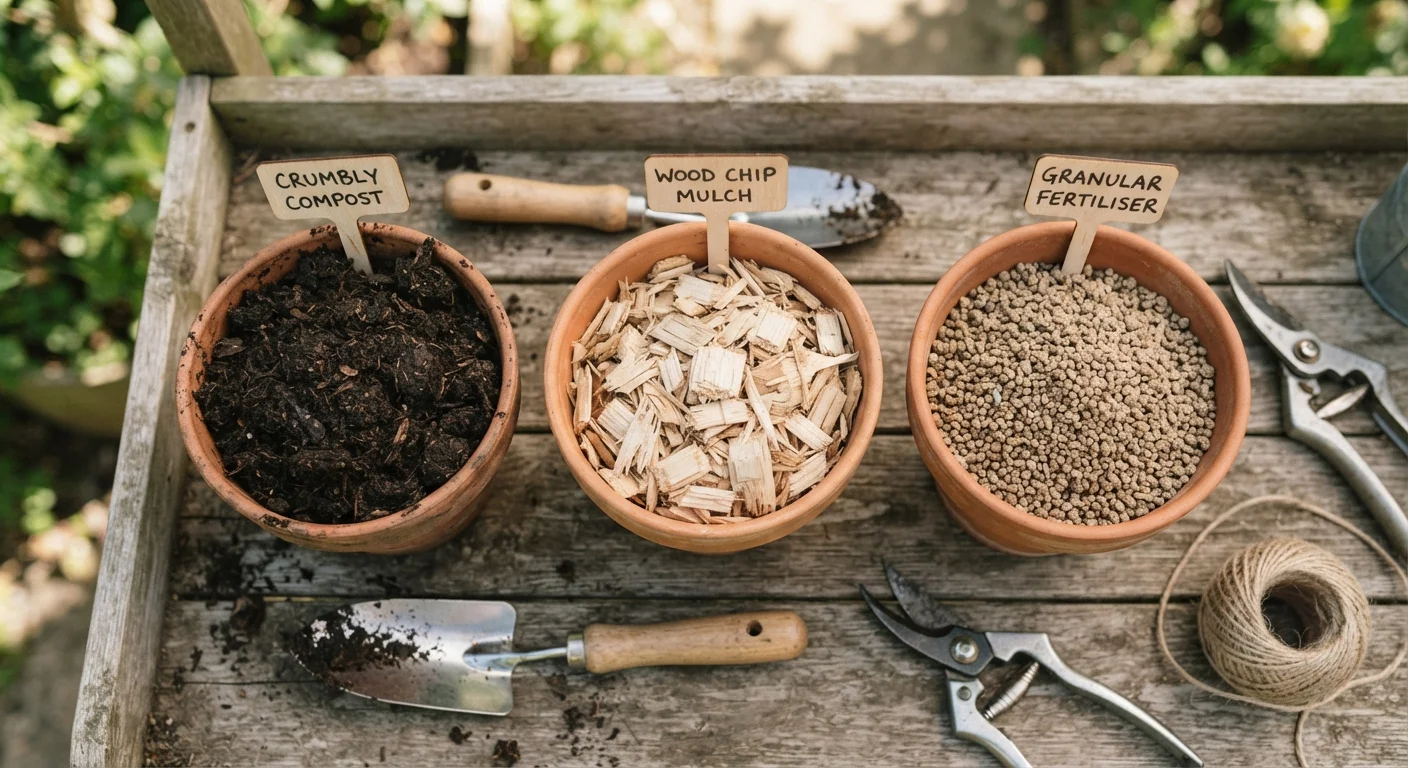
Compost is decomposed organic matter - kitchen scraps, yard waste, leaves, and similar materials broken down by microbes into a dark, crumbly material sometimes called humus. When you mix compost into your soil or spread it on top, you're improving the soil itself, not just feeding the plants in it.
Compost does several things at once:
- Adds a wide range of macro- and micronutrients in slow-release form
- Improves drainage in clay-heavy soils and water retention in sandy soils
- Supports beneficial microbial activity that makes nutrients more available to plant roots
- Raises or stabilizes soil pH gradually over time
Compost is most effective when worked into the top few inches of soil before planting, or spread as a top dressing around established plants in spring or fall. It won't deliver a quick nutritional jolt the way fertiliser does, but it builds lasting soil quality that benefits every plant in the bed. This is especially relevant if you're deciding between raised beds and in-ground planting, since both setups benefit from compost incorporation.
Starting Your Own Compost Pile
You don't need special equipment to make compost at home. A simple pile or basic bin works fine. Aim for a mix of 'greens' (vegetable scraps, grass clippings) and 'browns' (dry leaves, cardboard). Turn it every week or two and keep it about as moist as a wrung-out sponge. Avoid adding meat, dairy, or oily foods, which can attract pests.
Mulch: Protection for the Soil Surface
Mulch is any material laid on top of the soil - it doesn't go into the soil. Common types include wood chips, straw, shredded leaves, bark, and even inorganic options like gravel or landscape fabric. The key thing to understand is that mulch works by covering the ground, not by feeding it.
A 2-4 inch layer of mulch:
- Slows moisture evaporation, reducing how often you need to water
- Insulates soil against temperature extremes in both summer and winter
- Suppresses weed germination by blocking light
- Prevents soil compaction from rain and foot traffic
Organic mulches like wood chips and straw do break down gradually, adding some organic matter to the soil - but that's a slow side effect, not their primary job. Apply mulch after planting and keep it a few inches away from plant stems to prevent rot. Refresh the layer each season as it breaks down.
Watch Out for 'Mulch Volcanoes'
Piling mulch directly against tree trunks or plant stems - a common mistake sometimes called a 'mulch volcano' - traps moisture against the bark and can lead to rot, disease, and pest damage over time. Always leave a few inches of clear space around the base of any plant when applying mulch.
Fertiliser: Targeted Nutrition on Demand
Fertiliser delivers concentrated plant nutrients - primarily nitrogen (N), phosphorus (P), and potassium (K), shown on packaging as an N-P-K ratio. Unlike compost, fertiliser does not improve soil structure or support soil biology. Its job is to give plants a faster, more precise nutritional boost when they need it.
Fertilisers come in two main forms:
- Slow-release (granular)
- Broken down gradually in the soil over weeks or months; lower risk of over-application.
- Fast-release (liquid or soluble)
- Absorbed quickly through roots or leaves; useful when plants show immediate deficiency symptoms, but easier to over-apply.
Fertiliser is most useful for heavy-feeding plants (like tomatoes or corn), container plants where nutrients leach out with watering, or when a soil test reveals a specific deficiency. Over-fertilising - especially with nitrogen - can burn plants, cause excessive leafy growth at the expense of fruit or flowers, and contribute to nutrient runoff into local waterways.
Keeping track of when to fertilise throughout the year becomes much easier with a year-round garden maintenance checklist.
| Compost | Mulch | Fertiliser | |
|---|---|---|---|
| Primary function | Improves soil structure and biology | Protects soil surface | Delivers concentrated plant nutrients |
| Where it's applied | Mixed into or top-dressed on soil | Laid on top of soil surface | Mixed into soil or applied as liquid |
| Speed of effect | Slow, cumulative over seasons | Immediate physical protection | Fast (liquid) or gradual (granular) |
| Improves soil long-term | Yes - significantly | Partially, as organic types decompose | No - nutrients only, no structure change |
| Risk of over-application | Low - rarely causes harm | Low - too thick can restrict air | Moderate to high - can burn plants |
| Best time to apply | Spring or fall | After planting; refresh each season | At planting or during active growth |
Using All Three Together
The most productive approach for most home gardens is to treat compost, mulch, and fertiliser as partners rather than alternatives. A practical routine might look like this:
- In spring: Work compost into planting beds to refresh soil structure and nutrients after winter.
- At planting time: Add a slow-release fertiliser to the bed if a soil test suggests nutrient gaps, especially for heavy feeders.
- After planting: Apply a 2-3 inch layer of mulch around plants to conserve moisture as temperatures rise.
- Mid-season: Top-dress with a liquid fertiliser if plants show pale leaves or slow growth.
If you're experimenting with companion planting, a well-amended bed gives all your plant pairings a stronger foundation from the start. The goal isn't to apply more of everything - it's to understand what each amendment does so you use the right one at the right time.
2-4 inches
Recommended mulch layer depth
University extension programs generally recommend this depth to effectively suppress weeds and retain soil moisture without smothering roots.
~6 months
Typical backyard composting time
Home compost piles that are turned regularly and kept moist generally produce usable compost within three to six months, according to cooperative extension guidance.