
The Four Core Components of Soil
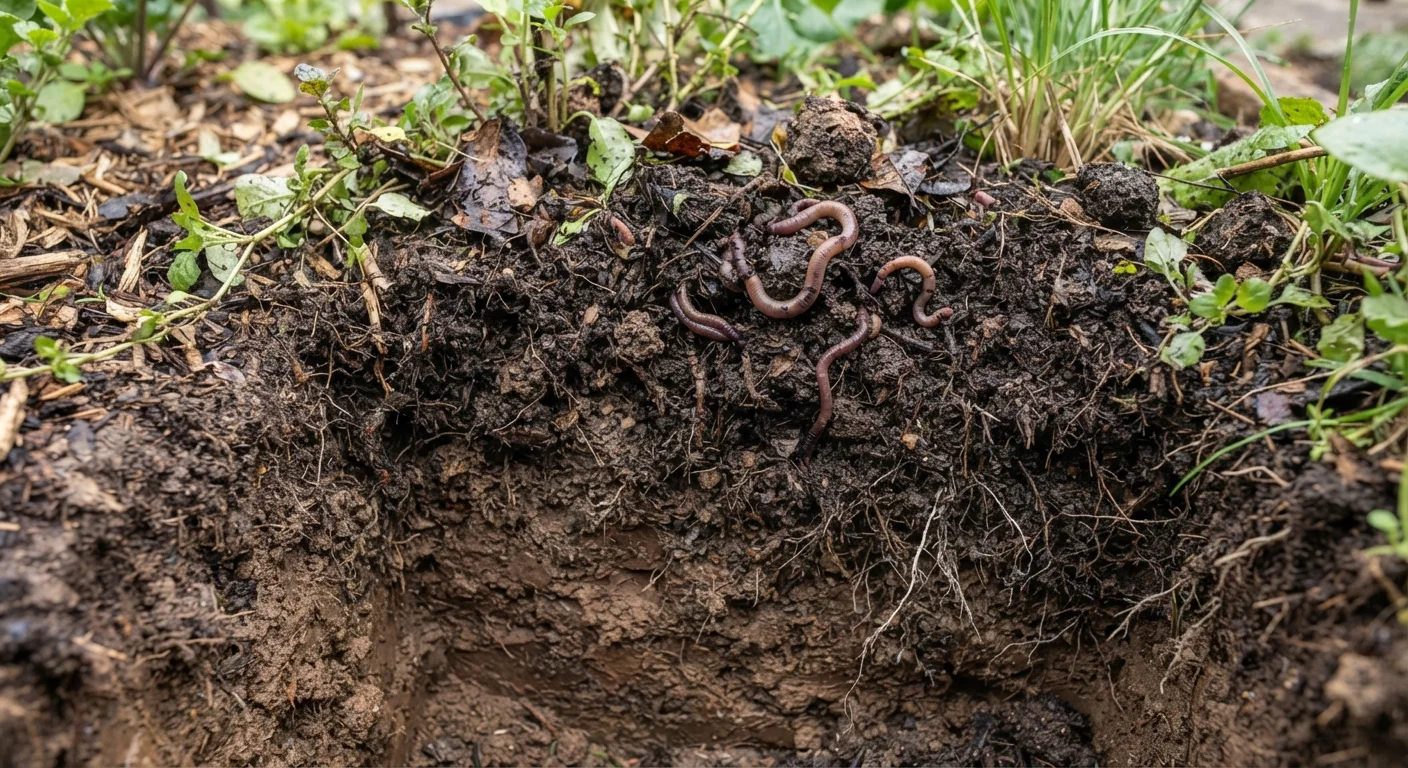
Dig a handful of soil from any yard and you're holding a surprisingly complex material. Healthy garden soil is made of four main components working together: mineral particles, organic matter, water, and air. A thriving soil also contains a vast community of living organisms - bacteria, fungi, earthworms, and insects - that keep the whole system running.
In a well-structured soil, roughly 45% is mineral particles, 5% is organic matter, and the remaining 50% is pore space filled with varying amounts of water and air. That pore space is critical: roots need both water and oxygen to grow, and a soil that's either waterlogged or bone-dry shuts plant growth down.
~1 billion
Bacteria in a teaspoon of healthy soil
USDA Natural Resources Conservation Service estimates that a single teaspoon of productive soil contains up to one billion bacteria, illustrating how biologically active healthy soil is.
5%
Organic matter in ideal garden soil
Most soil scientists consider around 5% organic matter content a benchmark for fertile, well-structured garden soil, though many garden soils start below this level.
50%
Pore space in well-structured soil
Roughly half of a healthy soil's volume is pore space - channels that hold air and water, both of which roots need to function.
If you're curious about how soil fits into the bigger picture of starting a new planting space, our beginner's garden roadmap walks through soil preparation as one of the key first steps.
Sand, Silt, and Clay: What Each One Does
The mineral portion of soil is divided into three particle sizes, and the ratio between them - called soil texture - shapes almost everything about how your soil behaves.
- Sand has the largest particles. Sandy soil drains fast and warms up quickly in spring, but it holds little water or nutrients, so plants can dry out rapidly.
- Silt particles are medium-sized and feel smooth or silky when wet. Silt holds moisture and nutrients better than sand and is quite fertile, but it can compact and crust over on the surface.
- Clay has the smallest, flattest particles. Clay soil holds nutrients and water well - sometimes too well, leading to poor drainage and waterlogging. When dry, it can become hard and cracked.
The ideal garden texture is called loam, which contains a workable balance of all three. Loam drains adequately, retains enough moisture for roots, and holds nutrients without drowning plant roots. Most garden plants thrive in it. You can learn more about the terminology used to describe soils in our gardening glossary for beginners.
Try the Simple Jar Test at Home
Fill a clear jar two-thirds with your garden soil and the rest with water. Shake it vigorously, then let it sit undisturbed for 24 hours. Sand settles to the bottom first, silt layers in the middle, and clay settles on top. The relative thickness of each layer gives you a visual estimate of your soil texture - no equipment needed.
Organic Matter: The Most Improvable Ingredient
Organic matter is the partially or fully decomposed remains of plants, animals, and microorganisms. It typically makes up only a small fraction of soil by volume, but its influence is outsized. Organic matter acts like a sponge in sandy soil, improving water retention. In clay soil, it opens up structure and improves drainage. It feeds soil microbes, supplies slow-release nutrients, and helps maintain a stable, crumbly texture that roots can easily penetrate.
The most practical way to add organic matter is compost. Even working in a 2-3 inch layer of finished compost each season makes a measurable difference over time. For a clear explanation of how compost differs from other soil amendments, see our article on compost, mulch, and fertiliser.
Organic Matter Takes Time to Build
Adding compost once won't transform your soil overnight. Organic matter breaks down and is used up by plants and microbes, so it needs to be replenished regularly. Many experienced gardeners add a layer of compost each spring and fall as a simple annual habit. Consistent, modest additions over several seasons produce more lasting results than a single large application.
If drought resilience is a concern in your area, improving organic matter levels is one of the most effective steps you can take - a topic covered in our guide to making your garden more drought-resilient.
How to Get a Quick Read on Your Soil
You don't need a lab to get a useful sense of your soil texture. Try the squeeze test: take a moist handful of soil and squeeze it firmly, then open your hand.
- If it falls apart immediately when you poke it, you likely have sandy soil.
- If it holds its shape and you can roll it into a ribbon between your thumb and fingers, clay is dominant.
- If it holds its shape briefly but crumbles when you poke it, you're probably working with loam or a mix close to it.
For a more precise picture - especially if you're troubleshooting poor plant performance - consider a soil test through your local university cooperative extension service. These tests typically measure pH, nutrient levels, and sometimes texture, and they come with region-specific recommendations. Whether you're gardening in raised beds or in-ground, understanding your soil texture helps you choose the right amendments. Our article on raised beds vs. in-ground planting explains how soil control differs between the two approaches.