
Choosing the Right Spot
Before you buy a single seed, spend a few days watching how sunlight moves across your yard. Most food plants and many ornamentals need six or more hours of direct sun daily. A patch that looks bright in the morning may be deep in shade by afternoon.
Beyond sun, consider these factors:
- Proximity to water: You'll water frequently at first, so choosing a spot near an outdoor faucet saves real effort.
- Drainage: Avoid low-lying areas where water pools after rain. Roots sitting in waterlogged soil are prone to rot.
- Level ground: A reasonably flat area reduces erosion and makes watering more even.
- Accessibility: A bed you can reach from all sides is far easier to maintain than one you need to step into.
Start smaller than you think you need - a 4×8-foot raised bed or a 10×10-foot in-ground plot is plenty for a first season. You can always expand once you're comfortable with the basics, much like the approach described in our guide to learning new skills from scratch.
The Shade Test Worth Doing
On a sunny day, check your potential garden spot at 9 a.m., noon, and 3 p.m. and note how much direct sun it receives at each time. This three-point check gives you a reliable picture of daily sun exposure without any special tools.
Understanding Your Soil
Soil is where your plants live, so it deserves real attention. Most native yard soil benefits from improvement before you plant. The simplest upgrade is mixing in several inches of compost, which loosens dense clay, improves drainage in sandy ground, and adds slow-release nutrients.
pH
A scale from 0 to 14 that measures how acidic or alkaline your soil is. Most vegetables grow best in slightly acidic to neutral soil, around 6.0-7.0 on the scale.
Compost
Decomposed organic material - like food scraps, leaves, and plant trimmings - that enriches soil with nutrients and improves its texture.
Hardiness Zone
A USDA geographic designation that indicates the average minimum winter temperature in your area, used to determine which plants can survive year-round where you live.
Frost Date
The average date of the last spring frost or first fall frost in your area. Knowing these dates tells you when it's safe to plant cold-sensitive crops outdoors.
Raised Bed
A contained planting area built above ground level, typically framed with wood or other materials and filled with quality growing mix. It gives you full control over your soil from the start.
Annual
A plant that completes its full life cycle - germinating, flowering, setting seed, and dying - within a single growing season. Most vegetables are annuals.
For a clearer picture of what you're working with, consider a basic soil test. Many cooperative extension offices offer inexpensive testing kits, or you can purchase a simple home kit. A test typically tells you pH and the levels of major nutrients. Most vegetables prefer a soil pH between 6.0 and 7.0.
If your soil pH is off, here's what that generally means:
- Too acidic (below 6.0): Adding ground limestone can raise pH over time.
- Too alkaline (above 7.5): Elemental sulfur or acidifying compost can help bring it down.
For those building raised beds, a blend of topsoil, compost, and coarse sand or aged wood chips creates a well-draining, nutrient-rich medium from day one. Our home improvement hub covers related outdoor project fundamentals if you're also thinking about landscaping or bed construction.
Planning What to Grow
The best plants for a beginner are ones that forgive small mistakes, grow relatively fast, and produce something you'll actually want to eat or enjoy. A few reliable choices to consider:
- Vegetables: Radishes, green beans, zucchini, cherry tomatoes, and kale are forgiving and rewarding.
- Herbs: Basil, chives, mint (in a container - it spreads aggressively), and parsley grow quickly and get used in the kitchen.
- Flowers: Marigolds and zinnias are easy annuals that also help deter common garden pests.
Match plants to your season. Cool-season crops (lettuce, peas, spinach) grow best in spring and fall when temperatures are mild. Warm-season crops (tomatoes, cucumbers, peppers) go in after your area's last frost date and need the heat of summer to produce well.
Think through spacing carefully - overcrowded plants compete for light, water, and nutrients, which stunts growth and invites disease. Seed packets and plant tags include spacing recommendations; follow them even when seedlings look tiny at planting time.
Native Plants Are Worth Considering
Plants native to your region are often more drought-tolerant, pest-resistant, and wildlife-friendly than exotic varieties. If you're adding ornamentals or ground cover alongside edibles, your local cooperative extension office can suggest native species well-suited to your area's climate and soil.
Planting and Basic Care
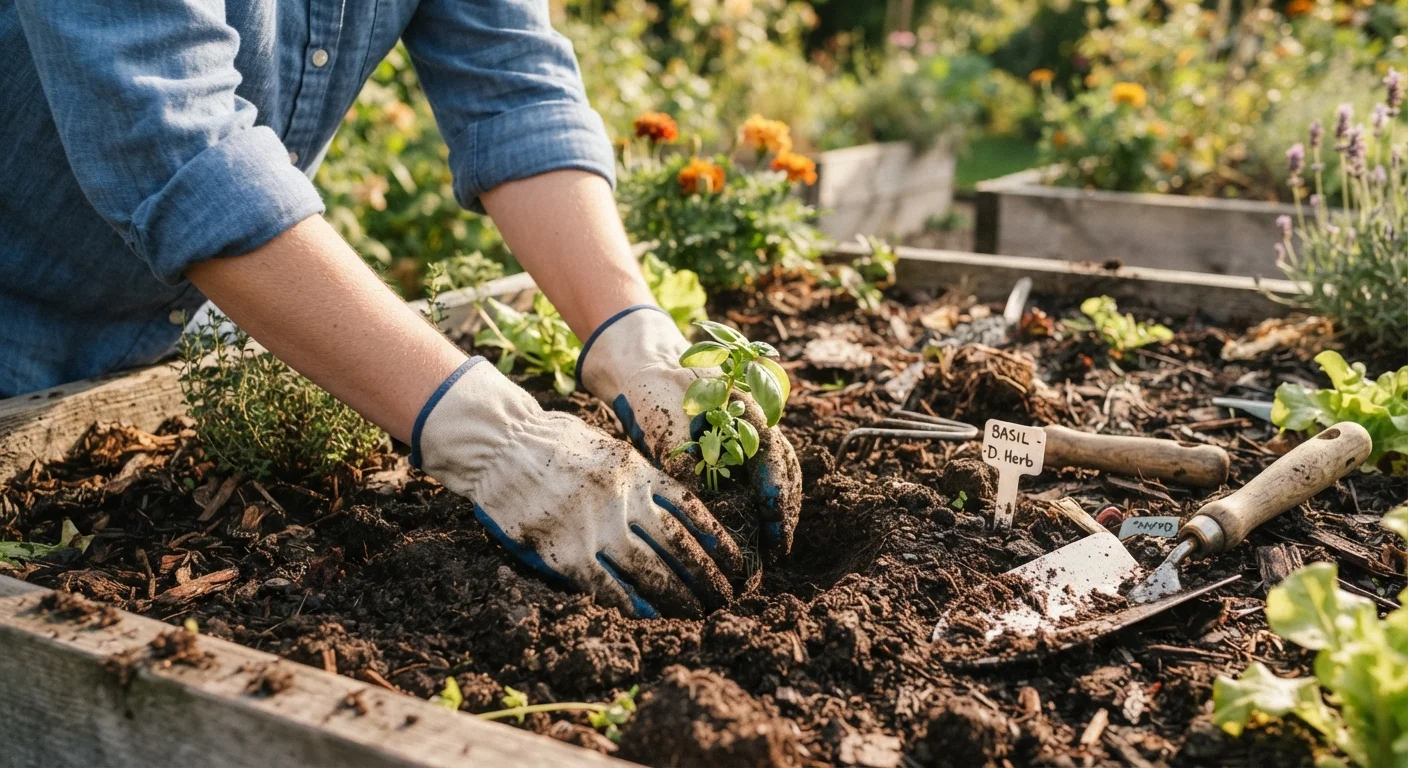
Once you're ready to plant, the process is straightforward. Dig a hole slightly larger than the root ball or as deep as the seed packet specifies. Set the plant or seed in place, firm the soil around it gently, and water immediately after planting.
Routine care comes down to three main habits:
- Watering consistently: Aim for about one inch of water per week. Water at the base of plants rather than overhead to reduce fungal disease risk. Our guide comparing hand watering and irrigation systems can help you decide on your approach as your garden grows.
- Weeding regularly: Weeds compete directly with your plants. A quick five-minute pass through the garden every few days prevents them from getting established.
- Monitoring for pests: Check the undersides of leaves weekly. Catching aphids, caterpillars, or fungal spots early makes them much easier to manage without resorting to harsh chemicals.
Adding a two- to three-inch layer of mulch around your plants conserves moisture, moderates soil temperature, and suppresses weeds - one of the most effective and underused habits in beginner gardens.
Common Beginner Mistakes to Avoid
Understanding what typically goes wrong saves you a frustrating first season.
Overwatering Is the #1 Beginner Mistake
Wilting plants often prompt new gardeners to water more - but wilting can also be a sign of root rot from overwatering. Before reaching for the hose, push a finger an inch into the soil. If it's still moist, hold off. Roots need oxygen as well as water, and saturated soil deprives them of both.
- Overwatering: More seedlings die from too much water than too little. Check soil moisture an inch below the surface before watering - if it still feels damp, wait another day.
- Planting too much too soon: A large garden becomes overwhelming quickly. A manageable plot you tend well outperforms a sprawling one you can't keep up with.
- Skipping soil prep: Planting directly into poor, compacted soil without amendment is the most common reason beginner gardens underperform.
- Ignoring the frost calendar: Planting warm-season crops too early can result in stunted growth or plant loss. Your local cooperative extension service publishes frost dates for your specific area - it's worth bookmarking.
- Not labeling plants: Seedlings look remarkably similar. Simple markers or stakes save real confusion later in the season.
Starting a garden is genuinely one of the most satisfying projects a homeowner can take on. With the right spot, healthy soil, and a handful of well-chosen plants, you'll be harvesting or enjoying blooms within a single season. Take it one step at a time, and don't be discouraged by small setbacks - every experienced gardener has had plants fail and learned from it.