
What Each Approach Actually Involves
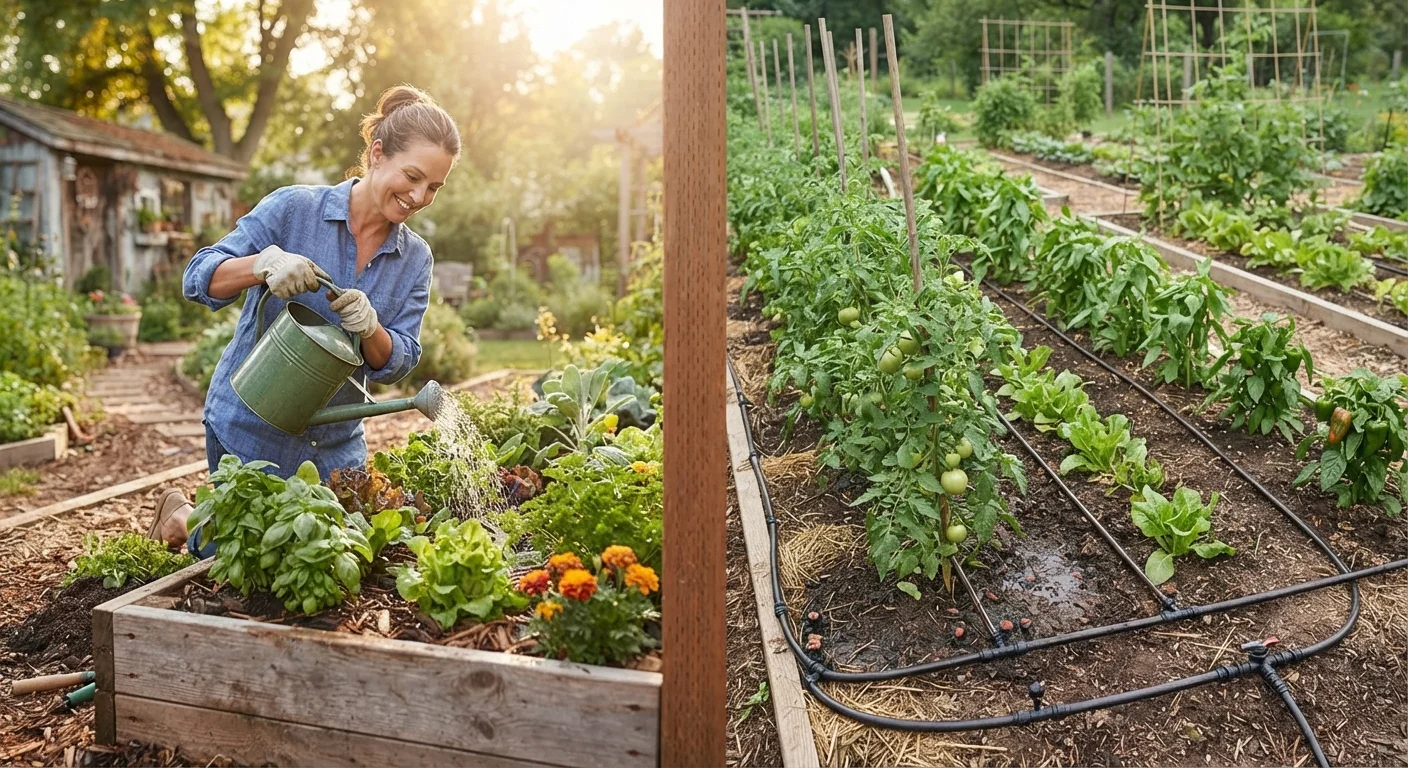
Hand watering means delivering water manually - with a watering can, a garden hose, or a hose fitted with an adjustable nozzle. You control exactly where the water goes and how much each plant receives. It's personal, flexible, and requires no installation whatsoever.
An irrigation system, in the context most home gardeners encounter, typically means a drip irrigation setup or soaker hose network. These deliver water slowly and directly to the root zone through tubing laid along garden beds. More advanced setups include a timer, which automates the entire process. If you're just beginning to think about your outdoor space, our beginner's garden roadmap covers the fundamentals before you commit to any watering method.
| Criterion | Watering by Hand | Irrigation System |
|---|---|---|
| Upfront cost | Very low | Low to moderate (DIY) or higher (professional) |
| Setup effort | None | Moderate - tubing, fittings, optional timer |
| Daily time required | 10-30 min depending on garden size | Minimal once installed |
| Consistency | Depends on gardener's schedule | High, especially with a timer |
| Water efficiency | Variable - depends on technique | Generally higher - less evaporation |
| Best garden size | Small to medium | Medium to large |
| Flexibility | High - adjust instantly per plant | Lower - requires manual override for changes |
Cost and Setup: What to Expect
Hand watering has almost no upfront cost. A basic watering can runs a few dollars; even a quality hose nozzle is inexpensive. There's nothing to install and nothing to maintain beyond the equipment itself.
A drip irrigation system requires a modest upfront investment. A simple DIY kit for a raised bed or small garden is often quite affordable, but costs scale with the size of your garden and whether you add a timer or pressure regulator. Professional installation of a full-yard system is significantly more expensive. That said, the water savings over time can offset some of that cost - drip systems reduce evaporation and runoff compared with overhead or hand watering. For broader context on keeping your garden healthy through dry periods, see our guide on making your garden more drought-resilient.
~50%
Water savings with drip vs. overhead watering
The EPA's WaterSense program estimates drip irrigation can use up to 50% less water than conventional sprinkler or overhead methods.
~30%
Household water used outdoors on average
According to the EPA, outdoor water use accounts for roughly 30% of total household water consumption in the US, rising higher in arid regions.
Consistency and Plant Health
Plants generally do best with consistent, appropriately timed watering - and this is where the two methods diverge most clearly. Hand watering depends on the gardener's schedule and judgment. Miss a hot afternoon or a stretch of dry days, and some plants will show it. On the other hand, attentive hand watering lets you adjust instantly if a plant looks stressed or waterlogged.
An irrigation system, especially one with a timer, delivers water on a predictable schedule regardless of how busy your week gets. The risk, however, is set-it-and-forget-it thinking: timers don't account for recent rainfall, and overwatering is as harmful as underwatering. Knowing how much your garden actually needs is critical either way - our article on how much water your garden actually needs walks through the key indicators to watch for.
Timers Don't Replace Observation
Even with an automated system, it's worth checking soil moisture regularly - a quick finger-test an inch below the surface tells you more than any schedule. Rainfall, seasonal temperature swings, and plant growth all change how much water your garden actually needs. Adjust your timer or watering routine as conditions shift, not just at the start of each season.
Which Method Suits Your Garden Best?
Garden size is the most practical deciding factor. A few pots on a patio or a single small raised bed are easy to water by hand in minutes. As the garden grows - multiple beds, mixed plantings, a lawn border, or a vegetable patch - hand watering becomes increasingly time-consuming and less consistent.
If you're weighing whether to start with raised beds or in-ground planting, that decision also shapes which watering method makes sense; our comparison of raised beds vs. in-ground planting explores that question in detail. As part of your ongoing yard care, it's also worth noting that your watering approach fits into a larger seasonal routine - the year-round garden maintenance checklist can help you stay on top of all of it.
Ultimately, many gardeners use both: a drip system for established beds and hand watering for new transplants, containers, or anything that needs closer attention. Starting simple is rarely the wrong call.