
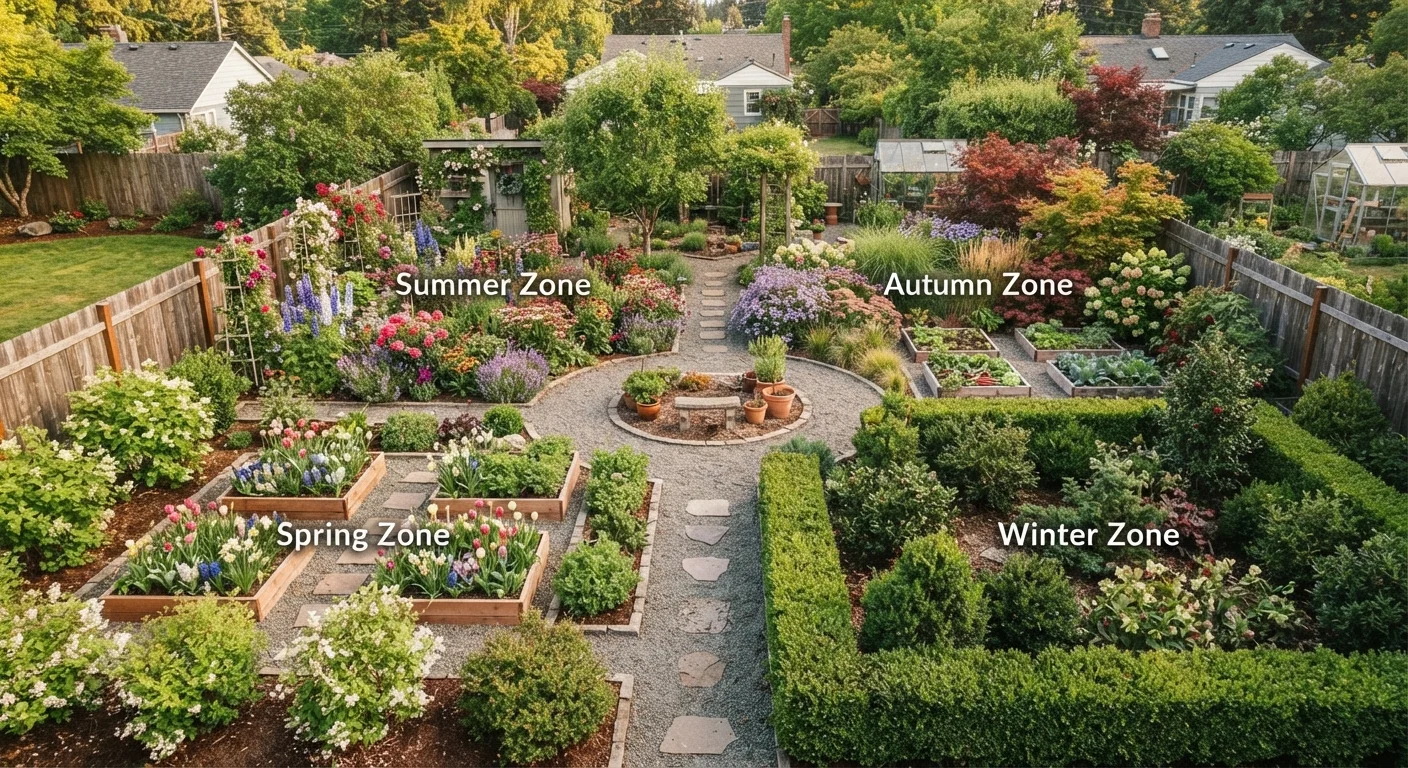
Why Seasonal Garden Care Beats Occasional Scrambles
Most garden problems - pest infestations, poor blooms, compacted soil - don't appear overnight. They build slowly between seasons when nothing seems urgent. Breaking your garden care into four focused seasonal rounds means smaller tasks, less stress, and plants that genuinely thrive rather than just survive.
This checklist works whether you have a sprawling backyard or a few raised beds. If you're just getting started, our beginner's garden roadmap covers the foundational setup steps before you dig into seasonal routines. For homeowners juggling indoor and outdoor upkeep, the seasonal home maintenance checklist pairs well with this one.
Use the tools and materials listed below to work through each season efficiently.
Garden fork or trowel
Turning compost into soil, dividing perennials, and planting bulbs.
Bypass pruners
Making clean cuts on stems, shrubs, and spent flowers without damaging live tissue.
Soil pH test kit
Checking whether your soil needs amendment before planting in spring.
Garden hose with adjustable nozzle
Delivering targeted watering at the base of plants to reduce fungal risk.
Mulch or compost
Insulating soil, retaining moisture, and improving soil structure across all seasons.
Frost cloth or burlap
Protecting tender plants and evergreens from wind, ice, and hard freezes in fall and winter.
How to Use This Checklist
Work through each seasonal group at the start of that season - not when you notice a problem. Items marked must are non-negotiable for basic plant health. Should items improve results meaningfully and are worth doing when time allows. Nice-to-have items are enhancements that reward the extra effort.
Understanding what inputs your plants need each season matters just as much as timing. Our guide to compost, mulch, and fertiliser explains the difference between these three staples and when each is most useful. If your yard includes a lawn, it's also worth reading the case for and against lawn grass - lawn care has its own seasonal rhythm that overlaps with the tasks below.
Don't Prune at the Wrong Time
Pruning spring-blooming shrubs like lilacs and azaleas in fall or early spring will remove this season's flower buds. Wait until just after they finish blooming to prune. When in doubt, research the specific plant before cutting.
Avoid Overwatering in Summer Heat
Soggy soil in warm weather is a leading cause of root rot and fungal disease. Check soil moisture an inch below the surface before watering - if it's still damp, hold off another day. Container plants dry out faster and need more frequent monitoring.
Work through the full seasonal checklist below, then revisit it at the turn of each new season.
Spring
Summer
Fall
Winter
Setting Your Garden Up for Long-Term Success
Consistency matters more than perfection. Missing one fall task - say, forgetting to mulch a bed - won't ruin your garden, but skipping fall prep repeatedly will show up in weaker plants, poorer blooms, and more pest pressure each spring. Small, regular efforts compound over time in ways that a single intense cleanup session cannot replicate.
Disconnect Hoses Before the First Freeze
Leaving a garden hose connected to an outdoor faucet when temperatures drop can cause water to back up and freeze inside your home's pipes, leading to costly damage. Disconnect hoses, drain any residual water, and shut off the outdoor water supply valve before nighttime temperatures consistently drop to freezing.
Fall preparation deserves particular attention. Our detailed guide on preparing your garden for winter walks through exactly what to cut back, cover, lift, and store so your plants come back stronger. And don't overlook the area just outside your garden beds - keeping gutters clear is a related fall task that protects the soil and structures around your planting areas from water damage.
Return to this checklist each season as a quick audit. Tick off what's done, note what needs attention, and your yard will reward you with more colour, better harvests, and far fewer emergencies.