
Why Winter Prep Makes a Real Difference
A little effort in fall pays dividends all through the growing season ahead. Plants that are properly protected, cut back at the right time, and supported by well-amended soil tend to emerge from winter more vigorously - with fewer pest problems and less dieback to deal with. Skipping winterization doesn't just risk losing individual plants; it can also mean a slower, more labor-intensive start in spring.
Winter preparation is especially important if your garden includes any plants that are on the edge of cold-hardiness for your region. Understanding your hardiness zone and what it means for your plants helps you make smarter decisions about what needs protection and what can fend for itself. For a broader view of garden tasks across all four seasons, the seasonal garden maintenance checklist is a useful companion resource.
Timing Matters: Know Your First Frost Date
Most winter prep tasks should be completed before your area's average first hard frost (28°F or below). Look up your local frost dates through your cooperative extension service or a reliable weather resource. Leaving tender plants or exposed water lines unprotected even one night too long can cause significant damage. Your USDA hardiness zone is also a useful guide for knowing how cold winters typically get in your area.
If you're brand new to gardening and still figuring out what's growing in your beds, start with key gardening terms every beginner should know before diving into these steps - knowing the difference between an annual, a perennial, and a bulb will help the instructions below make a lot more sense.
What You'll Need Before You Start
Winter prep doesn't require specialized equipment, but having the right basics on hand makes the work much faster. Gather your tools and materials before the first frost is forecast - once temperatures dip, the window for some tasks (like lifting bulbs) closes quickly.
What you will need
Bypass Pruners
Used to cleanly cut back perennial stems and remove dead or diseased foliage.
Garden Fork
Used to loosen soil and lift tender bulbs like dahlias without slicing through them.
Mulch (straw, shredded leaves, or wood chips)
Spread over root zones to insulate soil and protect plant roots from hard freezes.
Burlap or Frost Cloth
Wrapped around tender shrubs and borderline-hardy plants to shield them from cold wind and frost.
Breathable Mesh Bags or Paper Bags
Used to store lifted bulbs in a cool, dry indoor location over winter.
Compost or Aged Manure
Worked into beds at the end of the season to improve soil structure and fertility for spring.
Don't Cut Back Everything in Fall
Some perennials and ornamental grasses benefit from being left standing through winter - their seed heads feed birds, and their stems protect the crown of the plant from freeze-thaw cycles. Research each plant before cutting. As a rule of thumb, hollow-stemmed plants (like Joe-Pye weed) can shelter overwintering beneficial insects and are often best left until late winter or early spring.
Step-by-Step: Closing Down Your Garden for Winter
Work through these steps roughly in order during the weeks leading up to your area's first expected hard frost. You don't need to do everything in a single day - spreading the work over a few weekends is perfectly fine.
Clean Up Dead and Diseased Plant Material
Pull up spent annuals (plants that complete their life cycle in one season) and remove any foliage that shows signs of disease - spots, mold, or rot. Bag diseased material for trash rather than composting it. Leave healthy, hollow-stemmed perennials and ornamental grasses standing for now, as they provide habitat for beneficial insects and protect crown growth through winter.
Cut Back Perennials Selectively
Use clean bypass pruners to cut back perennials whose stems are solid (not hollow) to about 3-4 inches above soil level. Wipe pruner blades with rubbing alcohol between plants if any showed disease. Solid-stemmed plants like hostas and daylilies can be cut back now; hollow-stemmed and seed-head-bearing plants are better left until late winter.
Lift and Store Tender Bulbs
Tender bulbs and tubers - including dahlias, cannas, elephant ears, and gladioli - cannot survive frozen ground in most US climates. After the first light frost blackens their foliage, use a garden fork to carefully loosen the soil around each clump and lift the bulbs out. Shake off excess soil, let them air-dry for a few days, then store in breathable bags filled with peat moss or dry vermiculite in a cool (40-50°F), frost-free location such as a basement or garage.
Mulch Root Zones and Garden Beds
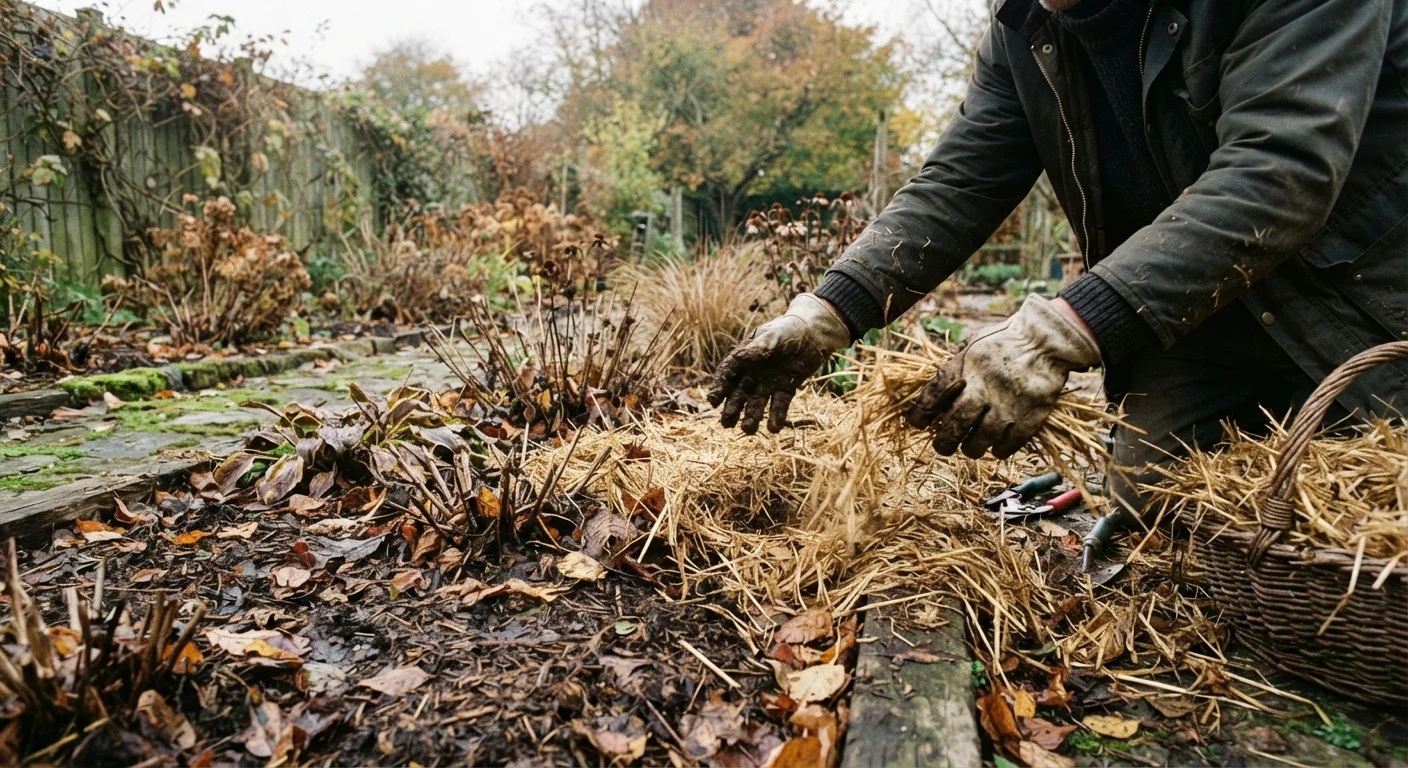
Apply a 2-3 inch layer of organic mulch - shredded leaves, straw, or wood chips - over the root zones of perennials, shrubs, and any borderline-hardy plants. Keep mulch a few inches away from plant stems to prevent rot. Mulch acts as a thermal blanket, slowing soil freeze-thaw cycles that can heave plant roots out of the ground. It also reduces moisture loss during dry winter spells.
Protect Tender Shrubs and Young Trees
Wrap borderline-hardy shrubs (such as fig trees or tender roses) in burlap or frost cloth before temperatures drop into the teens. Drive a few stakes around the plant to create a loose tent rather than wrapping tightly against the stems - you want air circulation. For young or newly planted trees, wrap the trunk with a commercial tree wrap or burlap strip to prevent winter sunscald (bark damage caused by temperature swings).
Drain and Store Hoses and Irrigation Lines
Disconnect garden hoses from outdoor spigots, drain them fully, and store them indoors or in an unheated but frost-protected shed. If you have in-ground irrigation, shut off the supply valve and blow out the lines with compressed air, or contact an irrigation professional to winterize the system. Shut off and drain any outdoor faucets that have individual shutoff valves. Water left in pipes and hoses expands when it freezes and can cause splits and leaks.
Amend and Rest Your Soil
Before the ground freezes hard, work a 1-2 inch layer of compost or aged manure into empty beds with a garden fork. You don't need to dig deeply - just enough to incorporate the organic matter into the top few inches. This gives nutrients time to break down over winter, so they're readily available to plant roots when growth resumes in spring. Then leave the soil undisturbed; bare, rested soil holds structure better than soil that's been over-tilled.
Compost Your Healthy Garden Waste
Healthy plant trimmings, spent annuals, and non-seeding stems can all go straight onto your compost pile. Composting converts garden waste into rich organic matter you can work back into beds next spring. Avoid composting anything diseased or pest-ridden - that material should go in the trash to prevent spreading problems.
Keeping Up With the Rest of Your Property
Garden prep is just one piece of seasonal home maintenance. While you're working outdoors, it's a good time to check gutters - clogged gutters can cause water to back up and damage fascia boards and foundations once winter rain and snowmelt arrive. Our guide to keeping gutters clear year-round walks through what to look for and how to clean them safely. It's also worth doing a quick visual check of your roof before bad weather sets in; see warning signs your roof needs attention before winter for what to look out for.
Once spring arrives and the soil warms back up, your well-prepared garden will be ready to go. If you're thinking about expanding or starting a new bed, our guide to starting a garden from scratch covers everything from planning to your first planting.