
Why Late Autumn Is the Right Time to Check
Roofs endure more stress between November and March than at any other time of year. Freezing temperatures, ice formation, heavy rainfall, and wind gusts combine to turn a hairline crack into a full-blown leak - often overnight. The good news is that most warning signs are visible well before the first hard frost if you know where to look.
You don't need to climb a ladder to spot many of these problems. A pair of binoculars and a careful walk around the outside of your home - combined with a torch inspection of your loft space - will reveal the majority of red flags covered below. For anything that needs closer examination or hands-on work, always hire a qualified roofing contractor. Working at height carries serious injury risk, and most roofing repairs require professional tools, materials, and expertise.
This checklist complements the broader upkeep advice in our seasonal home maintenance checklist, so consider running both together before temperatures drop.
Check After Every Significant Storm
Don't limit roof checks to an annual schedule. After any period of high winds, heavy rain, or hail, do a quick ground-level visual scan and a loft inspection with a torch. Catching a newly displaced tile or fresh water stain within days of a storm gives you the best chance of a quick, inexpensive fix before moisture spreads further into the structure.
Seven Warning Signs to Look For
Missing, cracked, or curling shingles
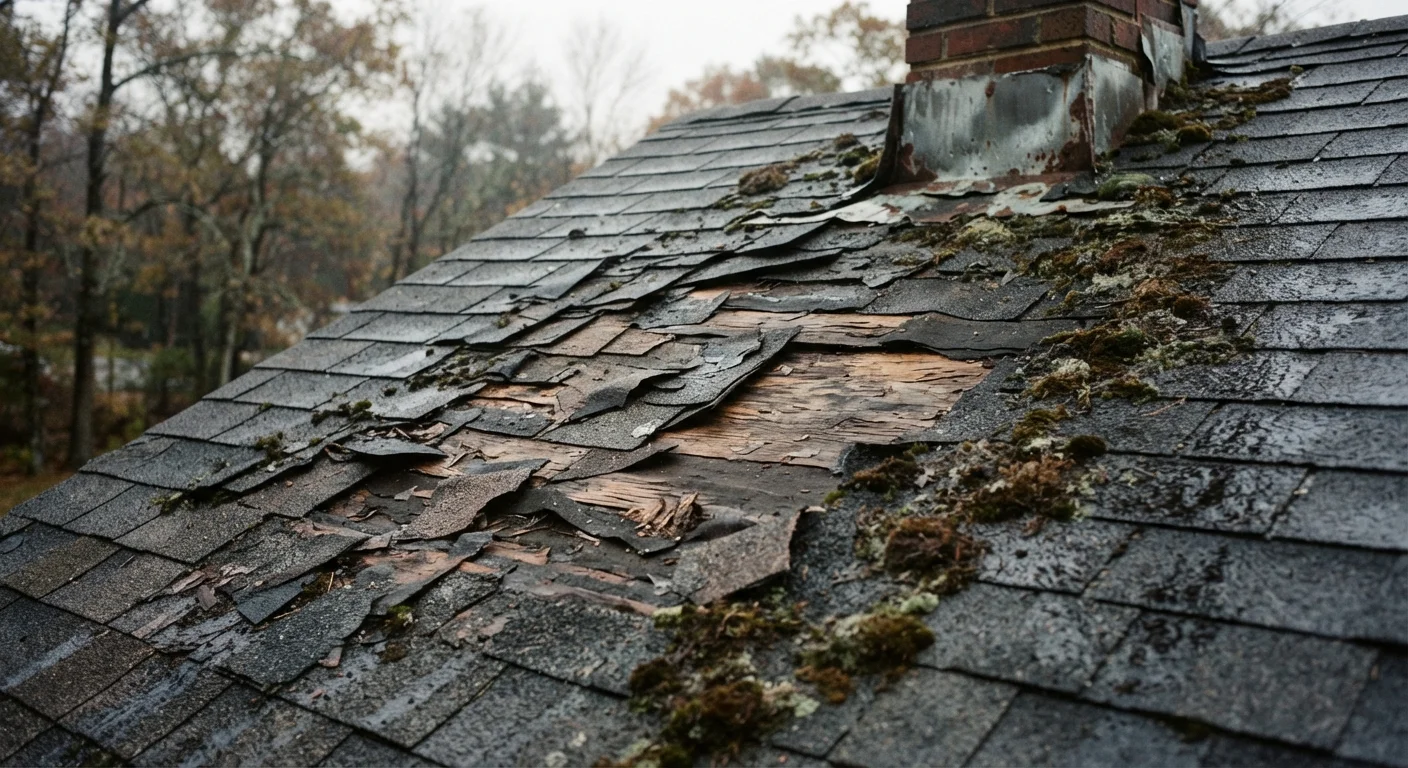
Individual shingles that have blown off, split down the middle, or begun curling at the edges are the most straightforward sign that your roof covering is failing. Each gap or weakened tile is a direct route for rainwater and wind-driven moisture to reach the timber structure beneath. Use binoculars from ground level and check the entire roof surface, paying particular attention to ridge lines, valleys (where two roof slopes meet), and areas around chimneys or skylights.
Even a single missing shingle creates a direct entry point for winter water damage.
Moss, lichen, or algae growth
A green or black biological crust on roof tiles isn't just cosmetic. Moss retains moisture against the tile surface, which accelerates freeze-thaw damage during cold spells - water trapped under moss expands as it freezes and can crack or lift tiles. Lichen, which appears as grey or orange crusts, is harder to remove because it anchors into the tile itself. Both are worth addressing before winter, but always use a qualified contractor for this kind of treatment.
Moss traps moisture that freezes and cracks tiles - a hidden accelerator of winter damage.
Damp patches or staining in the loft
Take a torch into your loft on a dry day and look for dark staining on the underside of roof boards, wet or compressed insulation, or any visible daylight coming through gaps. Water stains can appear some distance from the actual entry point because moisture travels along timber beams before dripping. Any sign of active damp - or evidence of past moisture - warrants a professional inspection. Early identification almost always means a smaller, cheaper repair.
Loft staining often appears far from the actual leak - always investigate the full roof area.
Damaged or deteriorating flashing
Flashing is the thin metal (typically lead or aluminium) fitted around chimneys, skylights, vents, and roof junctions to create a watertight seal. It's one of the most common failure points on older roofs. Look for flashing that is visibly lifted, buckled, corroded, or where the sealant has cracked away from the joint. Water that gets under damaged flashing during autumn rain will be forced deeper by winter freeze-thaw cycles, making repairs progressively more disruptive.
Flashing failures around chimneys and skylights are among the most common sources of roof leaks.
Blocked or sagging gutters
Gutters clogged with autumn leaves cause water to back up under the roof edge rather than flowing away cleanly. Over winter, that standing water can freeze, forming an ice dam that forces moisture under tiles. Gutters that are pulling away from the fascia board or visibly sagging in the middle can no longer channel water effectively and may indicate the fascia itself is starting to rot. Clear debris from gutters and downpipes before the first frost, and check that water flows freely away from the building's foundations.
Blocked gutters become ice dams in freezing conditions - clear them before the first frost.
A visibly sagging roofline
Stand back from your home and sight along the ridge line and the edges of the roof slopes. They should appear straight and even. Any visible dip, bow, or wave in the roofline suggests that the structural timbers underneath - rafters or roof joists - may be weakened, possibly by prolonged moisture exposure or rot. This is not a cosmetic issue. A sagging roofline is a potential structural problem that requires urgent assessment by a qualified roofing or structural professional.
A sagging roofline is a structural red flag - seek professional assessment without delay.
Granules accumulating in gutters or downpipes
Asphalt shingles are coated with small mineral granules that protect the underlying material from UV exposure and weathering. As shingles age or degrade, these granules shed and wash into the gutters. A handful here and there is normal wear; a significant accumulation - especially after no recent storms - suggests the shingles are reaching the end of their serviceable life and may not provide adequate protection through another winter season.
Heavy granule loss in gutters signals shingles that may not survive another winter season.
When to Call a Professional
The warning signs in this list are designed to help you identify potential problems from the ground or from inside your loft - not to guide DIY repairs at height. Roofing work involves serious fall risk and often requires permits or compliance with local building codes. If you spot any of these signs, contact a licensed, insured roofing contractor for a proper assessment. Always verify a contractor's credentials and ask for a written quote before work begins.
Act Now, Spend Less Later
Roof problems are a textbook example of deferred maintenance that quietly compounds. A displaced tile costs relatively little to re-fix; the water damage it causes to insulation, joists, and ceilings over a wet winter can run to many times that figure. Our article on the hidden costs of skipping routine home upkeep explores exactly that pattern across multiple areas of the home.
If you find roof issues while also noticing cold spots around window frames, those two problems may share a cause. Check our guide on draughty windows for what to look for there. And once the roof is squared away, turn your attention outside - preparing your garden for winter covers the outdoor tasks that round out a thorough pre-winter home check.
This article is for general informational purposes only. Roof inspection and repair work should be carried out by a qualified roofing professional. Always verify local building codes and permit requirements before undertaking structural repairs.