
What Hardiness Zones Actually Measure
When you pick up a plant at a nursery and the tag says "Hardy in Zones 5-9," it's telling you something specific: this plant has been shown to survive winter cold within that temperature range. Hardiness zones are not about rainfall, soil type, or summer heat. They are solely about how cold winter gets at its worst.
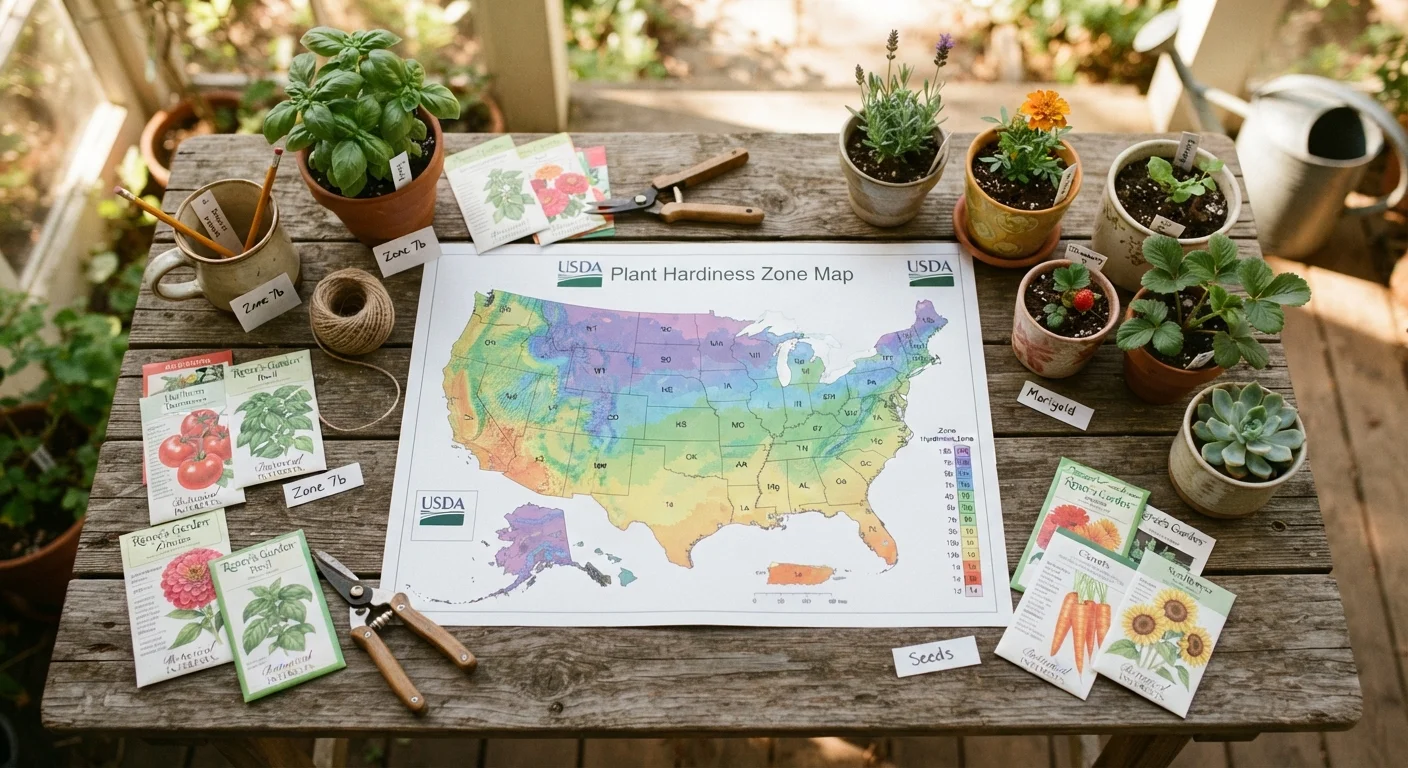
The USDA divides the US into zones numbered 1 (coldest) through 13 (warmest). Each zone covers a 10°F band of average annual extreme minimum temperature. Zone 5, for example, typically sees lows between -20°F and -10°F in a bad winter. Zone 9 bottoms out between 20°F and 30°F. The higher the number, the milder the winter.
When a plant is described as "hardy to Zone 6," that means it can tolerate temperatures as low as -10°F. It will generally survive in Zone 6 and any warmer zone - but may die over winter in colder Zone 5. Think of the zone number as the lower limit a plant can handle. See our plain-language glossary of gardening terms if other plant tag language is tripping you up.
13
Total USDA hardiness zones in the US
The USDA Plant Hardiness Zone Map divides the country into 13 primary zones, each representing a 10°F band of average annual extreme minimum temperature.
~50%
Of US land shifted to a warmer half-zone
When the USDA updated its map in 2023, roughly half of the country moved into a warmer half-zone compared to the previous 2012 edition, reflecting changes in observed minimum temperatures.
30 years
Of temperature data behind each zone
USDA zone assignments are calculated from 30-year averages of recorded temperature extremes, making them a statistically stable - though not infallible - planning tool.
How to Use Your Zone When Choosing Plants
The practical payoff of knowing your zone is simple: it helps you avoid buying plants that won't make it through winter. Before purchasing any perennial, shrub, or tree, check that its hardiness range includes your zone number.
- Annual vs. perennial: Annuals complete their life cycle in one season and don't need to survive winter, so zone ratings matter less for them. Perennials, shrubs, and trees need to overwinter successfully, which is where zone compatibility matters most.
- Zone as a floor, not a ceiling: A plant rated for Zones 4-8 will likely thrive in Zone 6 - you're well within its comfort range. But growing that same plant in Zone 3 carries real risk.
- Read the full tag: Some plants need a minimum number of "chill hours" (cold winter exposure) to bloom properly, which means they can actually struggle in zones that are too warm.
Memorize Your Zone Before You Shop
Write your hardiness zone on a small card and keep it in your wallet or save it in your phone. When you're browsing a nursery or flipping through a seed catalog, having your zone number on hand means you can check plant tags on the spot and avoid impulse buys that won't survive your winters.
Once you know which plants suit your zone, pairing them with proper watering practices makes a big difference in how well they establish. Our guide on how much water your garden actually needs covers that ground clearly.
Why Zone Ratings Are Just a Starting Point
Zones are genuinely useful, but they don't tell the whole story of your yard. Two gardens in the same zone can behave very differently depending on local conditions.
“The hardiness zone is the beginning of the conversation about plant suitability, not the end of it. Local soil, moisture, and shelter all influence what actually survives in a given garden.”
— Extension Horticulture Educators, Land-grant university cooperative extension programs across the US
Microclimates are the biggest wild card. A spot along a south-facing brick wall may stay several degrees warmer than your official zone minimum, letting you grow something slightly outside your range. Conversely, a low-lying area where cold air settles on still nights - called a frost pocket - can be meaningfully colder than the rest of your yard.
Other factors that interact with your zone rating include:
- Snow cover: A consistent blanket of snow insulates plant roots and can help marginally cold-hardy plants survive.
- Soil drainage: Wet roots freeze more easily than roots in well-drained soil. A plant rated for your zone may still die in waterlogged ground.
- Wind exposure: Wind chill desiccates (dries out) evergreen foliage and can push effective temperatures below what the thermometer reads.
For gardeners in colder zones, knowing how to protect borderline plants before temperatures drop is equally important. Our article on preparing your garden for winter walks through practical steps for mulching, covering, and storing plants before the cold sets in.
Putting It All Together in Your Garden
Finding your zone takes about thirty seconds - just enter your ZIP code into the USDA's online map. Once you have that number, you have a reliable filter for plant shopping. When you browse a nursery or seed catalog, hardiness zone ranges tell you at a glance whether a plant belongs in your yard for the long term or only for a single season.
Use your zone as a foundation, then layer in what you know about your specific yard: which spots are sheltered, where drainage is poor, and where cold air tends to collect. Over time, gardeners develop an intuitive feel for which corners of their yard are slightly more forgiving - and which ones demand tougher, more cold-tolerant plants.
Building a resilient garden is also about choosing plants adapted to your conditions rather than fighting nature. If your region faces dry summers as well as cold winters, combining zone-appropriate plants with drought-tolerant choices makes your garden more self-sufficient. The strategies in our guide on making your garden more resilient to drought complement zone-smart plant selection well.
In short: check the zone, understand the limits, and then use your own observations to fine-tune. That combination will serve you far better than either approach alone.