
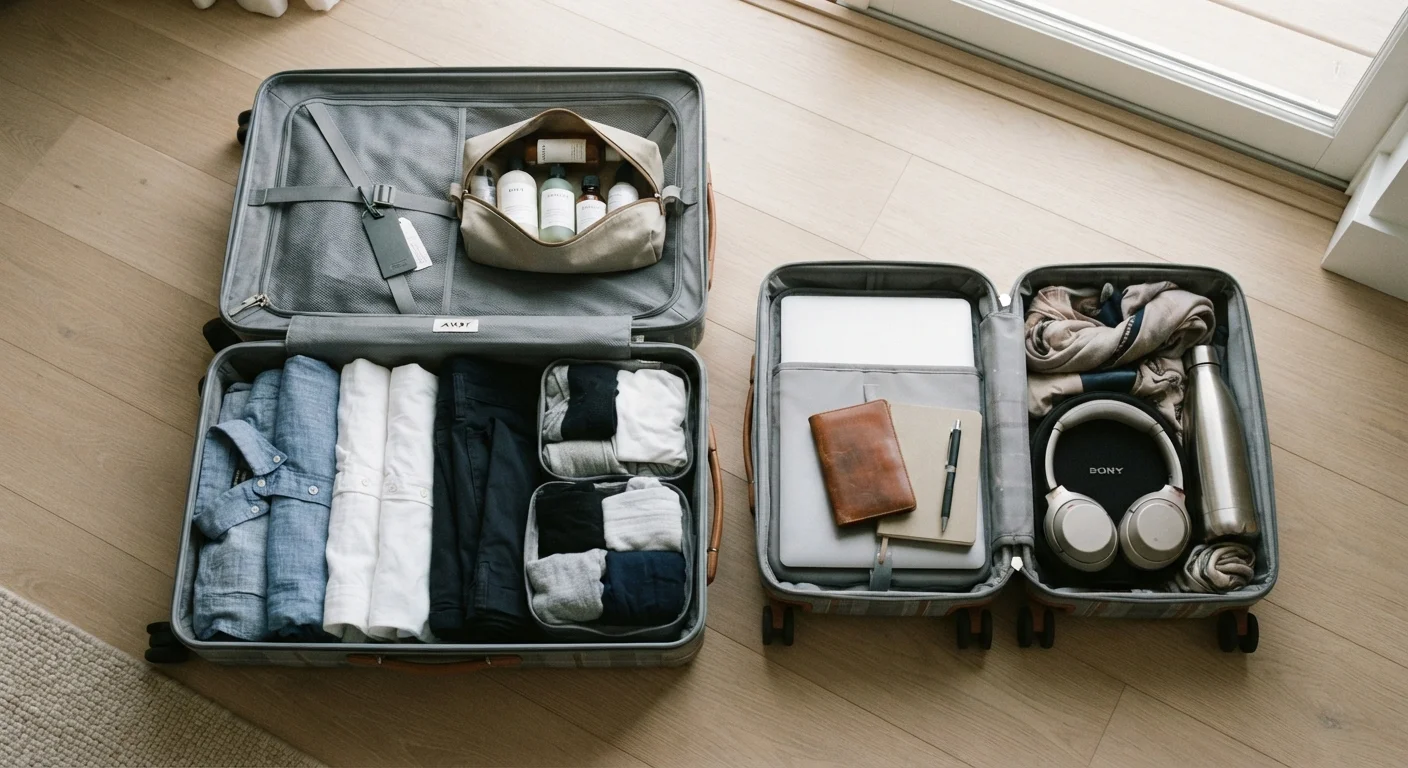
What Separates a Carry-On from a Checked Bag
The core difference is simple: a carry-on travels with you in the aircraft cabin, stored in the overhead bin or under the seat in front of you. A checked bag is handed over at the ticket counter or bag drop, tagged, and loaded into the cargo hold beneath the plane. You retrieve it at baggage claim after landing.
That distinction has real downstream effects — on cost, convenience, security rules, and what you can pack. Understanding those effects helps you decide which bag carries which items, rather than defaulting to habit or guessing at the gate.
Size is the first constraint. Most US carriers limit carry-on bags to roughly 22 × 14 × 9 inches, though this varies by airline and aircraft type. Checked bags are typically allowed up to 62 linear inches (length + width + height) and 50 pounds before oversize or overweight fees kick in. Always verify the specific limits with your airline before you pack, as budget carriers and regional jets often apply stricter rules. See our packing principles guide for strategies that work within any size constraint.
| Criterion | Carry-On | Checked Bag |
|---|---|---|
| Where it travels | Overhead bin or under seat | Aircraft cargo hold |
| Typical size limit | ~22 × 14 × 9 inches | 62 linear inches combined |
| Weight limit | Varies; often no set limit | Usually 50 lbs; fees above |
| Liquids rule | 3.4 oz containers, 1 quart bag | Full-size containers allowed |
| Typical fee (US domestic) | Usually free | $30–$40+ each way |
| Risk of loss or delay | Very low — stays with you | Small but real; higher on connections |
| Lithium batteries | Required here | Generally not permitted |
| Sharp tools and sporting gear | Restricted or prohibited | Often permitted if declared |
Security Rules and What You Can't Bring in the Cabin
The TSA's 3-1-1 liquids rule is the most commonly misunderstood restriction for carry-on bags. Each passenger may bring liquids, gels, and aerosols in containers of 3.4 ounces (100 ml) or less, all fitting in one quart-sized clear bag, one bag per person. This rule applies only to the cabin — checked bags allow full-size liquid containers. For a complete breakdown, our liquids on planes guide covers what's exempt and how to avoid confiscation at the checkpoint.
Beyond liquids, certain items are prohibited in carry-ons altogether — sharp objects like box cutters and full-size scissors, flammable items, and some sporting equipment. These must go in checked bags if they're permitted on the aircraft at all. Conversely, lithium batteries for laptops and cameras are generally required to travel in the cabin, not in checked luggage, due to fire risk in the hold. Always check the TSA's official website for the current restricted items list before your trip.
Medication Always Travels in the Cabin
Prescription and over-the-counter medications should travel in your carry-on regardless of trip length. If your checked bag is delayed, you need uninterrupted access to any essential medication. The TSA permits medications in quantities exceeding 3.4 oz in carry-ons when properly declared at the checkpoint — inform the officer before screening begins.
Our airport security walkthrough explains exactly what to remove from your bag at the checkpoint and how to move through the lane efficiently.
Fees, Risk, and the Real Cost of Each Option
Checked bag fees are now standard on most US carriers, particularly for basic economy fares. A single checked bag can cost anywhere from $30 to $40 each way on many domestic routes, with international fees varying widely. Carry-on bags are generally free, though some ultra-low-cost carriers charge for overhead bin access as well — read your fare terms carefully before assuming.
Beyond fees, there's the question of risk. Checked bags occasionally go astray. Tight connections, manual baggage tags, and transfer airports all raise the likelihood of a bag being delayed or misrouted. Our article on why checked bags get lost explains which factors increase that risk — worth reading if your itinerary involves multiple connections.
~1%
US bags mishandled per 100 passengers
US Department of Transportation data shows mishandling rates have stayed below 1 per 100 passengers on domestic routes in recent reporting periods, but the impact is significant when it affects your trip.
$30–$40
Typical one-way checked bag fee
Most major US carriers charge between $30 and $40 for a first checked bag each way on domestic routes, with fees varying by airline, fare class, and loyalty status.
For items that matter most — prescription medications, travel documents, electronics, and anything irreplaceable — carry-on is the safer default. Our pre-flight checklist includes a full review of what to keep close. To understand what actually happens to your bag once it's checked, see what happens to your bag after check-in.