
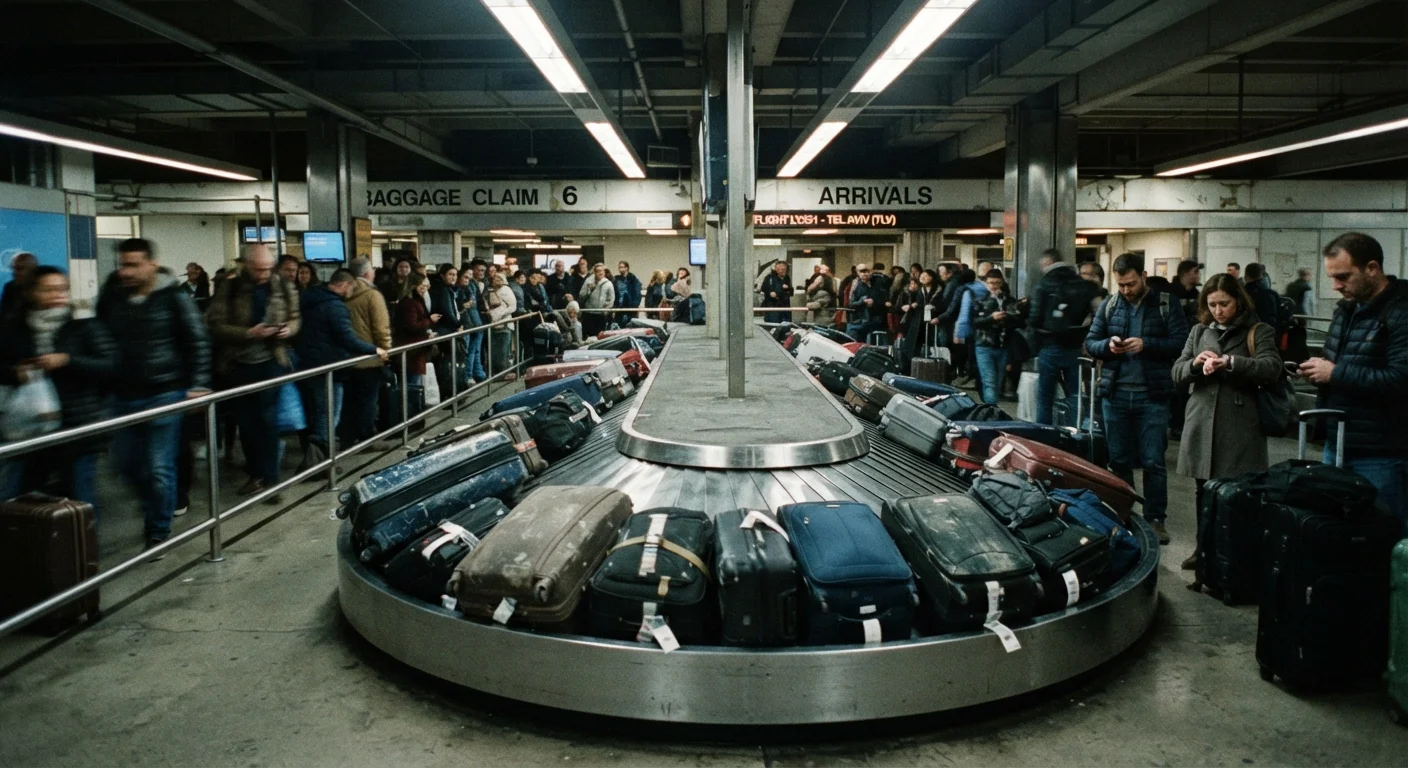
The Baggage Handling Journey Most Passengers Never See
From the moment you hand your bag to an airline agent, it enters a largely automated — but surprisingly fragile — system. Conveyor belts, optical scanners, and sortation machines read the barcode on your bag tag and route it toward the correct outbound flight. At major hub airports, that journey can span half a mile or more underground.
The system works reliably the vast majority of the time. But several friction points consistently account for the bulk of mishandled bags. Understanding them helps explain why baggage failures aren't random and why some itineraries carry more risk than others.
Most Bags Are Delayed, Not Permanently Lost
Industry figures consistently show that the majority of mishandled bag reports involve temporary delays rather than permanent loss. Airlines are required by regulation to compensate passengers for reasonable expenses when bags are delayed on domestic flights, and international rules under the Montreal Convention set liability limits for lost or damaged baggage. Always file a report at the airport before leaving — it starts the official recovery process.
Connection Time: The Biggest Variable Under Your Control
The single most common driver of a bag missing its flight is a tight layover. When your connection is short, the window for ground crews to offload bags from your arriving aircraft, transport them across the tarmac, and load them onto your next flight shrinks dramatically. Airlines publish minimum connection times — the shortest layover considered operationally viable — but those figures assume everything goes smoothly. A delayed arrival, a remote gate, or a large widebody aircraft can all push the real working window below what the schedule implies.
As a general principle, the shorter the connection, the higher the risk. Connecting through a large hub airport — where your two flights may operate from different terminals — compounds the problem. If you have flexibility when booking, a longer layover is one of the most effective ways to reduce baggage risk.
Choose Connections Wisely When Booking
When building an itinerary, treat connection time as a deliberate variable rather than a side effect of scheduling. A layover of 90 minutes or more at a midsize airport — or two hours or more at a major international hub — gives baggage systems a meaningful buffer. If a fare requires a 35-minute connection, it may be worth weighing the cost savings against the realistic chance your bag doesn't make it.
Tag Damage, Manual Handling, and Interline Transfers
The optical scanner that reads your bag tag needs a clean, intact barcode. A crumpled, wet, or torn tag fails the scan and sends the bag into a manual sorting queue — a slower process that increases the chance of a missed connection or wrong routing. This is one reason airlines recommend removing old bag tags from previous trips before checking in.
A separate risk category is the interline transfer — when your itinerary includes two or more airlines that must pass your bag between their separate handling systems. Each handoff is a coordination point that can fail. Booking a single-airline itinerary or at least one operated under a formal baggage agreement reduces the number of those handoffs.
~4–7
Bags mishandled per 1,000 passengers
SITA's annual Baggage IT Insights reports have tracked industry mishandling rates in this range in recent years, representing significant improvement from rates above 15 per 1,000 in the early 2000s.
~80%
Of mishandled bags eventually returned
Industry analysts note that the large majority of delayed bags are located and returned to passengers, typically within one to five days of the initial report.
~50%
Of mishandling linked to transfer failures
SITA research has attributed roughly half of all baggage mishandling incidents to failures during the aircraft-to-aircraft transfer phase of a connecting itinerary.
For travelers thinking carefully about their overall packing strategy, see our packing principles guide — reducing what you check in the first place is the surest way to sidestep baggage handling risk entirely.
Check-In Timing and Late-Drop Risk
Airlines set a baggage cutoff time — typically 30 to 60 minutes before departure — for a reason. Bags checked after the cutoff may be physically accepted at the counter but flagged as late, meaning they're routed into a secondary queue that may not make the flight. Even bags checked just inside the deadline, when a flight is fully boarded and ready to push back, face a compressed handling window.
Checking in as early as the airline allows — and dropping your bag promptly — gives the system the most time to process it. This is a small behavioral adjustment that meaningfully reduces risk on busy travel days.
Understanding how bag handling fits into the larger airport picture is useful context. Our overview of what slows travelers down at security covers other procedural bottlenecks worth anticipating before your next trip.
What You Can Do to Reduce the Odds
No single action guarantees your bag arrives, but several practical steps consistently reduce risk:
- Allow generous connection time, especially at large hub airports or on international itineraries.
- Remove old bag tags before checking in to prevent scanner misreads.
- Label your bag inside and out with your name and contact information, so a tag-less bag can still be identified.
- Arrive early and complete bag drop well before the airline's stated cutoff.
- Book within a single airline or alliance where possible to reduce interline handoffs.
- Consider a tracking device inside your bag — it won't prevent a problem, but it can help airline staff locate a bag faster once a report is filed.
For a broader look at the unwritten norms of air travel that inform confident, low-friction flying, see our piece on airport etiquette frequent flyers notice.