
Why Unwritten Rules Matter at 30,000 Feet
Air travel compresses hundreds of strangers into a shared space with almost no personal room and no easy exit. In that environment, small behaviors carry outsized weight. What feels like a minor inconvenience on the ground — a bag shoved sideways, a reclined seat with no warning — can make a two-hour flight genuinely unpleasant for someone else.
Frequent flyers absorb these norms through repetition. First-time and occasional travelers often haven't had the chance to. This guide walks through the practices that matter most, so you can navigate airports and cabins with confidence. For a broader orientation to air travel before your next trip, see our first-time flyer guide.
At the Gate: Boarding and Queue Behavior
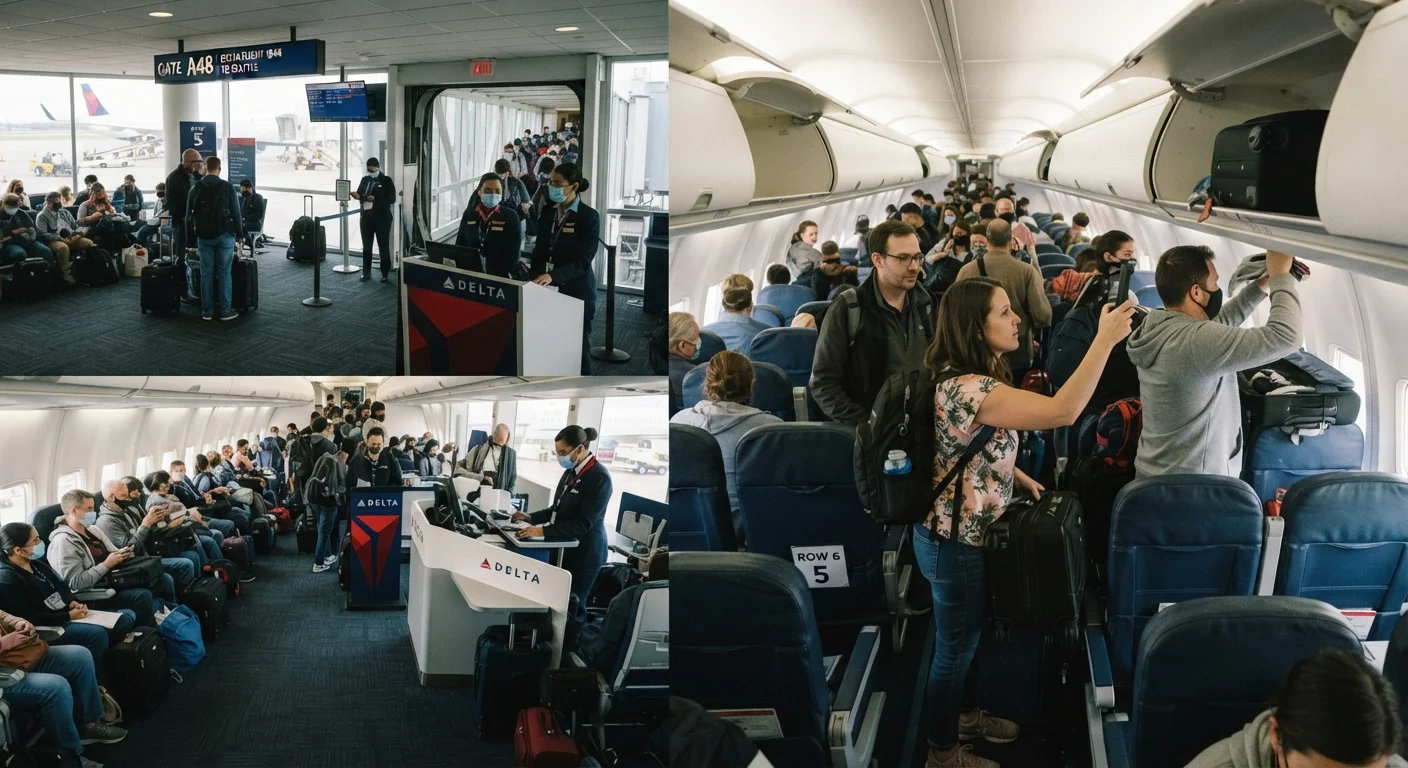
Gate areas are where etiquette friction starts. Airlines assign boarding groups for a reason — the system reduces aisle congestion and helps passengers with mobility needs or connecting flights board first. Crowding the gate entrance before your group is called creates a bottleneck that slows the entire process, including for the people doing it.
Security lines have their own rhythm too. Arriving unprepared — shoes still on, laptop buried, liquids in a sealed bag — adds delay for every person behind you. Our article on common security slowdowns covers exactly what to watch for.
On the Plane: Bins, Seats, and Shared Space
The overhead bin is communal property, not personal storage. Placing a soft duffel flat when it could stand upright, or occupying a bin three rows from your seat, denies space to passengers who board after you. Wheel-first placement for roller bags maximizes the available room.
The recline question is genuinely contested. Seats are designed to recline, and using that function isn't inherently rude. The issue is doing it abruptly or without a glance backward — especially during meal service, when a reclined seat can push a food tray into the person behind you. A brief pause and a quick look takes two seconds.
On armrests: the window seat has the wall; the aisle seat has extra width and easy exit. The middle seat passenger has neither advantage, which is why the informal norm gives them both center armrests. It's not a rule — it's a courtesy that most experienced flyers observe without discussion.
Armrest Norms Are Informal, Not Official
No airline policy dictates armrest use. The middle-seat convention is a widely observed social norm, not a rule you can enforce. If a seatmate doesn't follow it, a polite, low-key ask is reasonable — but treat it as a courtesy request, not a right. Most people respond well when approached calmly.
Seat choice itself involves real trade-offs. Our breakdown of aisle, middle, and window seats gives an honest comparison if you're still deciding.
Noise, Smell, and Personal Space
Sound travels easily in a pressurized cabin. Phone calls on speakerphone, videos without headphones, and loud conversations are among the most commonly cited passenger complaints. Earbuds or over-ear headphones should be considered standard cabin equipment, not optional.
Food smells are harder to control but worth considering. Strong-smelling foods in an enclosed space affect everyone nearby. This doesn't mean you can't eat on a plane — it means being mindful of what you bring, especially on longer flights.
Prep Your Carry-On Before You Reach the Gate
Reorganizing your bag at the gate or in the aisle slows boarding and frustrates those behind you. Before you leave home, place anything you'll want during the flight — headphones, a book, snacks — at the top of your bag or in an accessible pocket. Use our pre-flight checklist to make sure nothing is buried at the bottom.
Headphones on a fellow passenger almost always signal a preference for quiet. It's not an invitation to lean over and ask where they're traveling. Respecting that boundary isn't unfriendly — it's considerate. If you do need assistance or want to start a conversation, a gentle tap and making eye contact first is always the right move.
“The experience of flight is remarkable — but it requires a kind of enforced cooperation between strangers that few other forms of travel demand. Small courtesies compound quickly into a much more bearable journey for everyone in the cabin.”
— Travel Know-How Editorial Team, Experienced travel researchers and editors
Deplaning and Baggage Claim
When the plane lands, the instinct to leap up is understandable — but standing in a crouched hunch under the overhead bin while the door is still closed doesn't get you off any faster. It does, however, put pressure on passengers around you and can cause bags to fall.
The informal norm for deplaning is row-by-row, front to back, unless someone behind you has a tight connection. If a fellow passenger mentions they're racing to make a connecting flight, letting them pass costs you seconds and may save them a significant delay.
At baggage claim, standing at the carousel edge — especially with a cart — blocks other passengers from reaching their bags. Standing a step back until you spot your luggage, then moving forward to retrieve it, keeps the area functional for everyone. For tips on what's worth checking versus carrying on, see our guide on carry-on vs. checked luggage.