
Before You Book: What to Understand First
Flying for the first time can feel overwhelming — but the process is more predictable than it appears. Air travel follows a consistent sequence of steps, and knowing what each one involves removes most of the guesswork.
Before booking any flight, make sure your identification is in order. Domestic US travelers need a REAL ID-compliant driver's license or state ID (look for a star in the upper corner), or a valid US passport. International flights always require a passport, and some destinations also require a visa obtained in advance. Always verify entry requirements with official government sources before you book.
If you haven't yet planned the full trip surrounding your flight, the complete trip planning starter's guide walks through every stage from destination choice to packing. Also consider your full travel budget early — our guide to building a first travel budget covers cost categories that first-timers often miss.
Boarding Pass
A document (paper or digital) that confirms your seat on a specific flight. You receive it after check-in and must present it at security and at the gate.
REAL ID
A federally compliant form of state-issued identification marked with a star. Required for domestic US air travel; check your driver's license for the star symbol.
Carry-On Bag
A bag you bring onto the plane yourself, stored in the overhead bin or under the seat in front of you. Airlines set size and weight limits — check before you fly.
Checked Baggage
Luggage handed to the airline at check-in that is stored in the cargo hold during the flight. It is retrieved at baggage claim after landing.
TSA
The Transportation Security Administration — the US government agency that screens passengers and bags at airport security checkpoints.
Gate
The specific numbered door in the airport terminal where passengers board the aircraft. Gate assignments are shown on departure boards and can change, so always verify.
What to Do Before You Leave for the Airport
The 24 hours before your flight are among the most important. Most airlines open online check-in exactly 24 hours before departure. Completing check-in online lets you confirm your seat, receive your boarding pass digitally, and avoid long lines at the airport counter.
Review what you're packing against TSA rules. Liquids must be in containers of 3.4 oz (100 ml) or less, and all liquids must fit inside a single, quart-sized clear zip-top bag. Oversized liquids — including full-size shampoo or water bottles — will be confiscated at the checkpoint. Pack sharp objects, tools, and anything questionable in your checked bag, not your carry-on.
Use the pre-flight checklist to review documents, devices, medications, and essentials the night before. Running through it systematically is far more reliable than trying to remember everything from memory. You can also reference the broader pre-trip confirmation checklist for home arrangements and booking confirmations.
Save Your Boarding Pass Offline
Download your boarding pass to your phone's wallet app before you leave home. Airport Wi-Fi can be unreliable, and having the pass saved offline means you can access it even without an internet connection. Keep a screenshot as a backup.
Navigating the Airport: Check-In Through Security
When you arrive at the airport, follow signs for your airline's check-in area if you have bags to check, or head directly to security if you're carrying on only. Have your boarding pass (printed or on your phone) and ID ready before joining any line.
At the TSA security checkpoint, you'll place your carry-on, shoes, belt, jacket, and personal electronics (laptops and tablets must come out of bags) into separate bins on the conveyor belt. Walk through the scanner calmly. If a secondary screening is needed, a TSA officer will guide you through it — this is routine and not cause for concern.
Don't Joke or Make Suspicious Statements at Security
Remarks about weapons, bombs, or threats — even made in jest — are treated as serious by TSA officers and airport law enforcement. Such statements can result in removal from the screening area, missed flights, and potential legal consequences. Keep conversation at the checkpoint brief and straightforward.
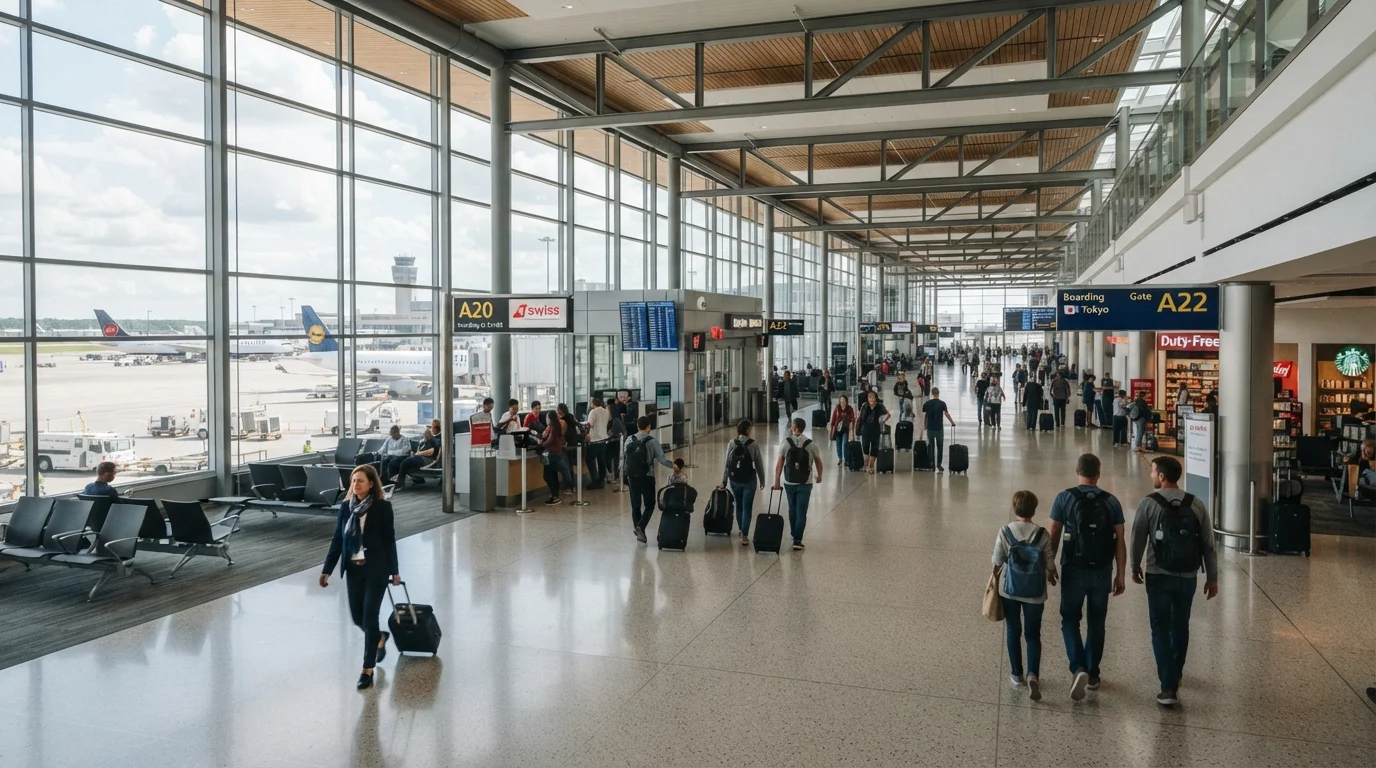
Once through security, check the airport's departure boards for your gate. Gate assignments occasionally change, so confirm rather than relying solely on your boarding pass. Follow signs for your terminal or concourse, and give yourself time to find the gate before boarding begins.
At the Gate and On the Plane
Boarding typically begins 30–45 minutes before departure. Airlines board in groups — usually by fare class, frequent flyer status, and then seat sections from back to front. Listen for your group or zone number to be called before joining the boarding line.
On the plane, locate your seat number, stow your carry-on in the overhead bin above or near your row, and place your personal item under the seat in front of you. If the overhead bin is full, a flight attendant will assist. Follow all crew instructions and pay attention to the safety demonstration — it takes only a few minutes and covers procedures specific to that aircraft.
Turbulence — the bumping sensation during flight — is caused by normal variations in air and is a routine part of flying. Keeping your seatbelt loosely fastened while seated is always recommended. For more on unwritten conduct expectations that help everyone travel more comfortably, see airport and in-flight etiquette.
Landing, Baggage Claim, and What Comes Next
As the plane descends, you may feel pressure changes in your ears. Yawning, swallowing, or chewing gum can help equalize that pressure. Remain seated with your seatbelt fastened until the seatbelt sign turns off after landing.
If you checked bags, follow signs to the baggage claim area for your airline. Baggage carousels are labeled by flight number — look for yours on the overhead display screens. Allow 15–30 minutes for bags to arrive after landing. If your bag does not appear, report it to the airline's baggage service desk before leaving the claim area.
For connecting flights, check the departure board immediately after landing for your next gate. If your connection is tight, inform a flight attendant before landing so they can advise on the best approach. After clearing baggage claim, ground transportation options — shuttles, taxis, rideshares, and public transit — are typically signposted from the arrivals area.
Air travel becomes routine with experience. Each trip reinforces the pattern, and what feels unfamiliar today will feel straightforward the next time you fly.