
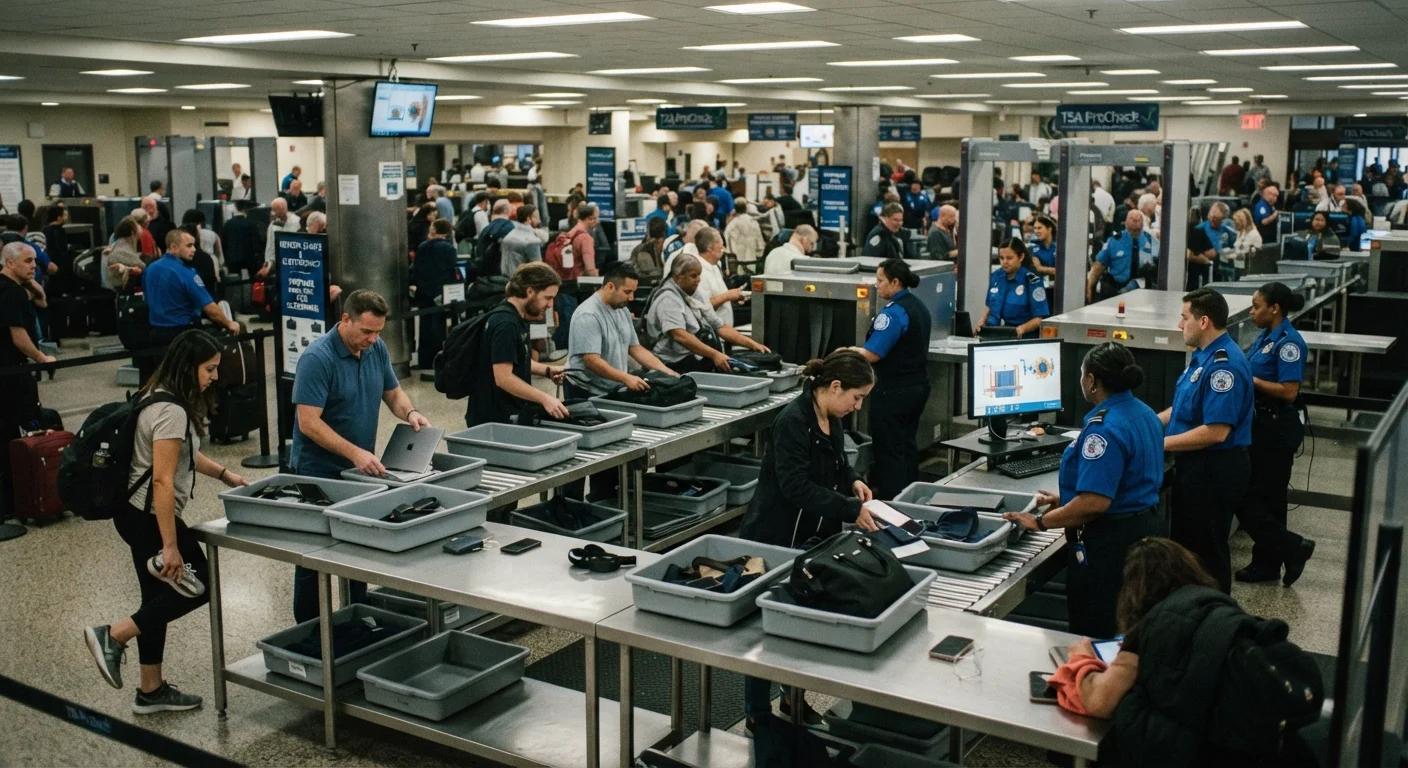
Why the Security Lane Stalls
Airport security moves at the pace of its least-prepared passenger. Most holdups aren't caused by sophisticated threats — they're caused by ordinary, avoidable oversights: a forgotten water bottle, a jacket with keys still in the pocket, or a laptop buried under three layers of clothing. Understanding what slows the lane down is the first step to clearing it without friction.
For a structured overview of how the screening process actually works from start to finish, see the plain-language security walkthrough. This article focuses specifically on the mistakes that cause delays — and how to sidestep each one.
Carrying liquids that exceed the 3-4-1 rule — or forgetting a water bottle entirely.
Why it happens: Travellers pack toiletries quickly without measuring, or leave a reusable bottle in their bag from a previous trip.
Leaving a laptop or large tablet inside a packed carry-on bag.
Why it happens: Many travellers assume all electronics can stay packed, not realizing that laptops require separate screening in standard lanes in the US.
Wearing or carrying metal-heavy items that trigger the body scanner or metal detector.
Why it happens: Belts, heavy watches, keys, coins, and thick metal jewelry are easy to forget when you're rushing.
Overpacking a carry-on so that officers can't read it clearly on the X-ray.
Why it happens: Dense, disorganized bags create overlapping images on X-ray screens, making it harder for officers to confirm contents without a hand inspection.
Not having your ID or boarding pass ready when you reach the document checker.
Why it happens: Travellers assume they'll have time to dig through their bag after reaching the front of the line.
Wearing bulky outerwear that must be removed and re-packed at the belt.
Why it happens: Travelers dress for comfort or cold weather without thinking about checkpoint requirements. Heavy coats, zip-up hoodies, and layered jackets all need to come off in standard lanes.
What to Do Before You Even Reach the Belt
Most security mistakes are made well before you reach the checkpoint — they're packed into your bag at home or stuffed into your pockets at the gate. A few minutes of intentional preparation can eliminate nearly every common holdup.
~70%
of bag pulls caused by liquid violations
TSA has consistently reported that prohibited liquids are among the most frequent reasons carry-on bags are pulled for additional screening.
2–5 min
extra per traveller for an unprepared bag
Security experts estimate that a hand-inspection of an overpacked or flagged bag typically adds two to five minutes to screening time for that traveller and the queue behind them.
Pack with the checkpoint in mind. Place your liquids bag, laptop, and any items you'll need to remove in the most accessible part of your carry-on. If you're traveling with medications, know the rules ahead of time — the guide to travelling with medications outlines what to carry, declare, and prepare. For broader packing strategies that reduce checkpoint stress, the packing principles guide is a useful reference.
Don't Wait Until the Belt to Reorganize
Holding up the bin conveyor while you dig for your laptop or unpack a toiletry bag creates a backlog that affects every traveler behind you. Use waiting time in the queue — not belt time — to get your bag and pockets ready. Officers may ask you to step aside for a secondary search if your bin isn't ready, which extends your delay further.
Before you leave home, run through a preflight review — documents, devices, and carry-on contents included. The pre-flight checklist is a good starting point. The goal isn't perfection; it's arriving at the belt ready to move.