
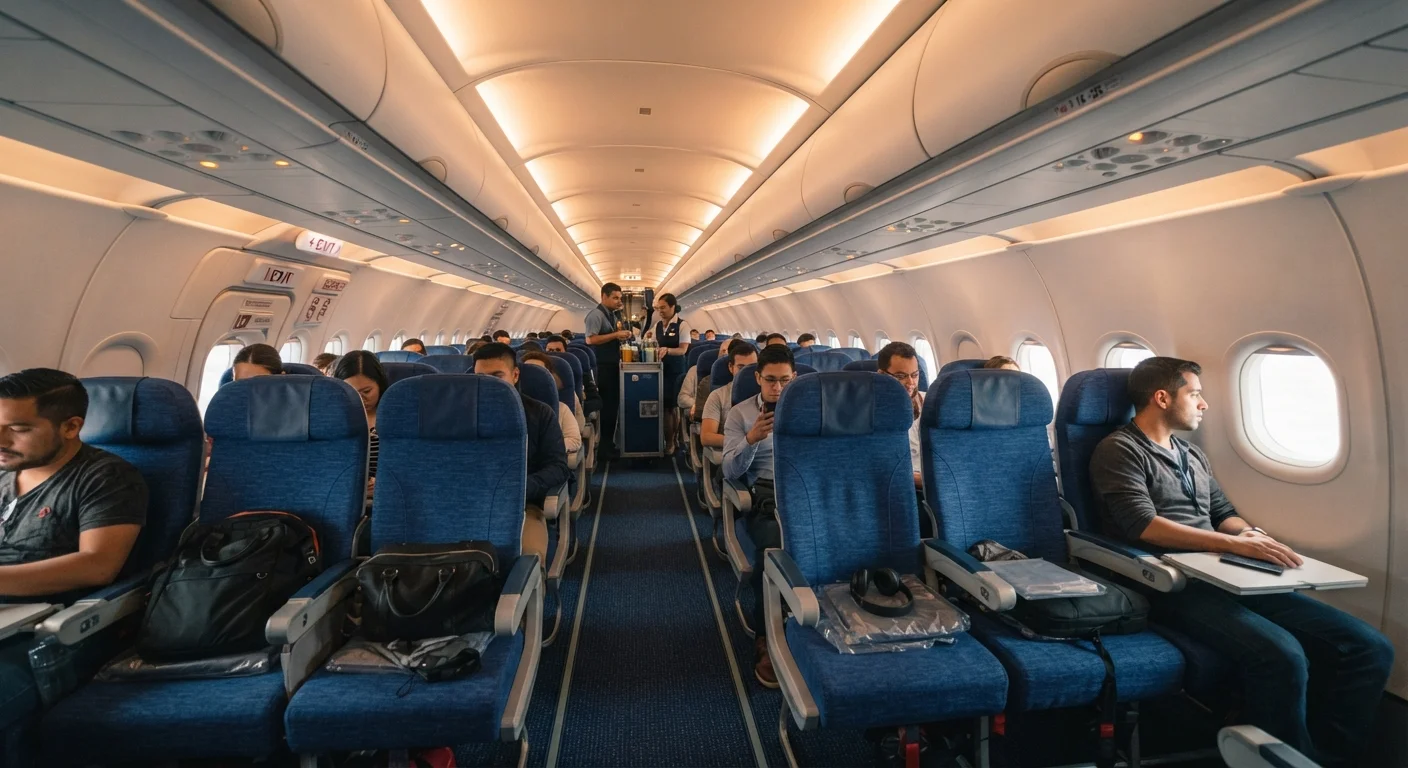
Why Seat Position Matters More Than Most Flyers Realize
On a typical domestic flight, you'll spend two to five hours in one position with limited ability to move freely. On a long-haul international route, that figure can reach 14 hours or more. The seat you choose directly affects how rested you arrive, how often you're interrupted, whether you can stretch your legs, and how much control you have over your environment.
Airlines assign seat positions as aisle (closest to the center walkway), middle (between two other seats), or window (against the fuselage). Understanding what each genuinely offers — not just the popular assumptions — helps you make a deliberate choice. See also our guide to reading your boarding pass for help interpreting the seat designation once you're assigned one.
Window Seats: Scenery and Sleep, With a Price
Window seats are consistently the most requested position on short and medium flights. The appeal is real: you control the window shade, you have a solid surface to lean against, and no one has to step past you. For sleepers, this combination is significant — leaning against the fuselage with your head supported is considerably easier than trying to stay upright or resting on a neck pillow without side support.
The trade-off is that you are effectively locked in. If you need to use the restroom or stretch, you must navigate past one or two seatmates, typically while they're working, sleeping, or watching something. On longer flights, this creates real social friction. Window passengers often feel reluctant to disturb their row, leading some to reduce their water intake — which can contribute to dehydration on long flights.
The window seat is also exposed to the temperature of the fuselage, which can feel noticeably cooler than seats closer to the aisle, particularly at altitude. If you run cold, bring a layer.
Booking a Window Seat? Check the Exit Row
Exit-row window seats sometimes have a fixed or partially obstructed window due to the overwing emergency exit structure. Before selecting, check your aircraft's seat map on the airline's site to confirm the window position is unobstructed. Some seat map tools note this limitation directly.
Aisle Seats: Freedom of Movement, Fewer Guarantees of Rest
Aisle seats appeal strongly to tall travelers, frequent restroom users, and anyone who simply dislikes feeling confined. You can stand, stretch, or walk the cabin without disturbing anyone. You also gain a marginal amount of extra elbow room on your aisle side, since no one is seated beside you in that direction.
The costs are equally tangible. You are the first person in your row to be bumped by passing passengers, flight attendant carts, and bags swinging from overhead bins. On busy flights, this can happen dozens of times. Sleeping in an aisle seat is harder: there's no surface to lean against, and the risk of an arm or shoulder extending into the walkway during sleep is real.
Flight attendants are also more likely to reach across you or ask you to stow items. If your priority is uninterrupted rest, the aisle's convenience comes at a direct cost to sleep quality. That said, for travelers who prefer to stay hydrated and move regularly — widely recommended on longer flights — the aisle removes the barrier to doing so.
| Window | Middle | Aisle | |
|---|---|---|---|
| Sleep suitability | High — wall support available | Low — no surface to lean on | Moderate — no lateral support |
| Cabin access / mobility | Low — must pass seatmates | Moderate — two people to navigate | High — step out freely |
| Light control | Full — you control the shade | None — dependent on others | None — no direct window |
| Interruptions from others | Low — others navigate around you | High — both sides may need to pass | High — aisle traffic and carts |
| Elbow room | One shared armrest | Two contested armrests | One shared, one open to aisle |
| Temperature comfort | Cooler near fuselage | Neutral | Warmer, more cabin airflow |
Middle Seats: The Honest Case For and Against
Middle seats are almost universally considered the least desirable position, and the reasons are straightforward: you're flanked on both sides, you have no natural surface to lean against, and both armrests are contested territory. By informal convention — and covered in more detail in our piece on in-flight etiquette norms — middle seat passengers are generally considered to have a stronger claim to both armrests, though this isn't universal in practice.
However, the middle seat isn't always the worst choice for every traveler. If you're flying with a companion in either the window or aisle seat, a middle position keeps you together. On less-full flights, middle seats are also the last to fill, which occasionally means you end up with an empty seat beside you — a meaningful upgrade in comfort.
On very short flights where sleep isn't a factor, the middle seat's disadvantages are reduced. It remains a seat that most travelers should avoid selecting deliberately unless there's a specific reason to choose it.
When planning your overall trip, decisions like seat selection sit alongside other practical choices. Our guide to carry-on versus checked luggage covers another common trade-off worth resolving before you fly.
~60%
Flyers who prefer window or aisle seats
Surveys by travel research groups consistently find the middle seat is the last position passengers voluntarily choose when alternatives remain available.
30%+
Passengers reporting dehydration symptoms on long flights
Aviation health researchers note that cabin humidity levels below 20% — common at cruising altitude — accelerate fluid loss, often compounded by passengers limiting movement.
Choosing By Flight Type and Personal Priority
Seat preference is not one-size-fits-all. A few practical frameworks help narrow the decision:
- Short flights (under 2 hours): Comfort differences are less pronounced. Aisle seats offer the fastest exit, which matters if you have a tight connection.
- Long-haul flights (over 6 hours): Sleep quality becomes the dominant factor. Window seats win for most people; aisle seats are preferable if you know you'll need to move regularly.
- Traveling with a child or frequent restroom needs: Aisle seats remove the logistical burden of disturbing others repeatedly.
- Sensitivity to motion or turbulence: Seats over the wing, regardless of position, tend to experience less movement. Window seats here also let you look out as a visual reference point, which some passengers find settling.
Reviewing all your pre-flight logistics together — seat, luggage, and itinerary — makes for a smoother departure. See our overview of booking flights and activities separately for related planning considerations.
Avoid Staying Seated for Entire Long-Haul Flights
Regardless of seat position, remaining seated for extended periods on long flights is associated with reduced circulation. Medical guidance generally recommends standing and walking the aisle periodically. If you're in a window or middle seat, plan for at least occasional movement, especially on flights over four hours. Travelers with circulatory concerns should consult a healthcare provider before long flights.