
Two Systems, One Goal
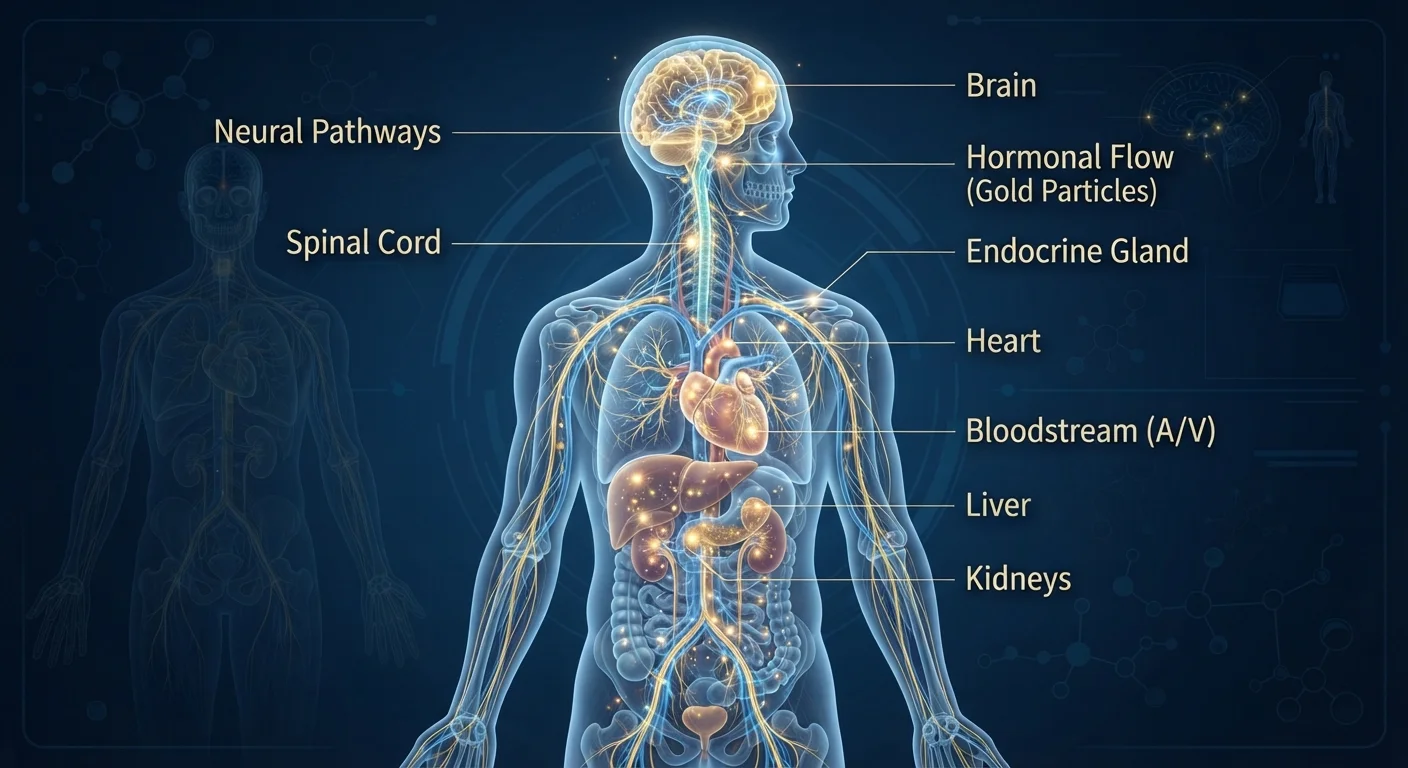
The human body contains roughly 37 trillion cells, and keeping them working in coordinated harmony requires constant, precise communication. That job falls primarily to two systems: the nervous system, which transmits rapid electrical impulses through a vast network of nerves, and the endocrine system, which dispatches chemical messengers - hormones - through the bloodstream.
Think of the nervous system as a telephone network: messages are fast, targeted, and short-lived. The endocrine system is more like a broadcast radio signal - slower to reach its destination but capable of influencing many tissues simultaneously and sustaining its effect over time. For a broader look at all the body's organ systems, see our quick-reference guide to organ systems.
~50
Known hormones in the human body
The endocrine system produces approximately 50 distinct hormones, each targeting specific cells or tissues to regulate a vast range of physiological processes.
270 mph
Top speed of nerve signal transmission
The fastest nerve fibers - large, myelinated A-alpha fibers - can transmit signals at up to approximately 270 miles per hour, enabling near-instantaneous reflexes.
37 trillion
Cells requiring coordinated communication
Estimates suggest the adult human body contains roughly 37 trillion cells, all requiring chemical or electrical signals to function in an integrated, organized way.
How Hormones Carry Messages
Hormones are produced by specialized glands - such as the thyroid, adrenal glands, and pancreas - and released into the bloodstream. Each hormone is shaped to bind only to specific target cells equipped with matching receptors, much like a key fitting a particular lock. Once bound, the hormone triggers a change in that cell's behavior: increasing or decreasing production of a protein, altering metabolism, or switching a gene on or off.
Because hormones travel through the blood, they can reach virtually every tissue in the body. However, this reach comes at a cost in speed - a hormonal signal may take minutes to hours to produce its full effect. The endocrine system's chemical messaging network is explored in detail in a companion article.
Hormones Affect Far More Than Mood
Many people associate hormones primarily with puberty or emotional states, but they regulate a much broader range of functions - including metabolism, immune response, blood pressure, bone density, and sleep cycles. Disruptions to hormonal balance can produce symptoms across multiple body systems, which is one reason a healthcare provider may order blood tests that include hormone panels when investigating seemingly unrelated complaints.
Nerve Signals: Speed and Precision
Nerve cells, or neurons, transmit information as electrical impulses that travel at speeds up to 270 miles per hour. When a signal reaches the end of one neuron, it triggers the release of chemical messengers called neurotransmitters that bridge the gap - the synapse - to the next neuron or target muscle. This combination of electrical and chemical signaling allows for extraordinarily fast, precise responses.
The nervous system is divided into two major branches. The central nervous system (the brain and spinal cord) processes information and generates responses. The peripheral nervous system carries those signals to and from the rest of the body. Our article on the CNS and PNS explains how these two divisions divide responsibilities. Many of the body's automated adjustments - breathing rate, blood pressure, digestion - run through the autonomic nervous system without any conscious input, as described in our piece on things your body does without you noticing.
Feedback Loops: The Body's Self-Correction Mechanism
Both systems depend on feedback loops to maintain homeostasis - the stable internal conditions cells need to function. Most of the body's self-regulation uses negative feedback, a process where a change in a variable triggers a response that opposes and reverses that change.
Blood sugar regulation is a textbook example. When blood glucose rises after a meal, the pancreas detects the increase and secretes insulin. Insulin signals cells to absorb glucose, bringing blood levels back toward the normal range. Once balance is restored, insulin secretion decreases - the loop completes itself. Body temperature, blood pressure, and thyroid hormone levels all operate on similar negative feedback principles.
Positive feedback loops work differently: rather than reversing a change, they amplify it to drive a process toward a definitive conclusion. These are less common precisely because they are self-reinforcing and need a clear endpoint to stop. Childbirth is the most cited example - uterine contractions prompt oxytocin release, which intensifies contractions further, until birth ends the cycle.
“The body is a self-regulating system of remarkable sophistication. Its feedback mechanisms continuously monitor and adjust internal variables in ways that no engineered system has yet matched.”
— Walter B. Cannon, Physiologist and originator of the homeostasis concept
Where the Two Systems Meet
The nervous and endocrine systems don't operate in separate silos - they are deeply interconnected. The hypothalamus, a small region at the base of the brain, serves as the primary integration point. It receives neural information about the body's internal environment and responds by directing the pituitary gland to release or suppress specific hormones, which then regulate glands throughout the body. This neuroendocrine axis is central to functions as varied as stress response, reproduction, growth, and sleep.
When you perceive a threat, for instance, the nervous system triggers the adrenal glands - via a rapid neural pathway - to release adrenaline within seconds. Simultaneously, the hypothalamus initiates a hormonal cascade that sustains the stress response over a longer period. This dual-channel approach reflects a core principle: fast nerve signals handle immediate demands, while hormonal signals manage sustained adjustments. Understanding how these systems interact also helps explain why disruptions show up as recognizable symptoms - see our overview of common symptoms across body systems for context.
This article is for general informational and educational purposes only and does not constitute medical advice. Always consult a qualified healthcare professional with questions about your health or any symptoms you may be experiencing.