
The Body's Hidden Workforce
Most people think of the body only when something goes wrong - a pulled muscle, a headache, an unexpected cough. But the vast majority of what your body does happens entirely outside your awareness, managed by systems so precise and automatic they rarely need your attention at all.
Understanding these background processes isn't just fascinating - it offers a clearer picture of how interconnected your biology really is. For a broader map of those connections, see our quick-reference guide to organ systems. Below are some of the most remarkable things your body does without a single conscious instruction from you.
Regulating your blood pressure every second
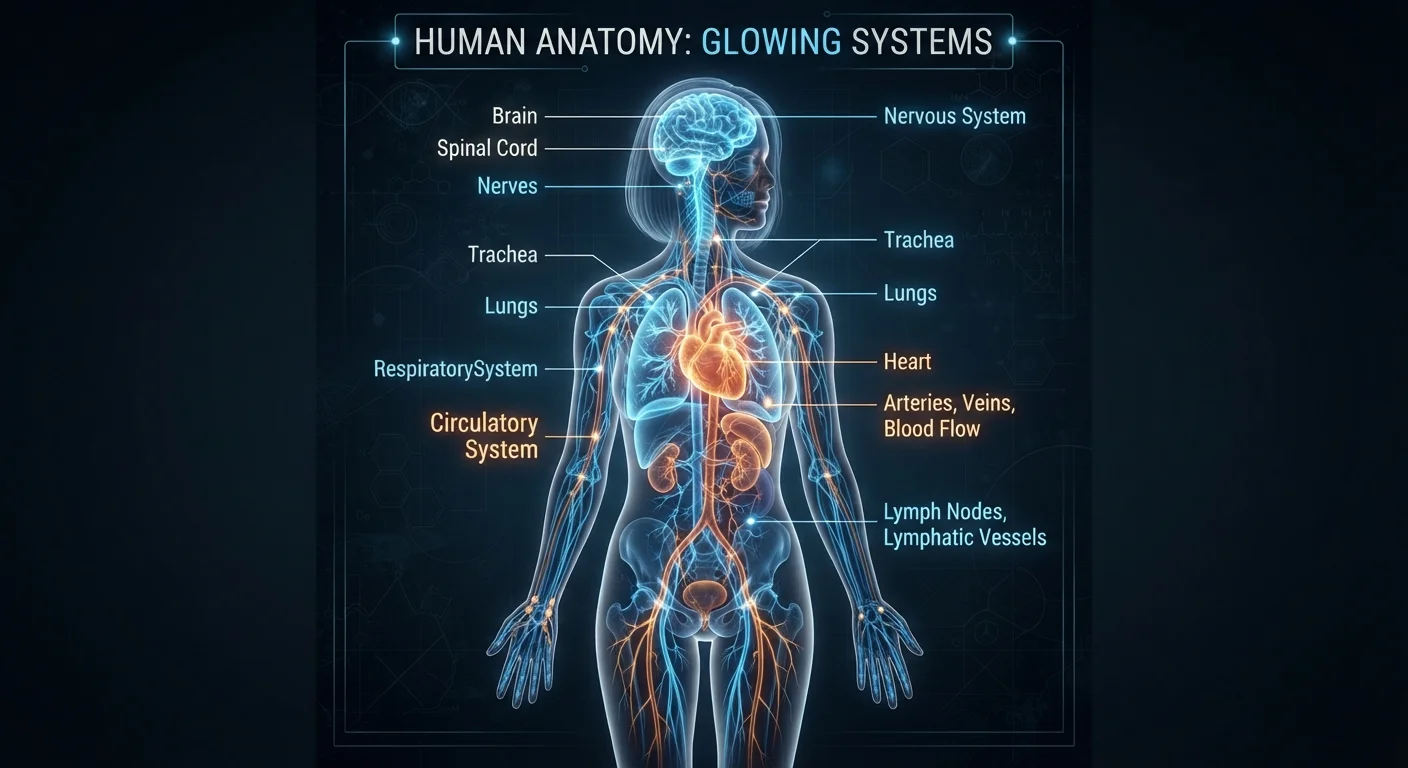
Your autonomic nervous system - the branch of the nervous system that operates without conscious control - monitors and adjusts your blood pressure continuously. Specialized sensors called baroreceptors, located in the walls of major arteries, detect changes in blood vessel stretch and relay signals to the brain's cardiovascular control center in milliseconds. The brain then directs the heart and blood vessels to compensate, widening or narrowing vessels and adjusting heart rate as needed. This happens thousands of times a day, including every time you stand up. For more on this system, visit our overview of how the cardiovascular system keeps everything moving.
Baroreceptors in your arteries adjust blood pressure faster than conscious thought is even possible.
Running a 500-function chemical plant: your liver
The liver is one of the most metabolically active organs in the body, performing an estimated 500 or more distinct functions simultaneously. It filters blood arriving from the digestive tract, metabolizes drugs and alcohol, produces bile for fat digestion, synthesizes proteins essential for blood clotting, and regulates blood glucose levels - all at the same time. It also stores vitamins and minerals, and converts excess amino acids into waste products the kidneys can excrete. What makes the liver especially remarkable is its capacity for regeneration: it can restore significant lost tissue, a trait uncommon in most organs.
The liver performs hundreds of chemical tasks simultaneously, including filtering, synthesizing, and storing vital compounds.
Filtering your entire blood supply dozens of times daily
Your kidneys filter approximately 200 liters of blood every day - cycling through your total blood volume roughly 40 times. They do this through around one million tiny filtering units in each kidney called nephrons, which separate waste products and excess water from substances the body needs to retain. The result is about 1-2 liters of urine, while the rest is reabsorbed and returned to circulation. The kidneys also play a key role in regulating electrolyte balance, blood pH, and blood pressure - functions that have nothing to do with urine but are critical to survival.
Each kidney contains around a million nephrons, quietly filtering your blood supply dozens of times every day.
Moving lymph fluid without a pump
Unlike the cardiovascular system, which has the heart as a dedicated pump, the lymphatic system has no central pump at all. Instead, lymph fluid - which collects excess tissue fluid, fats absorbed from the gut, and immune cells - is pushed through a network of vessels by the pressure created by surrounding muscle contractions, breathing movements, and arterial pulsations. One-way valves inside lymph vessels prevent backflow. This is one reason regular physical movement is important for immune function and fluid balance. Learn more in our dedicated piece on the lymphatic system's role in immunity and drainage.
Lymph fluid circulates through your body using no pump - muscle movement and breathing do all the work.
Continuously rebuilding your skeleton
Bone tissue is not static. Your skeleton is constantly being broken down and rebuilt through a process called bone remodeling, carried out by two types of specialized cells: osteoclasts, which dissolve old bone tissue, and osteoblasts, which lay down new bone. In healthy adults, the skeleton is estimated to undergo a complete turnover of its mineral content roughly every 10 years, though rates vary by age and bone type. This process allows bone to repair microscopic damage from daily stress and adapt its structure over time - all without any conscious effort on your part.
Bone remodeling never stops - specialized cells break down and rebuild your skeleton continuously throughout life.
Calibrating your body temperature within a narrow range
Core body temperature is tightly controlled within a range of roughly 97°F to 99°F (36.1°C to 37.2°C) by a region of the brain called the hypothalamus, which functions like a biological thermostat. When you overheat, the hypothalamus triggers sweating and redirects blood flow toward the skin to release heat. When you're too cold, it signals shivering - rapid, involuntary muscle contractions that generate warmth - and reduces blood flow to extremities to preserve core temperature. Even small deviations from the normal range affect enzyme function and cellular chemistry, making this one of the body's most critical regulatory tasks.
The hypothalamus acts as a thermostat, keeping your core temperature stable enough for cellular chemistry to function.
Why This All Matters
These systems don't operate in isolation. Your nervous system cues your endocrine system; your cardiovascular system feeds your lymphatic one; your kidneys respond to signals from the brain. For a deeper look at how these networks talk to each other, explore our article on how hormones, nerves, and feedback loops coordinate the body.
Becoming familiar with this background activity also helps you notice when something shifts. Subtle changes in how your body feels can be early signals worth paying attention to - our piece on signals your body sends that deserve a closer look covers exactly that.
Support Your Background Systems
Regular movement, adequate hydration, and consistent sleep all support the body's automatic systems - from lymphatic circulation to liver metabolism. You don't need to manage these processes consciously, but the conditions you create through daily habits do influence how effectively they run. For a look at what sedentary time does to some of these systems, see our article on sitting all day and its physiological effects.
This article is for general informational and educational purposes only and is not a substitute for professional medical advice. If you have concerns about your health, consult a qualified healthcare provider.