
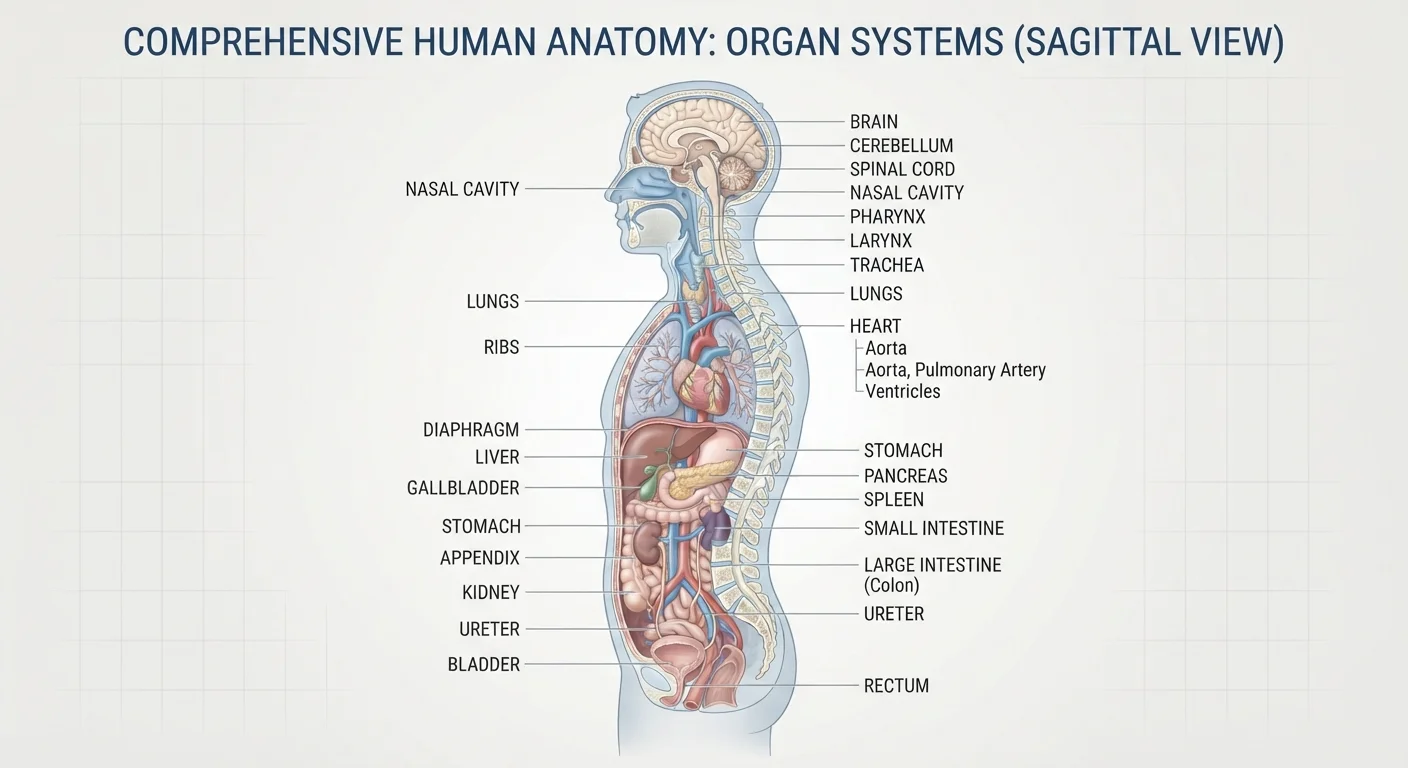
What Is an Organ System?
An organ system is a group of organs that work together to carry out a shared biological function. The human body contains eleven recognized major organ systems, and no single system operates in complete isolation - they are constantly communicating, compensating, and coordinating. Understanding each system's role is the foundation of human biology, whether you're a student, a curious adult, or someone trying to make sense of a health conversation.
For a broader view of how body systems concepts connect to biology education, see core biology concepts every student encounters.
| Number of major organ systems | 11 |
| Bones in an adult human body | 206 |
| Largest organ | Skin (integumentary system) |
| Approximate number of muscles | ~650 skeletal muscles |
| Smallest organ | Pineal gland (endocrine system) (Commonly cited in anatomy references) |
| Blood pumped by heart daily | ~2,000 gallons (American Heart Association estimates) |
The Eleven Major Organ Systems
Below is a concise overview of each organ system, its primary components, and its core function.
Integumentary System
Primary organs: skin, hair, nails, sweat glands. Core function: forms the body's outer barrier, regulates temperature, prevents water loss, and provides sensory input. Skin is far more than a covering - learn why skin qualifies as a remarkably capable organ.
Skeletal System
Primary organs: bones (206 in adults), cartilage, ligaments. Core function: provides structural support, protects internal organs, enables movement, produces blood cells in bone marrow, and stores minerals such as calcium.
Muscular System
Primary organs: skeletal muscles, cardiac muscle, smooth muscle. Core function: generates movement, maintains posture, produces body heat, and assists in circulation and digestion through involuntary contractions.
Nervous System
Primary organs: brain, spinal cord, peripheral nerves. Core function: detects stimuli, processes information, coordinates voluntary and involuntary responses, and regulates virtually every other organ system through electrical and chemical signals.
Endocrine System
Primary organs: hypothalamus, pituitary gland, thyroid, adrenal glands, pancreas, ovaries, testes. Core function: secretes hormones into the bloodstream to regulate growth, metabolism, reproduction, mood, and stress responses.
Cardiovascular System
Primary organs: heart, arteries, veins, capillaries. Core function: pumps blood throughout the body, delivering oxygen and nutrients to tissues while removing carbon dioxide and metabolic waste.
Lymphatic and Immune System
Primary organs: lymph nodes, spleen, thymus, bone marrow, lymphatic vessels. Core function: drains excess tissue fluid, transports dietary fats, and - critically - identifies and neutralizes pathogens and abnormal cells. Your body's immune activity behind the scenes is a remarkably continuous process.
Respiratory System
Primary organs: nose, trachea, lungs, diaphragm, bronchi. Core function: facilitates gas exchange - drawing oxygen into the blood and expelling carbon dioxide - and plays a role in regulating blood pH.
Digestive System
Primary organs: mouth, esophagus, stomach, small intestine, large intestine, liver, pancreas. Core function: breaks down food mechanically and chemically, absorbs nutrients into the bloodstream, and eliminates solid waste.
Urinary System
Primary organs: kidneys, ureters, bladder, urethra. Core function: filters blood to remove waste products, regulates fluid and electrolyte balance, and controls blood pressure through hormone signaling.
Reproductive System
Primary organs vary by biological sex; include gonads (ovaries or testes), associated ducts, and accessory glands. Core function: produces gametes and sex hormones, and supports reproduction. For a fuller explanation, see a clear overview of the reproductive system.
Organ system
A group of organs that work together to perform one or more related physiological functions. The human body has eleven major organ systems.
Hormone
A chemical messenger produced by an endocrine gland and released into the bloodstream. Hormones regulate processes such as metabolism, growth, and reproduction.
Gas exchange
The process by which oxygen moves from the lungs into the blood, and carbon dioxide moves from the blood into the lungs to be exhaled.
Homeostasis
The body's ongoing process of maintaining a stable internal environment - including temperature, fluid balance, and blood chemistry - despite external changes.
Gamete
A reproductive cell - either a sperm cell or an egg cell - that contains half the normal number of chromosomes and fuses with another gamete during fertilization.
How the Systems Connect
No organ system is an island. The nervous and endocrine systems together act as the body's command-and-control network, influencing virtually every other system. The cardiovascular system delivers the oxygen and nutrients that allow the muscular, digestive, and other systems to function. The urinary system works alongside the respiratory system to keep blood chemistry stable.
This interdependence is why a problem in one system frequently shows up as symptoms in another - and why healthcare providers consider the whole body rather than individual organs in isolation.
This article is for general educational purposes only and does not constitute medical advice. For any questions about your personal health, consult a qualified healthcare professional.