
What the Reproductive System Does
The reproductive system is the only organ system whose primary purpose is not to sustain the individual - it exists to sustain the species. Its two core biological jobs are producing gametes (the sex cells: eggs and sperm) and, when fertilization occurs, supporting the development of a new organism.
Beyond reproduction itself, this system also generates sex hormones - chiefly estrogen, progesterone, and testosterone - that shape the body well beyond the reproductive organs. These hormones influence bone density, muscle mass, mood regulation, and cardiovascular function. The reproductive system is, in that sense, deeply integrated with nearly every other body system. For a broader look at how organ systems interconnect, see the quick-reference guide to organ systems.
Gametes
The sex cells involved in reproduction - eggs in female anatomy and sperm in male anatomy. Each carries half the genetic material needed to form a new organism.
Gonads
The primary reproductive organs that produce gametes and sex hormones. In female anatomy these are the ovaries; in male anatomy they are the testes.
Ovulation
The release of a mature egg from one of the ovaries, which typically happens once per menstrual cycle and represents the window when fertilization is possible.
Fertilization
The process in which a sperm cell merges with an egg cell, combining their genetic material to form a single cell called a zygote - the starting point of a new organism.
Spermatogenesis
The continuous biological process by which the testes produce sperm cells, taking approximately 64-74 days from start to mature cell.
Luteinizing Hormone (LH)
A hormone released by the pituitary gland that triggers ovulation in female anatomy and signals testosterone production in male anatomy.
Key Structures and Their Roles
Human reproductive anatomy differs significantly between those with female reproductive systems and those with male reproductive systems. Both, however, share a common organizing logic: gonads produce gametes and hormones, while accessory structures transport and support them.
Female Reproductive Anatomy
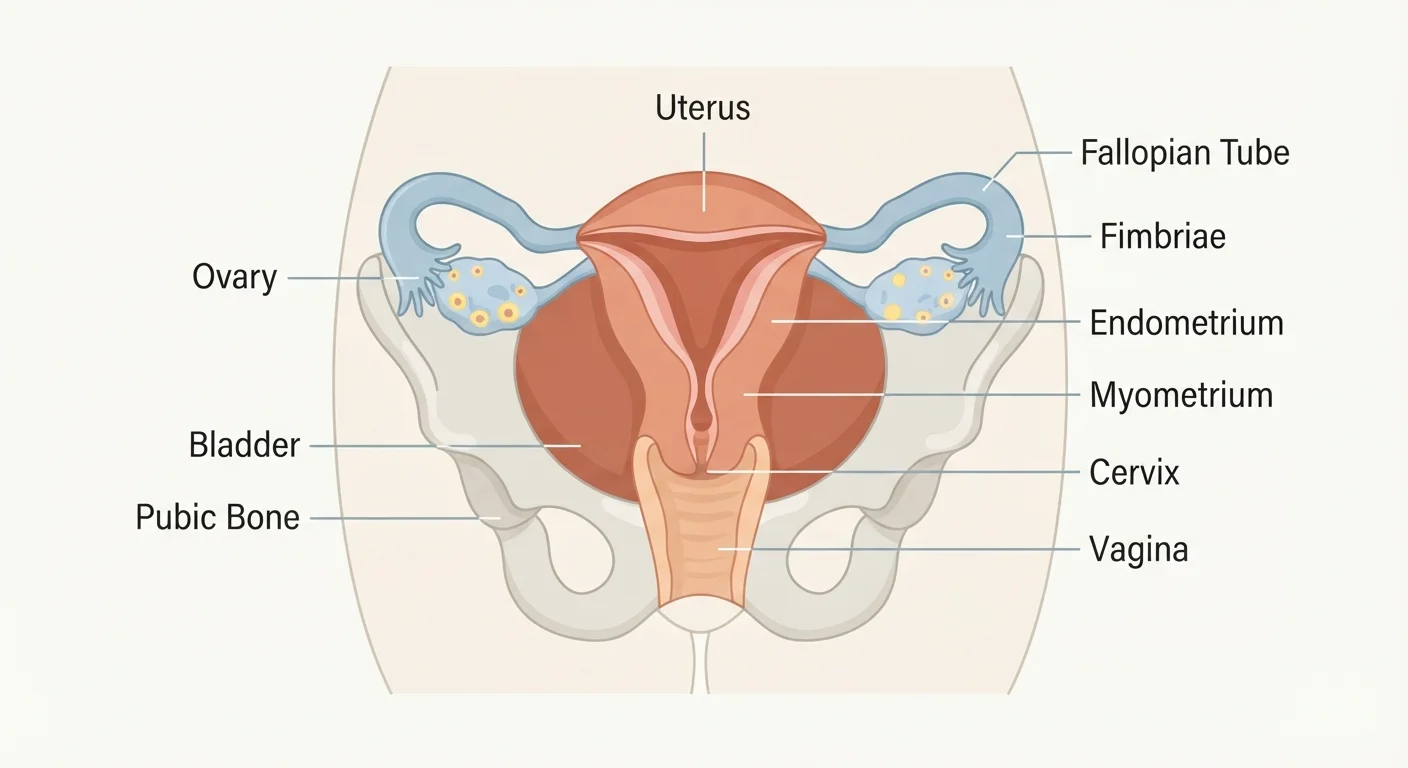
- Ovaries: Two almond-shaped glands that produce eggs (ova) and secrete estrogen and progesterone.
- Fallopian tubes: Narrow channels that carry a released egg from the ovary toward the uterus; fertilization typically occurs here.
- Uterus: A muscular, pear-shaped organ where a fertilized egg implants and a fetus develops during pregnancy.
- Cervix and vagina: The cervix connects the uterus to the vaginal canal, which serves as the birth canal and passageway for menstrual flow.
Male Reproductive Anatomy
- Testes: The primary male gonads, housed in the scrotum; they produce sperm and testosterone.
- Epididymis and vas deferens: The epididymis is where sperm mature; the vas deferens transports mature sperm toward the urethra.
- Seminal vesicles and prostate gland: These accessory glands produce fluids that nourish and protect sperm, forming semen.
- Penis and urethra: The urethra carries semen (and urine at separate times) out of the body.
Hormones: The System's Chemical Messengers
Reproductive function is orchestrated by a hormonal chain of command that begins in the brain. The hypothalamus releases gonadotropin-releasing hormone (GnRH), which prompts the pituitary gland to secrete two key hormones: follicle-stimulating hormone (FSH) and luteinizing hormone (LH).
In people with female anatomy, FSH stimulates follicle development in the ovaries, while a surge in LH triggers ovulation. In people with male anatomy, FSH supports sperm production and LH signals the testes to produce testosterone. The gonads then feed hormone levels back to the brain in a continuous feedback loop - when levels are adequate, the brain dials back its signals; when they drop, it increases them.
Hormonal Balance Affects More Than Reproduction
Sex hormones like estrogen and testosterone influence bone strength, cardiovascular health, mood, and energy levels - not just fertility. Significant hormonal changes at any life stage, including puberty, postpartum periods, and menopause, can produce wide-ranging effects throughout the body. Understanding this helps explain why reproductive health is often central to overall wellness conversations.
This same hormonal system governs puberty, fertility windows, and the gradual hormonal shifts of menopause and andropause later in life.
The Reproductive Cycle and Fertility
The menstrual cycle - typically ranging from 21 to 35 days - is the recurring process by which the body prepares for potential fertilization. It involves four phases: menstruation (shedding of the uterine lining), the follicular phase (egg development), ovulation (egg release), and the luteal phase (preparation for implantation). If fertilization does not occur, progesterone drops and the cycle restarts.
Sperm production (spermatogenesis) is a continuous process rather than a monthly cycle. The testes produce millions of sperm daily, with the full maturation process taking roughly 64-74 days. Sperm viability and quality are influenced by temperature - which is why the testes are located outside the body cavity, where it is slightly cooler.
Don't Self-Diagnose Fertility Concerns
Fertility challenges involve complex biological variables that cannot be assessed without clinical evaluation. Over-the-counter tests can offer limited information, but they do not replace a comprehensive assessment by a reproductive health specialist. If you have concerns about your fertility or reproductive health, a qualified medical provider is the right starting point.
Fertility is shaped by many interacting factors including age, hormonal balance, anatomy, and general health. It's a topic closely tied to individual biology, and anyone with concerns about fertility is encouraged to seek evaluation from a qualified reproductive medicine specialist.
For a broader view of biology fundamentals - including how reproduction fits into the study of life - core biology concepts every student encounters provides useful context.
When to Talk to a Healthcare Provider
The reproductive system can produce a range of symptoms - some routine, others worth evaluating. Irregular periods, pelvic pain, unusual discharge, or changes in sexual function are among the signs that a healthcare provider should assess. These symptoms don't always indicate a serious condition, but they are rarely worth self-diagnosing. For a broader reference on how symptoms map to body systems, this overview of common symptoms across body systems can help orient you before a medical visit.
Reproductive health intersects with overall wellbeing in significant ways. Routine check-ups - such as gynecological exams, STI screening, and prostate health monitoring - are a standard part of preventive care across adulthood.
This article is for general informational and educational purposes only and does not constitute medical advice. Always consult a licensed healthcare professional for guidance specific to your health situation, symptoms, or medical history.