
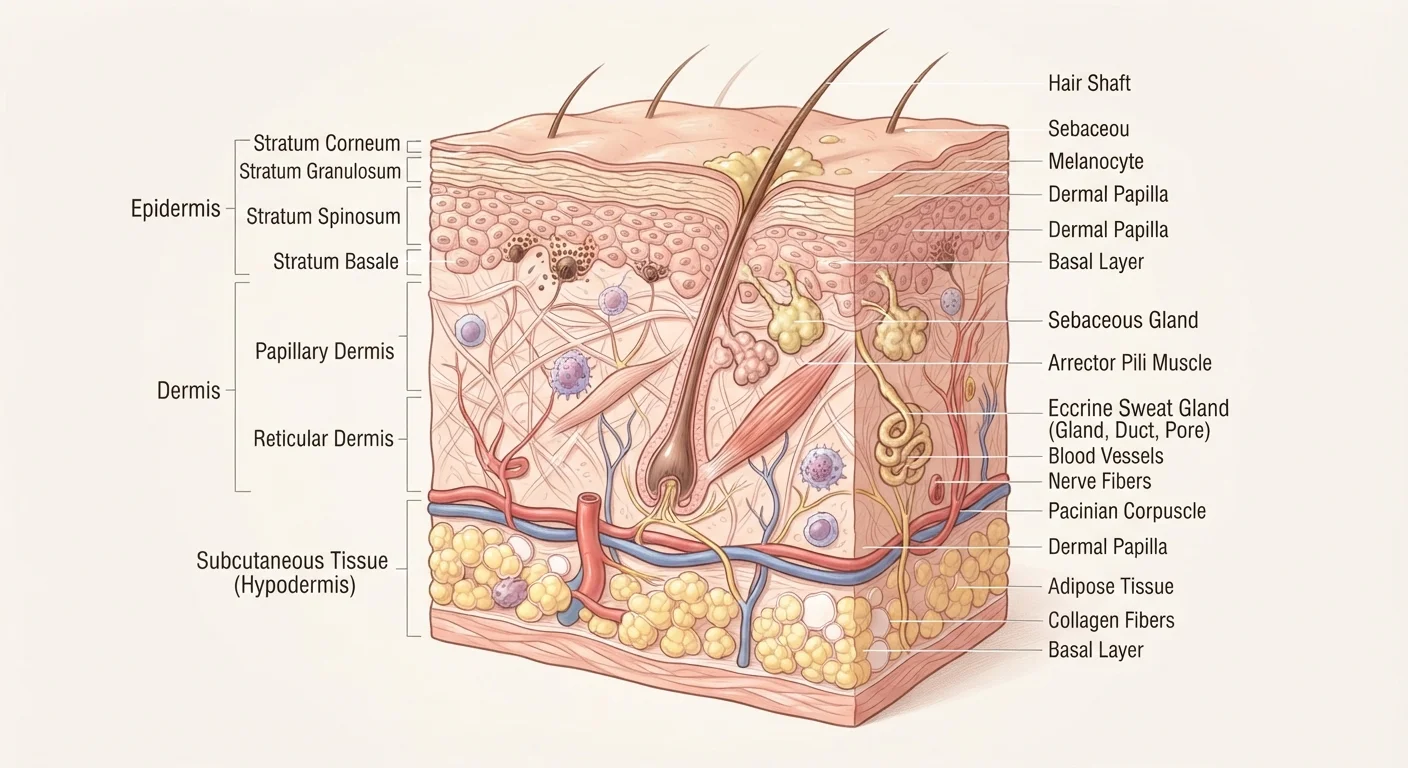
What Makes Skin an Organ?
Many people think of skin as little more than a surface - an outer wrapping that keeps everything else in place. In reality, skin is a fully qualified organ, and a remarkably complex one at that. An organ, by biological definition, is a structure composed of two or more tissue types working in concert to perform specific functions. Skin fits this description precisely.
It contains epithelial tissue (providing barrier coverage), connective tissue (offering structural support), nervous tissue (enabling sensation), and vascular tissue (supplying blood). This multi-tissue architecture allows skin to carry out a range of physiological tasks that no single material could manage. For a broader look at how this fits into the body's overall architecture, see our organ systems reference guide.
Skin Is the Body's Heaviest Organ
While the brain and liver often get attention for their complexity, skin outweighs them all. In an average adult, skin accounts for approximately 15% of total body weight. This mass reflects how much structural material - collagen, keratin, fat - is required to maintain a barrier across the body's entire external surface.
The Three Layers and What They Do
Skin is organised into three primary layers, each with distinct responsibilities.
- Epidermis: The outermost layer, visible to the eye. It is dominated by keratinocytes - cells that produce the tough protein keratin - and also houses melanocytes (which produce pigment) and Langerhans cells (immune sentinels). The epidermis is continually renewed from the bottom up, with new cells replacing shed surface cells every 2-4 weeks.
- Dermis: The thicker middle layer, packed with collagen and elastin fibres that give skin its strength and elasticity. Hair follicles, sweat glands, sebaceous (oil) glands, and a dense network of blood vessels and nerve endings all reside here.
- Hypodermis (subcutaneous layer): Composed primarily of fat and connective tissue, this deepest layer cushions internal organs against impact, anchors the skin to underlying muscle, and contributes to body temperature insulation.
~20 sq ft
Average adult skin surface area
Skin is consistently cited by anatomists as the body's largest organ by surface area, spanning roughly 1.5-2 square meters in a typical adult.
15%
Proportion of total body weight
According to standard anatomical references, skin accounts for approximately 15% of an adult's body weight, making it heavier than any other single organ.
2-4 weeks
Epidermal renewal cycle
The outermost epidermal cells are continually shed and replaced, with a full surface turnover taking roughly two to four weeks in healthy adults.
Seven Functions That Earn Skin Its Reputation
Skin does far more than prevent the outside world from getting in. Physiologists typically identify at least seven core functions:
- Physical barrier: Skin blocks pathogens, chemicals, and UV radiation from reaching internal tissues. Its slightly acidic surface pH (around 4.5-5.5) further discourages microbial growth.
- Temperature regulation: Sweat glands release moisture that cools the body through evaporation. Blood vessels near the surface dilate in heat to radiate warmth and constrict in cold to conserve it - much as the cardiovascular system adjusts blood distribution in response to demand.
- Sensation: Specialised nerve receptors in the dermis detect pressure, vibration, temperature, and pain, relaying that information to the brain in real time.
- Immune defence: Langerhans cells in the epidermis act as frontline immune monitors, identifying and responding to foreign antigens before they penetrate deeper tissue.
- Vitamin D synthesis: UVB radiation converts a precursor molecule in skin cells into pre-vitamin D3, which the liver and kidneys then activate for use throughout the body.
- Waste excretion: Sweat carries trace amounts of urea, salts, and other metabolic byproducts to the surface, providing a minor but real excretory pathway.
- Water retention: The lipid-rich outer epidermis prevents excessive water loss from internal tissues, maintaining hydration balance.
This breadth of activity is part of what makes the body so active behind the scenes - skin included.
Support Skin's Natural Functions Every Day
Staying adequately hydrated supports the skin's ability to maintain the moisture barrier. Sun protection - such as seeking shade during peak UV hours and wearing protective clothing - helps preserve skin cell integrity over time. For personalised skin care guidance, particularly if you notice new or changing spots, consult a dermatologist or primary care provider.
Skin in the Wider Body System
Skin does not operate in isolation. Its blood vessels connect directly to the cardiovascular system; its immune cells coordinate with the lymphatic network - a relationship explored in our article on the lymphatic system's role in immunity and fluid balance. Its nerve endings feed information to the central nervous system constantly, informing posture, reflexes, and pain response.
Understanding skin as a functional organ - rather than simply a surface - reframes how we think about everyday experiences like sweating, goosebumps, sunburn, and wound healing. Each is a precise physiological process, not a random event. Skin is perpetually at work, adapting, defending, and communicating, often without any conscious awareness on our part.
This article is for informational purposes only and does not constitute medical advice. Consult a qualified healthcare professional for any concerns about your skin health or any changes you notice.