
Three Components, One Seamless System
The cardiovascular system has three core parts: the heart, a network of blood vessels, and blood itself. Each plays a distinct role, but they function as a single, integrated unit that never stops working from before birth until death.
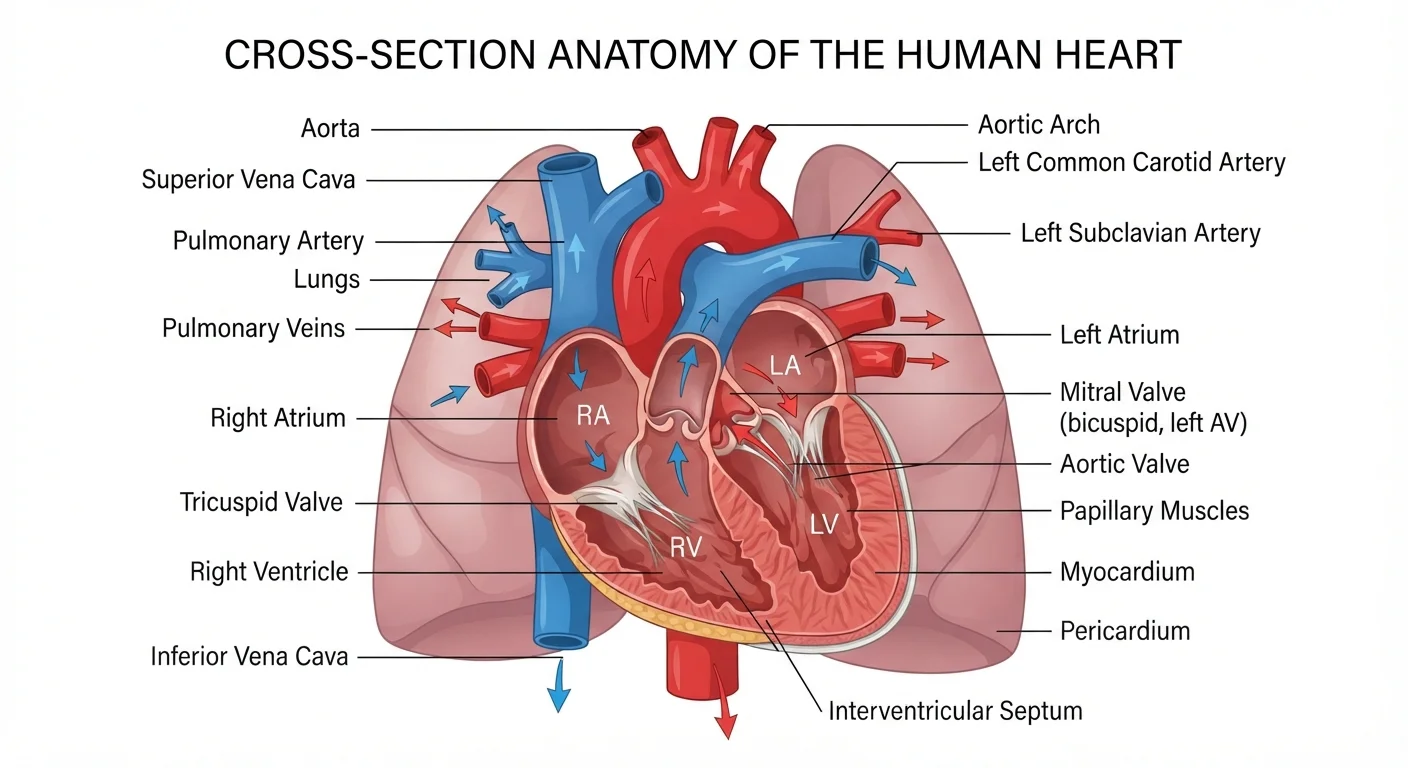
The heart is a muscular pump, roughly the size of a fist, positioned slightly left of center in the chest. It is divided into four chambers: two upper chambers called atria (singular: atrium) and two lower chambers called ventricles. The right side of the heart handles deoxygenated blood returning from the body; the left side handles oxygenated blood arriving from the lungs. Valves between chambers open and close in precise sequence to keep blood flowing in one direction only.
Blood vessels form an extensive branching network. Arteries are thick-walled vessels that carry blood away from the heart under high pressure. They branch into smaller arterioles, which feed into the tiny capillaries where the real exchange happens - oxygen and nutrients move into cells, and waste products move out. Veins then gather the depleted blood and return it to the heart at lower pressure, assisted by one-way valves and the pumping action of surrounding muscles.
Blood itself is a fluid tissue composed of red blood cells (which carry oxygen using a protein called hemoglobin), white blood cells (immune defenders), platelets (clotting agents), and plasma (the liquid medium that carries everything else, including hormones, nutrients, and waste).
~60,000
Miles of blood vessels in the adult body
Estimates from anatomical research suggest the total length of all blood vessels - arteries, veins, and capillaries - in one adult body spans tens of thousands of miles.
100,000
Heartbeats per day on average
At a typical resting rate of 60-100 beats per minute, the heart completes roughly 100,000 full contractions every 24 hours.
5 liters
Blood volume in the average adult
The average adult body contains approximately 4.7-5.5 liters of blood, which the heart circulates completely about once per minute at rest.
Two Circuits, One Pump
Blood doesn't travel in a single loop - it follows two distinct circuits that the heart runs simultaneously.
The pulmonary circuit is the shorter of the two. The right ventricle pumps oxygen-depleted blood to the lungs via the pulmonary arteries. In the lungs, blood passes through capillaries wrapped around tiny air sacs called alveoli, where it releases carbon dioxide and absorbs fresh oxygen. The oxygenated blood then returns to the left atrium via the pulmonary veins. To learn more about the lung's role in this exchange, see our explainer on the respiratory system.
The systemic circuit is far larger. The left ventricle - the heart's most powerful chamber - pumps oxygenated blood through the aorta (the body's largest artery) and out to every organ and tissue. After delivering oxygen and collecting waste, the blood returns via the vena cavae into the right atrium, completing the loop.
This dual-circuit design means the heart is really two pumps in one: a right pump serving the lungs and a left pump serving the entire body. They contract together in a coordinated rhythm set by the heart's own electrical system, originating at a cluster of cells called the sinoatrial (SA) node - the heart's natural pacemaker.
“The heart is not simply a pump. It is a dynamic organ that continuously adapts its output to the demands of every tissue, every moment, throughout an entire lifetime.”
— American Heart Association, Leading US nonprofit focused on cardiovascular health research and education
How the Cardiovascular System Connects to the Rest of the Body
The cardiovascular system doesn't work in isolation. It is the delivery infrastructure every other organ system depends on. The endocrine system, for example, relies entirely on blood to transport hormones from glands to their target tissues. The digestive system absorbs nutrients into the bloodstream; the kidneys filter waste products from it.
Even the lymphatic system - which handles fluid balance and immunity - maintains a close relationship with cardiovascular circulation, though it operates through a separate channel. You can explore that relationship in our article on the lymphatic system.
Blood pressure - the force blood exerts against vessel walls - is a key indicator of how well the system is functioning overall. It is expressed as two numbers: systolic pressure (when the heart contracts) over diastolic pressure (when the heart rests between beats). Both numbers reflect different aspects of cardiovascular workload and vessel health.
Know Your Numbers
Blood pressure and resting heart rate are two of the most accessible windows into cardiovascular function. Both can be measured non-invasively and tracked over time. If you have questions about what your readings mean for your health, a healthcare provider is the right person to consult - not general reference ranges alone.
For a broader look at how all organ systems fit together, our organ systems quick-reference guide provides a useful overview.
This article is for informational and educational purposes only and is not a substitute for professional medical advice, diagnosis, or treatment. Always consult a qualified healthcare professional with any questions about your cardiovascular health or any medical condition.