
What the Endocrine System Actually Does
Imagine a postal system that delivers messages to every corner of your body without wires, tubes, or a direct physical connection. That's essentially what the endocrine system does. Glands scattered throughout the body release hormones - tiny protein or lipid-based molecules - directly into the bloodstream, where they travel to target cells equipped to receive them.
Once a hormone arrives at its destination, it binds to a receptor and triggers a specific response. Insulin signals cells to absorb glucose. Adrenaline primes muscles for rapid action. Melatonin tells the brain it's time to sleep. The specificity is remarkable: each hormone acts only on cells that carry the right receptor, leaving other tissues unaffected.
This chemical messaging network runs in parallel with the nervous system, which uses electrical impulses for fast, precise communication. As explained in our article on how the nervous system sends and receives signals, the two systems are complementary - one built for speed, the other for sustained, body-wide coordination.
50+
Identified hormones in the human body
According to established endocrinology references, the human body produces more than 50 distinct hormones influencing nearly every physiological process.
~8
Major endocrine glands in the body
Core endocrinology texts identify approximately eight primary glands, though hormone-secreting cells exist in many additional organs including the gut and heart.
Minutes to years
Timescale of hormonal effects
Hormones can trigger responses in minutes (adrenaline) or drive gradual changes over years (growth hormone during development), unlike nerve signals which act in milliseconds.
The Major Players: Glands and Their Hormones
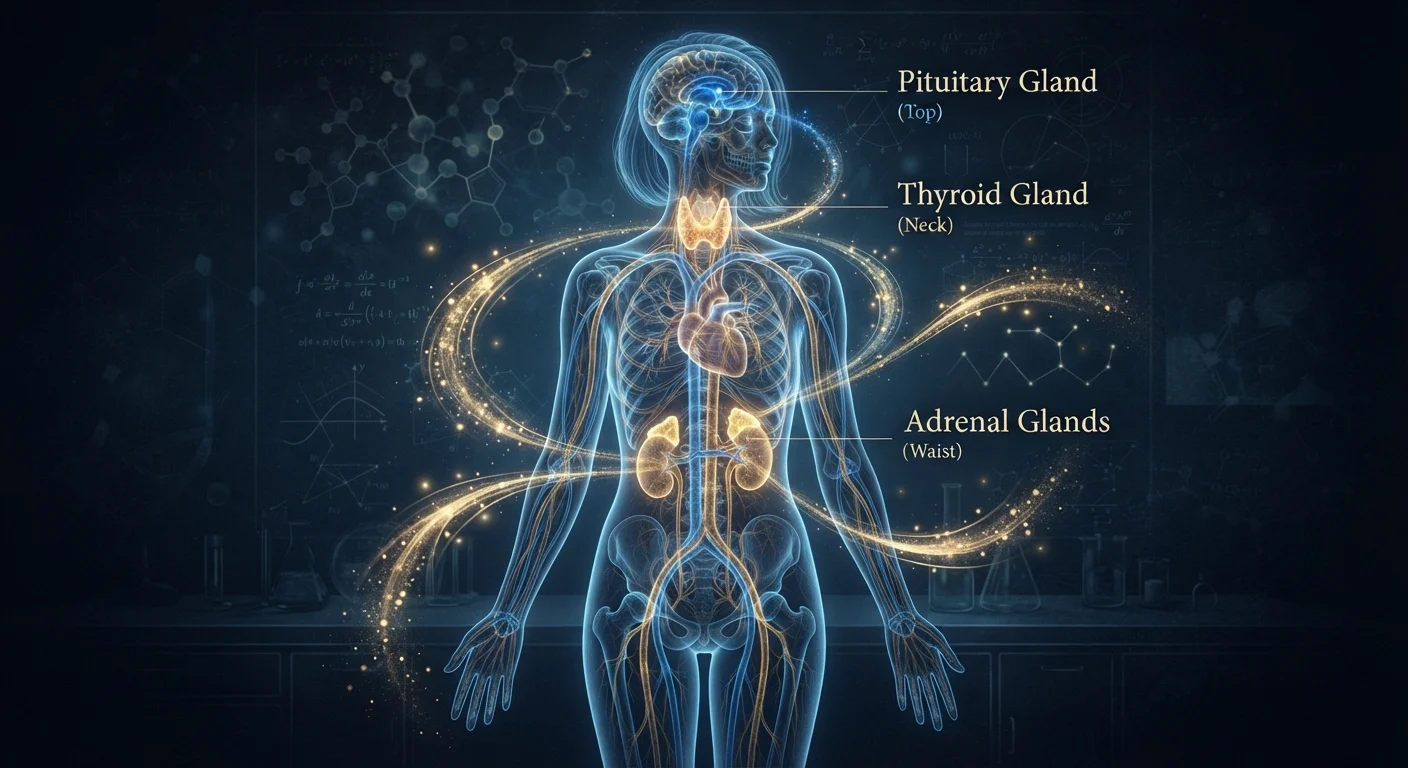
The endocrine system is not a single organ but a collection of glands distributed from the base of the brain to the lower abdomen. Each has a distinct role:
- Hypothalamus: A region of the brain that acts as the command center, linking the nervous and endocrine systems. It sends signals to the pituitary gland to initiate hormonal cascades.
- Pituitary gland: Often called the master gland, it releases hormones that direct the thyroid, adrenal glands, and reproductive organs to increase or reduce their own output.
- Thyroid gland: Located in the neck, it produces hormones that set the body's metabolic rate - influencing energy, heart rate, and body temperature.
- Adrenal glands: Perched atop each kidney, they release cortisol (the stress hormone) and adrenaline, preparing the body for perceived threats.
- Pancreas: Produces insulin and glucagon to regulate blood sugar levels, keeping energy supply stable between meals.
- Ovaries and testes: Produce sex hormones - estrogen, progesterone, and testosterone - governing reproduction, bone density, and secondary sex characteristics.
Several other organs, including the heart, kidneys, and gut, also secrete hormones as part of their functions - demonstrating how interconnected body systems truly are. For a broader look at this coordination, see our piece on how hormones and nerves use feedback loops.
Feedback Loops: How Hormone Levels Stay Balanced
The endocrine system is largely self-regulating, relying on feedback loops to prevent hormone levels from climbing too high or dropping too low. The most common mechanism is the negative feedback loop: when a hormone reaches a sufficient level in the bloodstream, it signals the gland that produced it to slow or stop output.
Think of it like a thermostat. When room temperature hits the set point, the heater shuts off. When the thyroid produces enough of its hormone, the pituitary stops sending the signal to produce more. This constant monitoring keeps the body in a state of hormonal equilibrium - a component of the broader concept of homeostasis.
Support Your Endocrine Health Daily
Consistent sleep schedules, balanced nutrition, and stress management all support normal hormone regulation. The endocrine system responds to lifestyle patterns over time, not just acute events. If you notice persistent changes in energy, weight, mood, or sleep, speak with a healthcare provider rather than self-diagnosing.
Disruptions to these loops - whether caused by disease, chronic stress, or environmental factors - can lead to hormonal imbalances with wide-ranging effects. Fatigue, mood changes, and metabolic shifts can all reflect underlying endocrine changes, which is why such symptoms deserve professional evaluation. Our overview of common symptoms across body systems maps these patterns across multiple organ systems.
This article is for general educational purposes only and does not constitute medical advice. If you have concerns about your hormonal health or related symptoms, consult a qualified healthcare professional.