
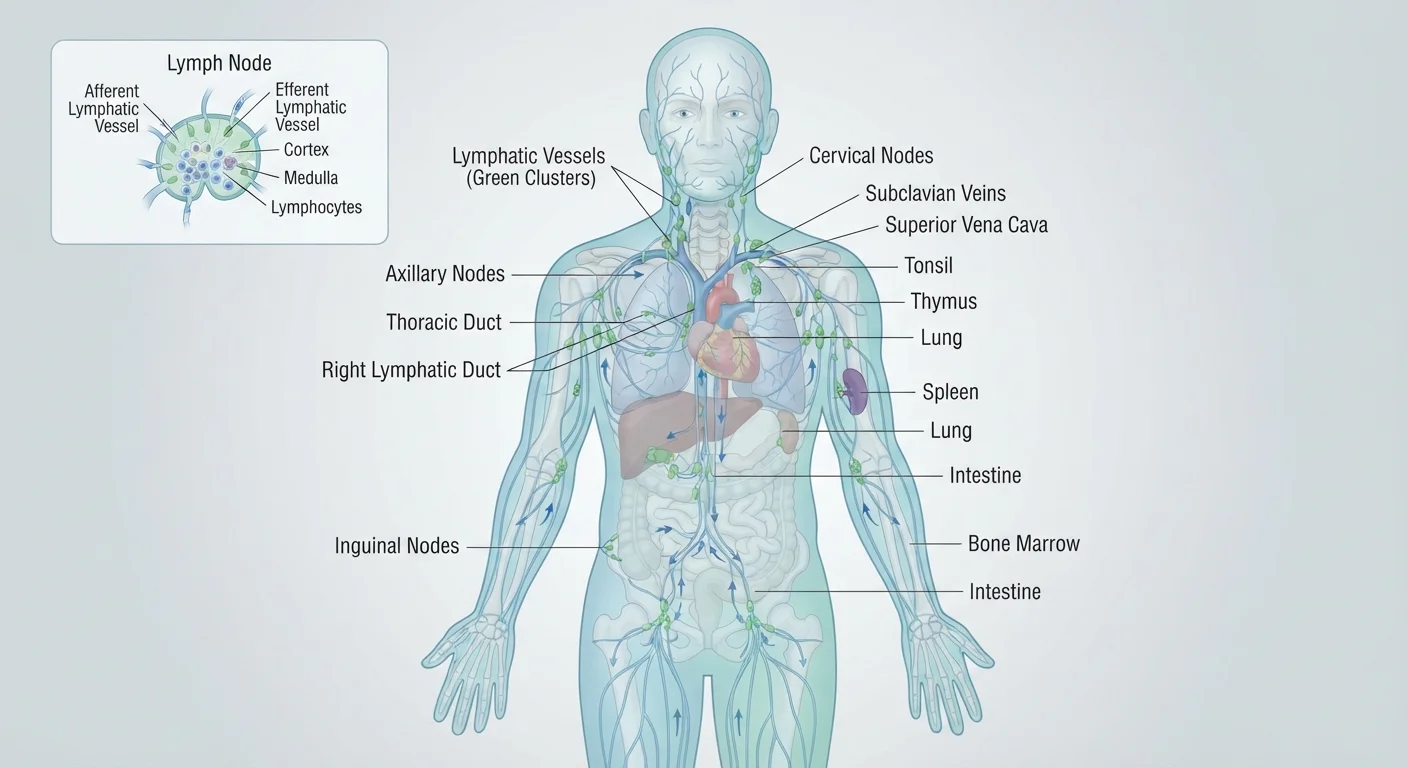
A System That Quietly Does Everything
Most people can name the heart and lungs, but far fewer think about the lymphatic system - even though it is constantly at work beneath the surface. It is, in many ways, the body's silent sanitation and security department. As your cardiovascular system pumps blood through capillaries, a small amount of fluid inevitably leaks out into surrounding tissue. Left to accumulate, this would cause dangerous swelling. The lymphatic system collects that leaked fluid, cleans it, and returns it to circulation.
Beyond fluid management, the lymphatic system is a backbone of immune defence, an absorption route for dietary fats, and a surveillance network that operates every moment of your life - as detailed in our look at remarkable things your body does behind the scenes.
~600-700
Lymph nodes in the human body
According to established anatomical references, the body contains several hundred lymph nodes, with the largest clusters in the neck, groin, and armpits.
2-3 L
Lymph fluid returned to blood daily
Physiological estimates suggest the lymphatic system returns approximately 2 to 3 litres of fluid to the circulatory system every day, preventing dangerous tissue swelling.
~1%
Of blood plasma leaks into tissues per pass
A small fraction of plasma escapes blood capillaries with each circulation cycle; the lymphatic system's primary job is recovering this fluid before it accumulates.
Key Structures and What They Do
The lymphatic system is made up of several interconnected components, each with a distinct role:
- Lymphatic vessels: A body-wide network of thin tubes that collect lymph fluid from tissues. Like veins, they contain one-way valves to keep fluid moving in the right direction.
- Lymph nodes: Small, bean-shaped glands clustered along lymphatic vessels. They act as biological checkpoints - filtering fluid and housing lymphocytes (white blood cells) that identify and neutralize bacteria, viruses, and abnormal cells.
- Spleen: The largest lymphatic organ, positioned in the upper left abdomen. It filters blood rather than lymph, removing damaged red blood cells and mounting immune responses to blood-borne pathogens.
- Thymus: A gland in the chest where T-cells - a critical class of immune cell - mature and develop the ability to recognise threats.
- Tonsils and adenoids: Clusters of lymphatic tissue in the throat that intercept inhaled or ingested pathogens at a first line of entry.
“The lymphatic system is the body's other circulatory system - less celebrated than blood circulation, but just as essential to survival. Without it, tissues would swell, immunity would collapse, and dietary fats could not reach the bloodstream.”
— Marlys Witte, Professor of Surgery and pioneering lymphatic researcher
The Gut Connection: Fats and the Lymphatic System
One of the lesser-known roles of lymphatic vessels involves digestion. Specialised lymphatic vessels in the small intestine, called lacteals, absorb dietary fats and fat-soluble vitamins (A, D, E, and K) that are too large to pass directly into blood capillaries. These nutrients are carried through the lymphatic system before eventually entering the bloodstream via the thoracic duct - the largest lymphatic vessel in the body. This is why the fluid inside lymphatic vessels in the gut appears milky white after a meal rather than the clear fluid seen elsewhere.
Understanding how body systems communicate and coordinate helps illustrate why disruption in one area - like the lymphatic system - can have wide-reaching effects on digestion, immunity, and overall balance.
Physical Activity Supports Lymph Flow
Because the lymphatic system has no pump of its own, it depends heavily on body movement. Regular physical activity - even walking - helps contract the muscles surrounding lymphatic vessels, encouraging fluid to move through the network. Deep breathing also creates pressure changes in the chest that assist lymph flow, which is one reason movement and breathing exercises are commonly incorporated into lymphedema management programmes. Always consult a healthcare professional before starting any new exercise routine, especially if you have a known lymphatic condition.
When the Lymphatic System Sends a Signal
Because the lymphatic system operates silently, changes in how it functions often show up as symptoms that seem unrelated - swollen glands during illness, unexplained fluid retention, or recurring infections. These are worth paying attention to. Our article on body signals you might dismiss too quickly explores why some mild, recurring symptoms deserve a closer look.
Chronic disruption of lymph flow can lead to lymphedema - a condition in which fluid builds up in limb tissues, causing persistent swelling and discomfort. This can result from damage to or surgical removal of lymph nodes, often in the context of cancer treatment. Management is possible but requires specialist guidance. Anyone noticing persistent unexplained swelling should speak with a healthcare professional rather than self-managing.
This article is for general informational and educational purposes only and is not a substitute for professional medical advice, diagnosis, or treatment. Always consult a qualified healthcare provider with any questions you have about a medical condition.