
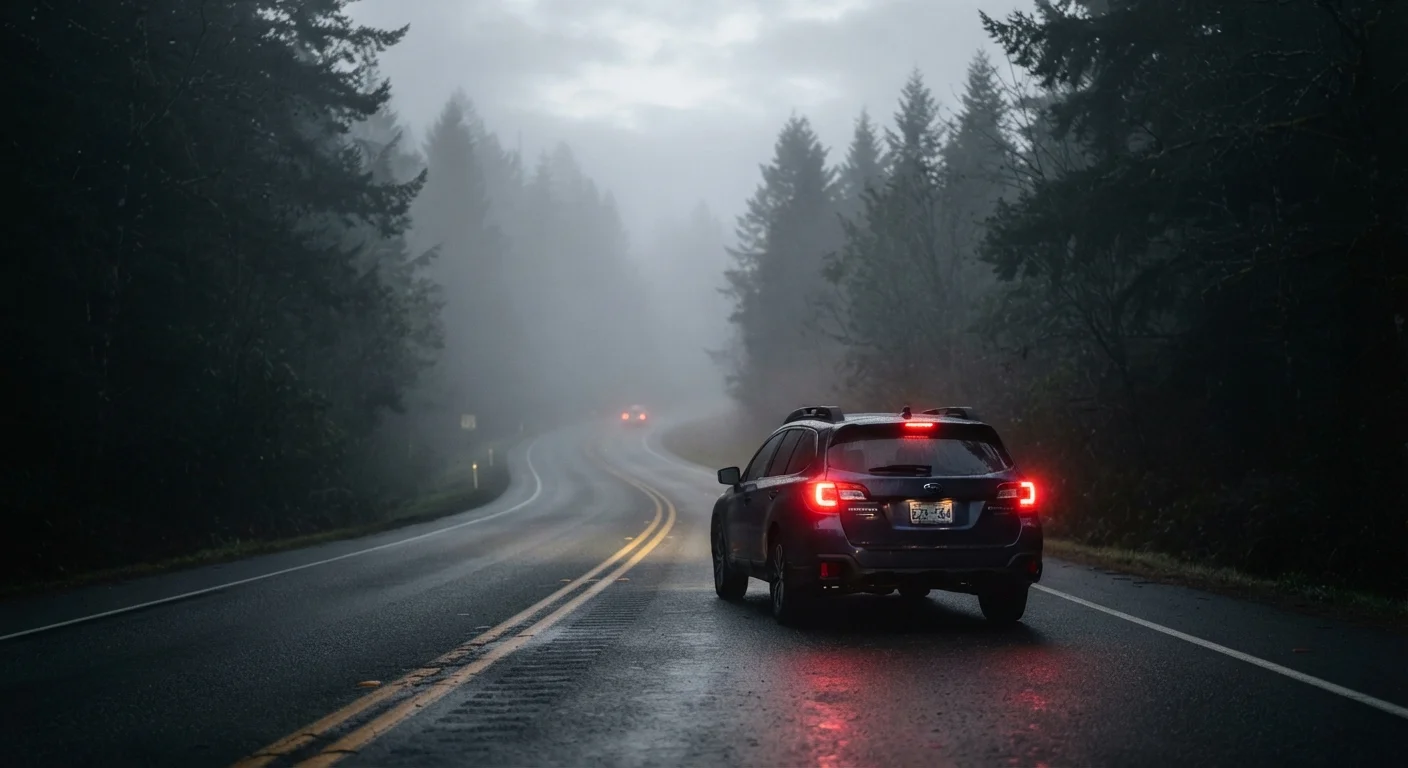
Why Extreme Conditions Change the Rules
Normal driving assumptions - comfortable stopping distances, predictable steering response, clear sightlines - collapse quickly in fog, ice, or high winds. Each condition changes a different variable: fog attacks visibility, ice attacks grip, and wind attacks stability. Understanding which threat you're facing helps you apply the right response rather than reacting instinctively in ways that can make things worse.
For context on how slick surfaces extend stopping distances even in ordinary rain, see our guide on stopping distance in wet conditions. Ice multiplies those same forces dramatically. Good seasonal car maintenance - checking tires, wiper blades, and battery health - is the foundation that makes in-the-moment technique effective.
38,700+
Annual US crashes in fog, rain, and snow combined
According to the US Department of Transportation Federal Highway Administration, adverse weather conditions contribute to roughly 21% of all vehicle crashes annually.
Up to 80%
Reduction in tire grip on black ice vs. dry road
Road safety researchers estimate tire-to-road friction coefficients drop dramatically on ice, making stopping distances several times longer than in dry conditions.
Driving in Fog: Slow Down and Light Up Correctly
Fog creates what safety researchers call a "velocity illusion" - because you can see only a short distance ahead, your brain underestimates speed. Drivers consistently travel faster than conditions allow, leaving no time to stop for obstacles that appear at the edge of their visibility.
Reduce speed significantly below posted limits in fog, ice, or high winds.
Speed limits are set for ideal conditions. In extreme weather, your available reaction time, stopping distance, and vehicle control all degrade - the posted limit may be far too fast for safety. Slowing down is the single most effective adjustment you can make.
In fog, increase your following distance to at least four times the normal gap.
In clear conditions, the standard following distance of two to three seconds provides adequate reaction time. Fog slows your perception of hazards, so doubling or tripling that buffer preserves the margin you need to stop safely.
On ice, brake by applying steady, gentle pressure rather than pressing the pedal hard.
Hard braking on ice overwhelms tire grip instantly, causing wheels to lock and the vehicle to slide straight - regardless of steering input. Modern vehicles with ABS (Anti-lock Braking System) manage this better, but the system works best when pressure is firm and continuous rather than pumped or slammed.
Grip the steering wheel firmly with both hands at 9 and 3 o'clock in high-wind conditions.
Wind gusts can jerk the wheel unexpectedly. A two-handed grip at the lateral positions gives you the most leverage to hold your lane without overcorrecting, which can trigger a skid or swerve into an adjacent lane.
Pull off the road safely if conditions exceed your ability to drive confidently.
Continuing to drive in conditions you cannot manage safely is not a sign of capability - it increases risk for you and other road users. Stopping at a rest area, parking lot, or safe shoulder until conditions improve is a legitimate and sound decision.
One often-misunderstood rule: use low-beam headlights, not high beams. High beams reflect off water droplets in the fog and scatter back toward you, reducing rather than improving visibility. If your vehicle has dedicated front fog lights mounted low on the bumper, use those instead - they cut beneath the fog layer more effectively.
The Low-Beam Rule in Fog
Always switch to low beams when entering fog - high beams scatter off water droplets and reflect glare back at you. If your car has dedicated fog lamps (typically mounted low on the front bumper), use those in combination with low beams. Turn off fog lights once you exit the fog to avoid dazzling oncoming drivers.
Driving on Ice: Smooth Is Everything
Ice - whether black ice (a thin, nearly invisible glaze on pavement) or packed snow-ice - can reduce tire grip by up to 80% compared to dry asphalt. The fundamental rule: every input must be gentler and slower than normal. Hard braking locks wheels; sharp steering causes slides; sudden acceleration spins tires. All three can send a vehicle off the road before a driver has time to correct.
It's worth noting that all-wheel drive and four-wheel drive improve traction when accelerating, but they do not shorten stopping distances on ice. Drivers with AWD vehicles sometimes overestimate their safety margin - braking physics apply equally to all drivetrain layouts.
Properly inflated tires matter enormously on ice. See our explainer on tire pressure and grip for why even a few PSI off can affect handling in cold conditions.
Driving in High Winds: Anticipate, Don't React
Strong crosswinds - typically anything above 40-50 mph - can push a vehicle sideways mid-lane, especially during gusts. High-profile vehicles (SUVs, vans, trucks with trailers) are most vulnerable, but all cars are affected. The key challenge is that gusts are sudden: a vehicle can shift a full lane in a fraction of a second if the driver isn't gripping the wheel firmly and tracking straight ahead.
Wind Advisories and Road Closures
State departments of transportation routinely issue high-wind advisories and may close bridges or elevated sections of highway to high-profile vehicles during severe gusts. Before traveling in stormy conditions, check your state's 511 traffic information line or the relevant DOT website. Conditions can change rapidly, so verify close to departure time rather than the night before.
Particular danger zones include open stretches of highway after leaving a sheltered section (tree lines, buildings, or bridges), overpasses, and rural roads through open fields. When the shelter suddenly ends, a full gust hits instantly - slow down before you reach these spots, not as you pass through them.
Understanding blind spots and mirror positioning becomes especially relevant in high winds, since wind can push you laterally toward vehicles you may not clearly see.
“In adverse weather, the most dangerous thing a driver can carry is overconfidence. The road does not care how experienced you are - it only responds to physics.”
— AAA Foundation for Traffic Safety, Road safety research and education organization