
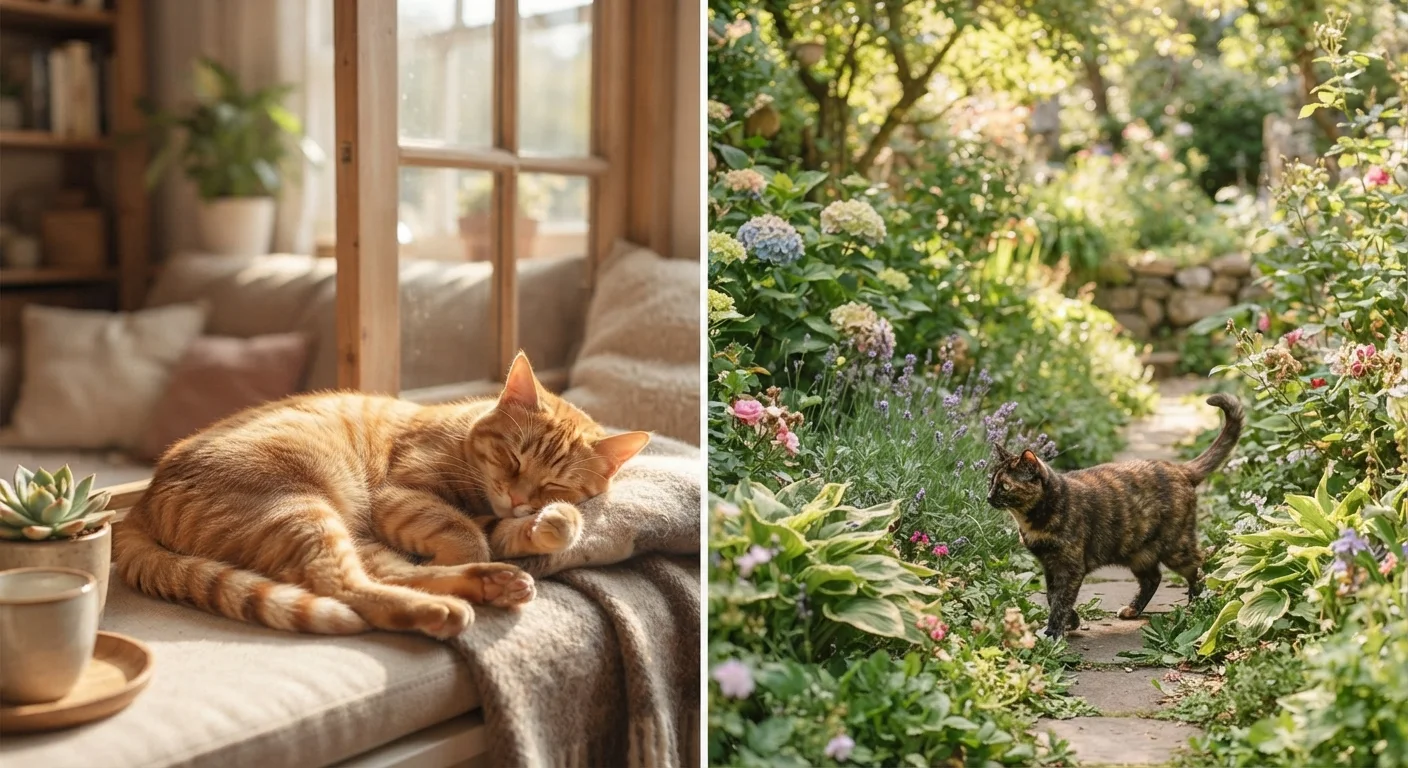
Why This Question Matters More Than People Realize
The indoor-versus-outdoor debate is one of the most common — and most consequential — decisions cat owners face. It's not simply a lifestyle preference; where a cat spends its time has measurable effects on health, behavior, and longevity. Understanding both sides helps you make a genuinely informed choice for your specific cat and circumstances.
For a broader look at how living environment shapes feline behavior patterns, see how environment shapes cat behaviour.
| Criterion | Indoor Cat | Outdoor Cat |
|---|---|---|
| Average lifespan | 10–15 years (estimated) | 2–5 years (estimated) |
| Injury risk | Low | High (traffic, predators, fights) |
| Disease exposure | Minimal | Elevated (FIV, FeLV, parasites) |
| Behavioral enrichment needs | Must be deliberately provided | Partially met by environment |
| Exercise level | Lower without active play | Generally higher |
| Wildlife impact | Negligible | Significant (birds, small mammals) |
| Owner supervision required | Moderate (enrichment, play) | Low daily, but health checks key |
The Case for Keeping Cats Indoors
Indoor cats are shielded from the most statistically significant threats to feline life. Traffic accidents, encounters with predators (coyotes, dogs, larger wildlife), exposure to feline infectious diseases like FIV and FeLV, and accidental poisoning from pesticides or antifreeze are dramatically reduced or eliminated entirely.
Studies and veterinary organizations consistently find that indoor cats have longer average lifespans than their outdoor counterparts — often cited as roughly 10–15 years versus 2–5 years for free-roaming cats, though these figures vary by region and circumstance. The ASPCA and American Veterinary Medical Association both recommend indoor-only or supervised outdoor lifestyles for domestic cats.
10–15 yrs
Typical indoor cat lifespan
Veterinary organizations commonly cite this range for indoor-only cats compared to much shorter averages for free-roaming cats.
2–5 yrs
Estimated free-roaming cat lifespan
Free-roaming and feral cats face significantly higher mortality risks from traffic, disease, and predation, reducing average lifespan substantially.
1.3–4B
Birds killed by cats annually in the US
A study published in Nature Communications estimated that free-ranging domestic cats kill between 1.3 and 4 billion birds in the US each year.
Indoor life does require active management. Without stimulation, cats can become bored, anxious, or develop behaviors like over-grooming or aggression. Structured play, climbing structures, window perches, and food puzzles are important tools. If you notice signs of stress in your cat, learning to spot early stress signals can help you intervene before problems escalate.
The Case for Outdoor Access
Cats are obligate carnivores with deeply hardwired hunting and exploration instincts. Outdoor access allows cats to express natural behaviors — stalking, climbing, scent-marking, and investigating novel stimuli — that can be difficult to replicate fully indoors. For some cats, particularly those raised outdoors from kittenhood, outdoor access may genuinely support better psychological wellbeing.
Outdoor cats also tend to get more incidental exercise, which can help maintain a healthy weight. However, these benefits come with real costs. Beyond personal injury risks, free-roaming cats have a documented impact on local bird and small mammal populations — a consideration that extends beyond individual pet welfare into broader ecological responsibility.
It's also worth noting that outdoor cats are more likely to engage in territorial marking behaviors. Understanding what drives this can be helpful — territorial marking in pets compared offers useful context.
Finding a Middle Ground
The binary framing of "indoor" versus "outdoor" misses a growing and practical middle ground. Supervised outdoor time — using a harness and leash, a secure enclosed yard, or a purpose-built outdoor enclosure known as a "catio" — allows cats to experience fresh air and environmental novelty without unsupervised exposure to hazards.
This approach suits owners who want to protect their cat's safety while respecting that cat's need for stimulation and natural behavior. It also works well for cats transitioning from an outdoor lifestyle who may struggle with full confinement.
Catios: A Growing Option Worth Knowing
A catio is an enclosed outdoor structure — ranging from a simple window box to a large walk-in enclosure — that gives cats safe exposure to fresh air, sunlight, and outdoor sights and sounds. Many cat owners and shelters now recommend them as a practical compromise. They can be built or purchased in a wide range of sizes and configurations to suit different spaces and budgets.
Diet and enrichment both shift depending on your cat's activity level. Understanding the differences between dry and wet food can help you adjust your cat's nutrition to match their lifestyle.
This article is for general informational purposes only and does not substitute for advice from a licensed veterinarian. Consult your vet for guidance tailored to your cat's individual health, history, and environment.