
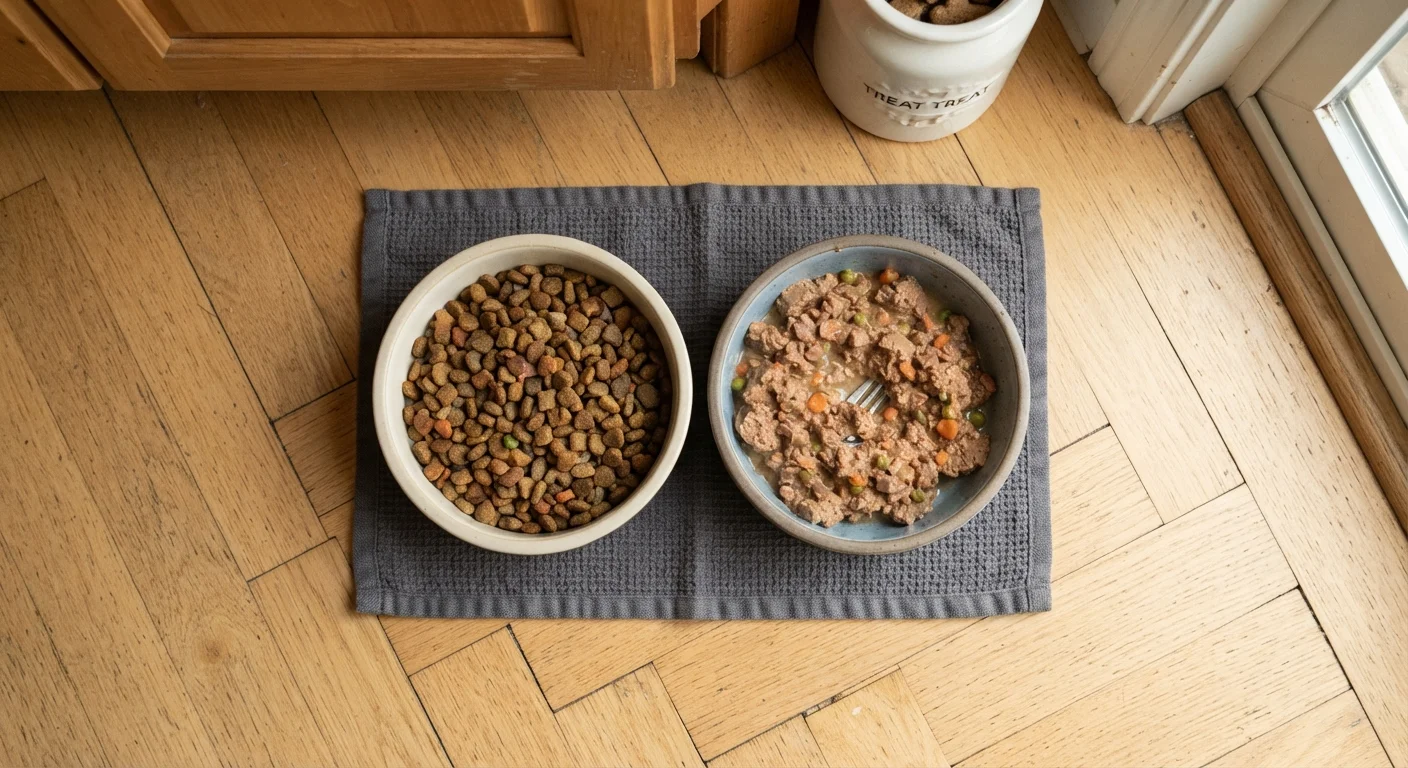
What Actually Separates Dry and Wet Pet Food
The most fundamental difference between dry and wet pet food is water content. Dry kibble typically contains around 10% moisture, while wet food — whether canned or in a pouch — generally ranges from 70% to 80% moisture. That gap has real consequences for how your pet's body processes each meal.
Beyond water, both formats can be nutritionally complete when manufactured to meet established standards (such as those set by the Association of American Feed Control Officials, or AAFCO). The format itself doesn't determine quality — ingredients and formulation do. That said, the physical properties of each format create meaningful trade-offs in digestion, hydration, dental health, and palatability.
For a broader picture of what balanced daily care looks like alongside feeding, see our guide to what pets need every day.
| Criterion | Dry Food (Kibble) | Wet Food (Canned/Pouch) |
|---|---|---|
| Moisture content | ~10% | 70–80% |
| Cost per serving | Generally lower | Generally higher |
| Shelf life (opened) | Weeks (sealed bag) | 1–2 days (refrigerated) |
| Dental benefit | Minimal (unless dental formula) | None |
| Palatability | Moderate | High |
| Calorie density | Higher per ounce | Lower per ounce |
| Ease of portion control | Easy to measure | Moderate (once opened) |
| Suitable for seniors/dental issues | Less ideal | Well suited |
Hydration, Urinary Health, and Why Moisture Content Matters
Cats, in particular, have a relatively low thirst drive compared to dogs — an evolutionary trait from their desert-dwelling ancestors. Many cats don't drink enough water from a bowl to adequately support kidney and urinary tract function. Wet food can substantially close that gap by delivering water directly through meals.
For dogs, hydration is somewhat less critical to manage through food, but wet food can still benefit dogs prone to constipation or those living in hot climates. Pets with diagnosed kidney disease, bladder stones, or urinary tract infections are often advised by veterinarians to increase fluid intake — and food format is one lever for doing that.
70–80%
Moisture content in wet pet food
Compared to roughly 10% in dry kibble, this difference makes wet food a meaningful supplemental hydration source for cats and dogs.
~60%
Cats estimated to be mildly dehydrated
Veterinary nutrition researchers have noted that many domestic cats consistently under-drink, making dietary moisture an important consideration.
It's worth noting that wet food doesn't replace fresh water access. All pets should have clean water available regardless of food format.
The Dental Health Question: What the Evidence Actually Shows
One of the most persistent claims in pet feeding is that dry kibble cleans teeth. The reality is more nuanced. While some specially formulated dental kibbles — typically larger, textured pieces designed to create a scrubbing action — can reduce plaque accumulation, standard dry kibble offers minimal dental benefit. Most kibble shatters before it reaches the gumline where plaque forms.
Wet food does not contribute to dental cleaning. However, it also doesn't directly cause dental disease on its own — poor dental hygiene is the primary culprit there, regardless of food format.
The practical takeaway: food format is not a substitute for active dental care. Regular toothbrushing, veterinary dental checkups, and appropriate dental chews form the core of oral health. Our pet dental care guide covers what a sustainable routine actually looks like.
A Note on "Dental" Kibble Claims
Not all dry kibble is created equal when it comes to dental health. Only formulas that have earned the Veterinary Oral Health Council (VOHC) seal have been independently evaluated for plaque or tartar reduction. If dental health is your goal, look specifically for VOHC-accepted products and confirm with your vet — standard kibble alone is unlikely to make a measurable difference.
Cost, Convenience, and Practical Feeding Decisions
Dry food is generally less expensive per calorie than wet food, making it the more practical primary option for many households — especially those with large dogs or multiple pets. It also stores easily, with an open bag staying fresh for several weeks when sealed. Wet food, once opened, typically needs to be refrigerated and used within 24–48 hours.
Palatability is where wet food frequently wins. Its stronger aroma and softer texture make it appealing to picky eaters and senior pets whose sense of smell may have diminished. Many owners feed a combination: dry food as the daily base, with wet food added occasionally or as a topper.
There's no single correct approach for all pets. If you're uncertain about the right format for your specific animal — particularly if they have a health condition — a conversation with your veterinarian is the most reliable starting point. You can also explore common misconceptions that influence feeding decisions in our piece on pet nutrition myths.