
Why Cats Hide Their Stress So Well
Cats are both predator and prey in the wild, which means showing vulnerability is a survival risk. As a result, domestic cats have inherited a strong tendency to mask discomfort — including stress — until it becomes impossible to hide. By the time a cat shows obvious signs of distress, the problem is often well established.
This biological instinct is why routine observation matters so much. Understanding what normal looks like for your cat makes it far easier to notice when something has quietly shifted. For a broader look at how cats and other pets signal that something is wrong, see our guide to recognizing when pets are unwell.
Early Physical and Behavioral Warning Signs
Stress rarely announces itself with a dramatic behavioral change. More often, it begins with small, easy-to-dismiss shifts that accumulate over time. Knowing the early indicators gives you a meaningful head start.
It's also worth noting that some of these behaviors — particularly changes in appetite or elimination — can reflect underlying medical conditions rather than purely behavioral stress. If signs persist for more than a few days, a veterinary check-up is always the right next step.
Reading Body Language in the Moment
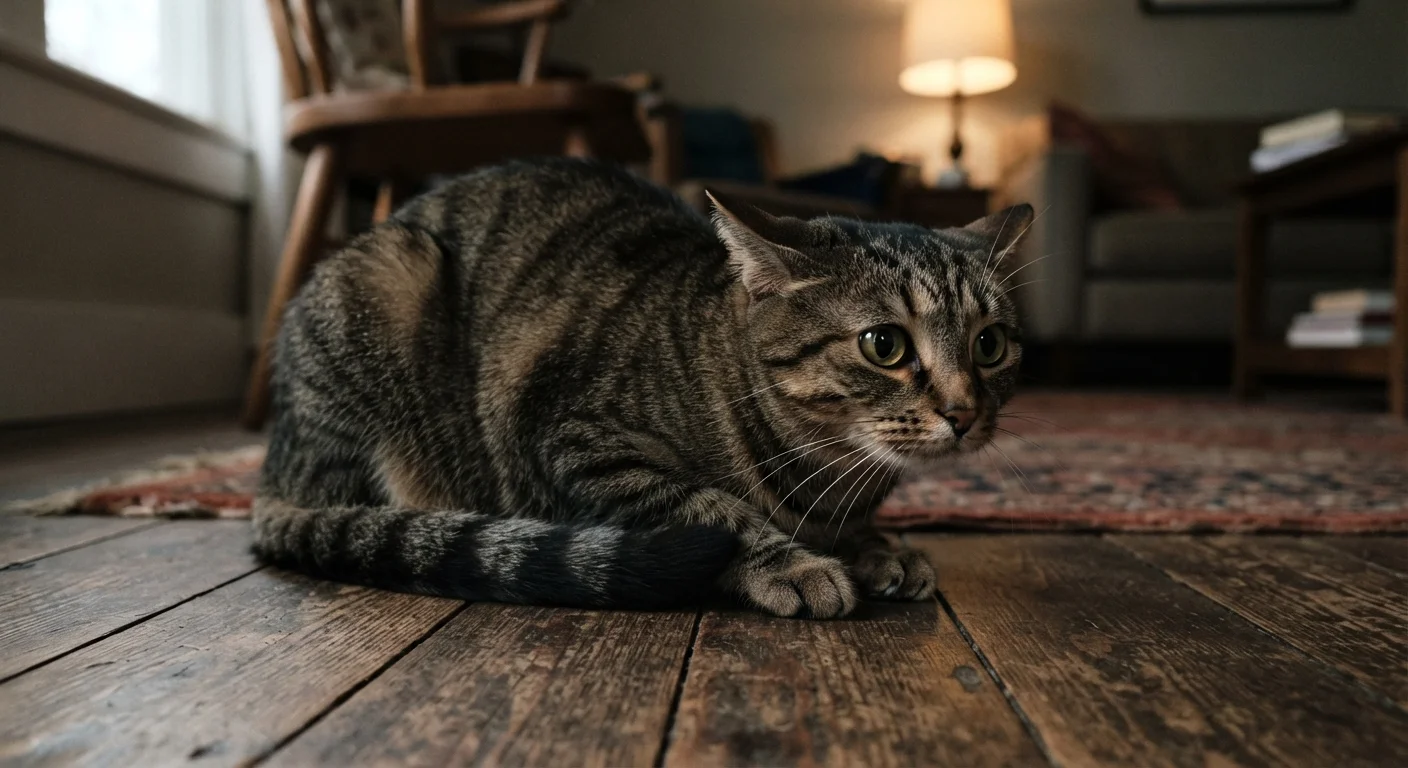
While behavioral changes unfold over days or weeks, body language signals stress happening right now. Cats communicate anxiety through micro-adjustments in posture, facial expression, and movement that are easy to misread or overlook entirely.
“Cats are masters at concealing distress. By the time most owners recognize a problem, the animal has often been coping with it for some time. Learning to read the subtle signals is what separates reactive care from truly proactive ownership.”
— Sharon Crowell-Davis, Veterinary behaviorist and professor of animal behavior
Key signals to watch for include: ears rotated sideways or flattened against the skull; tail tucked tightly beneath the body or puffed up; pupils dilated beyond what the lighting warrants; whiskers pulled back flat; and a low, crouched posture as though the cat is trying to shrink. Rapid, shallow breathing or exaggerated yawning in a tense context can also signal discomfort — though owners often misinterpret these as signs of calm. Our guide to commonly misread pet behaviors explains why these signals get confused so frequently.
For a detailed visual reference across all postures, tail positions, and vocalizations, the cat body language field guide is an essential companion to this article.
Common Stress Triggers in the Home
Identifying signals is only half the task — understanding what triggers feline stress helps you address the source, not just the symptom. Common household stressors include:
- Changes to routine: Cats thrive on predictability. Feeding schedule changes, new work hours, or household disruption can all unsettle them.
- New people, pets, or furniture: Introductions of any kind require careful management. Even a new piece of furniture can alter a cat's perceived territory.
- Litter box issues: A dirty, repositioned, or newly shared litter box is a frequent and underestimated stressor.
- Insufficient environmental enrichment: Boredom and under-stimulation are genuine stressors, particularly for indoor cats. The relationship between living environment and behavior is explored in depth in our article on how environment shapes cat behaviour.
Stress and Illness Can Look Identical
Many early stress signals — reduced appetite, hiding, litter box changes — are also symptoms of common feline illnesses including urinary tract infections, hyperthyroidism, and dental pain. Never assume a behavioral explanation without first ruling out a medical one. A veterinarian visit is the safest starting point whenever symptoms persist or worsen.
Unchecked stress that escalates can eventually manifest as aggression. Understanding that connection early is valuable — our article on aggression in cats covers how fear and stress become behavioral problems.
What to Do When You Spot the Signs
Responding calmly and systematically is the most effective approach when stress signals appear. Sudden changes or forced reassurance can make things worse — cats rarely respond well to being picked up or crowded when already anxious.
If you are unsure whether your cat's stress is situational or rooted in something medical, consulting a veterinarian is always the appropriate first move. Stress and physical illness share many symptoms, and even familiar behaviors like purring can sometimes signal stress rather than contentment. A vet can rule out health factors and, if needed, refer you to a certified feline behaviorist.
This article is for general informational purposes only and does not constitute veterinary or medical advice. If your cat is showing signs of distress, illness, or behavioral change, consult a licensed veterinarian for guidance specific to your pet's needs.