
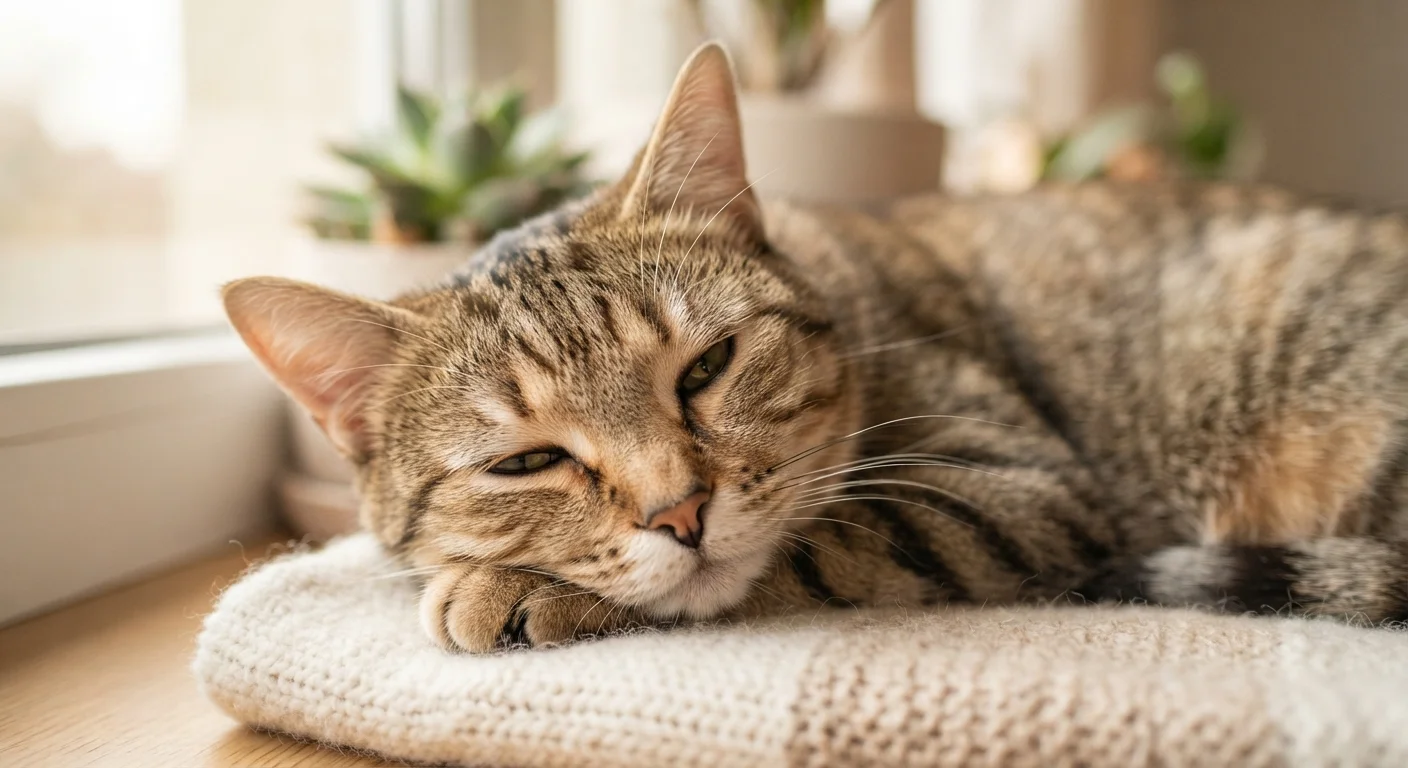
Why Reading Cat Body Language Matters
Cats communicate almost entirely through body language, and misreading those signals can lead to scratches, stress, and a strained relationship. Because cats evolved as both predator and prey, they tend to mask discomfort and communicate subtly — making fluency in feline posture genuinely useful for any owner.
Research in animal behavior confirms that cats use a combination of facial expressions, tail position, ear orientation, and vocalizations to convey emotional states. Once you learn the patterns, you'll notice your cat is talking to you constantly. This guide covers the most reliable signals, organized for quick reference.
If certain body language signals persist or seem linked to physical discomfort, it's worth reviewing how pets show they're unwell to rule out a health issue.
| Primary communication method | Body language (posture, ears, tail, eyes) |
| Ear rotation range | Up to 180 degrees independently |
| Slow blink research | Increases cat approach behavior toward unfamiliar humans (Scientific Reports, 2020) |
| Tail-up greeting | Confident, friendly; used with trusted individuals |
| Rapid tail lash meaning | Irritation or overstimulation — stop interaction |
| Pupil dilation in normal light | Signals high arousal (fear, excitement, or aggression) |
Eyes and Face: The Clearest Window Into Mood
A cat's eyes, whiskers, and mouth position communicate more than most owners realize. Use this as a quick lookup for the signals you see most often.
Slow Blink
When a cat makes deliberate, unhurried eye contact and then slowly closes and reopens its eyes, it is expressing trust and relaxed friendliness. You can return the gesture — slow-blink back — and many cats will respond in kind. Behavioral studies, including research published in Scientific Reports, suggest cats are more likely to approach an unfamiliar person who returns a slow blink.
Dilated Pupils
Wide, fully dilated pupils in normal lighting signal high arousal — excitement, fear, or overstimulation. Context matters: a cat crouched low with dilated pupils is frightened, while a cat in play posture with dilated pupils is excited.
Slow, Half-Closed Eyes
Soft, droopy eyes indicate deep calm and contentment. A cat that falls asleep near you with narrowed eyes feels genuinely safe.
Hard Stare
Unblinking, fixed eye contact directed at another cat or an unfamiliar person is a challenge or threat signal. Avoid staring directly at a cat you've just met — it can read as confrontational.
Whisker Position
Whiskers fanned forward indicate curiosity or alertness. Whiskers pressed flat against the cheeks signal fear or aggression. Relaxed, slightly fanned whiskers to the side are a neutral, calm state.
Slow blink
A deliberate, unhurried closing and reopening of the eyes directed at a trusted individual. In cats, it signals relaxed affiliation and is considered a friendly, non-threatening gesture.
Piloerection
The involuntary raising of fur along the spine or tail, caused by the same mechanism as human goosebumps. In cats it occurs during fear or defensive aggression to make the animal appear larger.
Overstimulation
A state of sensory overload during petting or play in which a cat abruptly shifts from calm to agitated. Warning signs include rapid tail flicking, skin rippling, and dilated pupils.
Affiliative behavior
Friendly, social actions that reinforce bonds between individuals — such as head-butting (bunting), tail-wrapping, grooming, and slow blinking in cats.
Airplane ears
A colloquial term for ears rotated sideways and held flat, indicating mild to moderate anxiety or ambivalence in cats.
Tail Positions and What They Signal
The tail is one of the most expressive parts of a cat's body. Its position, movement speed, and stiffness all carry meaning.
- Tail held high, tip curved slightly: Confident, friendly greeting. This is the posture cats use when approaching a trusted person or a friendly companion animal.
- Tail held high, fully puffed: Frightened or defensively aggressive. The cat is trying to appear larger.
- Tail low or tucked between the legs: Anxiety, submission, or fear. A consistently tucked tail warrants a check of the cat's environment and stressors.
- Slow, wide tail sweep: Focused concentration — common during hunting or play. Not the same as a dog's happy tail wag.
- Rapid, short tail flick or lash: Irritation or overstimulation. Stop petting and give the cat space. Many owners miss this signal before a scratch occurs — for more commonly misread signals, see behaviors owners commonly misinterpret.
- Tail wrapped around another cat or a person's leg: Affection and social bonding.
Ear Positions: A Four-Point Compass
Cat ears are highly mobile and can rotate nearly 180 degrees independently. Four key positions cover most situations:
- Forward and upright: Alert, curious, engaged. The cat is attending to a sound or stimulus.
- Rotated sideways ("airplane ears"): Mild anxiety or ambivalence. Often seen in cats at the veterinary clinic or in an unfamiliar setting.
- Flat and back against the skull: Fear or defensive aggression. Do not approach a cat in this state.
- Relaxed, facing slightly outward: Calm and comfortable. This often accompanies soft eyes and a still or loosely held tail.
Environment plays a significant role in how often you see anxious ear positions. How a cat's living environment shapes behavior explores why indoor cats may show different baseline stress signals than cats with outdoor access.
When Body Language Changes Suddenly
A cat that abruptly becomes withdrawn, stops grooming, holds its ears flat consistently, or shows unusual aggression may be in pain or distress rather than simply moody. Sudden behavioral shifts — especially in combination — are among the most reliable early indicators that something physical is wrong. Always consult a veterinarian if you notice an unexplained change in your cat's normal patterns.
Body Posture and Vocalizations at a Glance
Full-body posture gives the complete picture when individual signals seem ambiguous.
Postural Signals
- Exposed belly: Often a sign of trust, not always an invitation to pet. Many cats will swipe if you touch their belly — read it as a compliment, not a request.
- Loaf position (paws tucked under body): Relaxed but alert. The cat feels safe enough to tuck away its paws — a defensive tool — but is still watching the room.
- Arched back, puffed fur: Defensive threat display triggered by fear.
- Rolling and stretching: Comfort and contentment, sometimes a solicitation for play or attention.
Vocalizations in Context
Body language rarely operates without an accompanying sound. Purring most often signals contentment, but it also occurs during stress or self-soothing — the science behind why cats purr reveals how complex that familiar sound actually is. Chirping or chattering (directed at birds through a window) reflects predatory excitement. Growling, hissing, or spitting are unambiguous warnings — always honor them by backing off.
276+
Distinct facial expressions documented in domestic cats
A 2023 study in Behavioural Processes identified over 276 distinct facial expression combinations in domestic cats.
~65%
Cat owners who misidentify tail-lashing as playfulness
Surveys of cat owners suggest a majority initially misread the rapid tail lash as excitement rather than irritation, according to animal behavior educators.
This article is for general educational purposes only. If your cat's behavior changes suddenly or you have concerns about its health or welfare, consult a licensed veterinarian or certified animal behaviorist.