
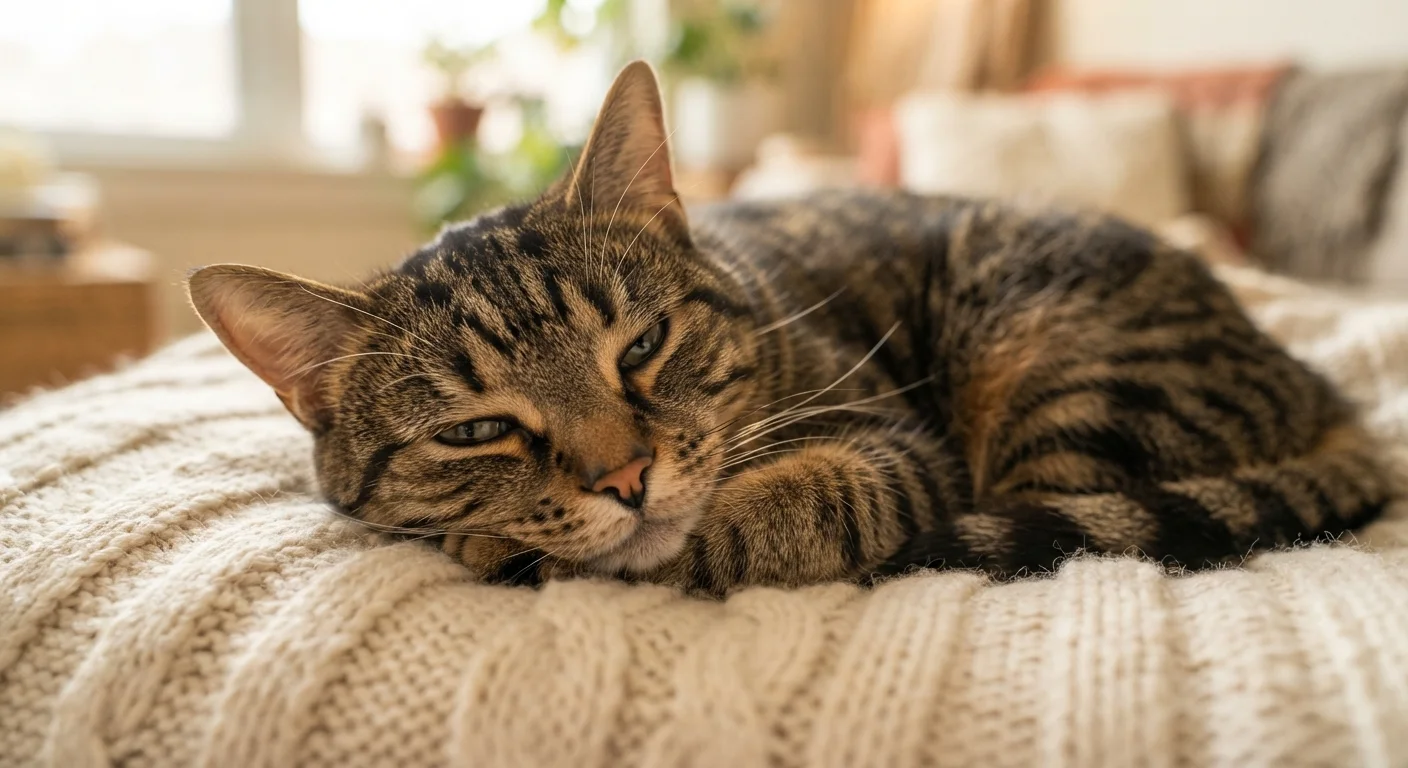
How Cats Produce the Purring Sound
The mechanics of purring are surprisingly elegant. A cat's brain sends repetitive signals to the laryngeal (voice box) muscles, causing them to twitch at 25 to 150 times per second. This rapid movement dilates and constricts the glottis — the part of the larynx surrounding the vocal cords — with each breath cycle. The result is a continuous, rhythmic vibration that persists on both the inhale and exhale, which is what distinguishes purring from other vocalizations.
This continuous bilateral purring is a hallmark of smaller domestic cats. Unlike roaring cats, which have a more flexible hyoid bone that enables their thunderous calls, domestic cats have a fully ossified (hardened) hyoid that makes roaring impossible — but purring effortless.
“The domestic cat is a genuinely unusual creature in the felid family — the ability to purr continuously on both inhale and exhale, across such a range of emotional states, has no real parallel among the big cats we study.”
— Leslie Lyons, Feline geneticist and professor, University of Missouri College of Veterinary Medicine
Purring Isn't Just About Happiness
Many owners assume a purring cat is a happy cat, but that's only part of the picture. Cats purr across a wide emotional and physical spectrum. Veterinarians commonly observe purring in cats that are frightened, in pain, giving birth, or even dying. This has led researchers to view purring as a multifunctional behavior rather than a simple contentment signal.
One leading theory is that purring functions as an internal self-regulator — a way cats calm their own nervous system during stressful or uncomfortable moments, much like how humans might hum or breathe deeply. If your cat is purring but also showing flattened ears, a tucked tail, or hiding, the purring may be a coping response rather than satisfaction. Our guide on spotting feline stress signals can help you tell the difference.
Read the Whole Cat, Not Just the Sound
Never rely on purring alone to assess your cat's emotional state. A purring cat with a tucked body, dilated pupils, or flattened ears may be anxious or in pain rather than content. Always pair what you hear with what you see in your cat's posture and environment.
The Healing Frequency Hypothesis
Perhaps the most fascinating element of purring is its potential biological benefit. Vibrations in the 25–50 Hz range have been studied for their ability to promote bone density, stimulate tissue regeneration, and reduce inflammation. Cats purr squarely within this range, prompting some researchers to hypothesize that purring may be an evolved self-healing mechanism.
25–150 Hz
Frequency range of domestic cat purring
This range overlaps with vibration frequencies studied for therapeutic effects on bone and soft tissue in biomedical research.
25–50 Hz
Bone-stimulating vibration frequency
Studies in vibroacoustic therapy have documented that frequencies in this range can promote bone density and accelerate healing in certain controlled settings.
~20 types
Estimated vocalizations in domestic cats
Researchers studying feline communication have identified a wide repertoire of sounds; purring is among the most acoustically complex and functionally versatile.
This could explain a well-known observation among veterinarians: cats often recover from bone fractures and muscular injuries with fewer complications than dogs of similar size and activity level. While purring alone isn't a medical treatment, the acoustic biology behind it is a genuine area of scientific interest, not merely folklore.
Purring as Communication
Purring also plays a clear communicative role, particularly between cats and their human companions. Researchers at the University of Sussex identified a specific type of purring — called a solicitation purr — that cats use primarily when they want something, most often food. This purr embeds a higher-frequency cry within the lower rumble, making it harder for humans to ignore. It activates the same auditory sensitivity humans have evolved to respond to infant cries.
Cats also purr at other cats, typically kittens purring to their mothers and mothers purring back, likely as a bonding and reassurance signal. Adult cats rarely vocalize to each other the way they do with humans; most adult cat-to-cat communication is postural. Understanding purring in context alongside other signals — like slow blinks, tail positions, and ear angles — gives a much fuller picture of what your cat is expressing. Our feline body language field guide is a useful companion reference.
It's also worth noting that purring is just one of several sounds cats use — and its meaning shifts depending on context. Owners who commonly misread pet behavior often take purring at face value without reading the surrounding signals.
Purring Varies by Individual Cat
Some cats are naturally quiet purrers; others produce a rumble that can be heard across the room. This variation is largely anatomical and is not an indicator of health or emotional intensity. If your cat's purring pattern changes suddenly or is accompanied by labored breathing, a veterinary check-up is a sensible step.