
Why Utilisation Carries So Much Weight
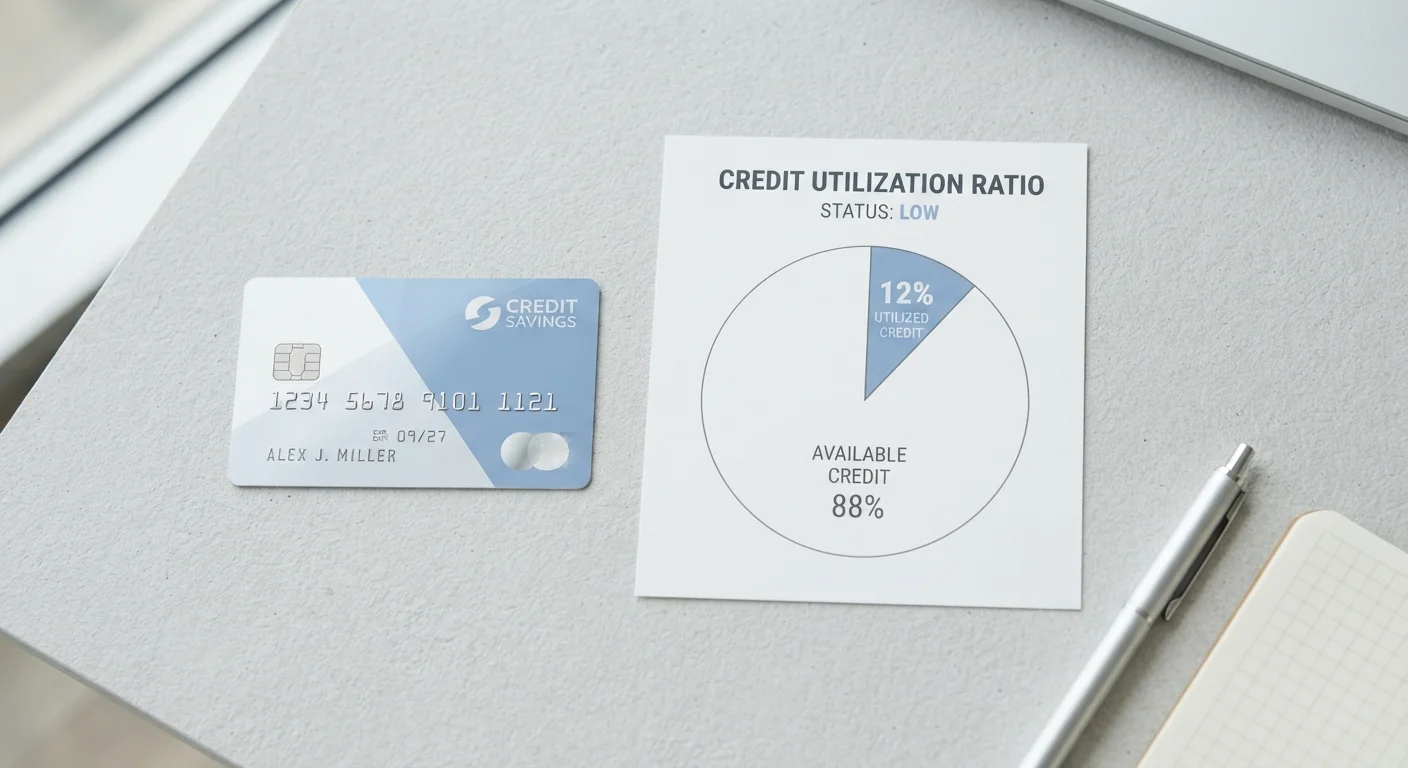
Of all the factors that shape your credit score, credit utilisation is among the most immediate and controllable. Under the FICO scoring model — the most widely used in the U.S. — amounts owed, which includes utilisation, accounts for approximately 30% of your total score. Only payment history carries more weight.
The logic behind this weighting makes sense from a lender's perspective. When someone is using a large share of their available credit, it may signal financial stress or over-reliance on borrowed funds. Conversely, a low utilisation ratio suggests that a borrower isn't stretched thin and is managing credit conservatively.
It's worth understanding that this is general financial education, not personalised advice. For guidance specific to your situation, consulting a qualified financial professional is always a good idea. You can also explore how savings and credit influence each other in broader ways that affect your overall financial health.
~30%
Share of FICO score tied to amounts owed
According to FICO's published scoring criteria, 'amounts owed' — which includes credit utilisation — makes up approximately 30% of a standard FICO score.
<10%
Utilisation ratio common among top scorers
FICO data indicates that consumers with scores above 800 typically carry credit utilisation well below 10% across their accounts.
3
Major credit bureaus that receive monthly balance data
Equifax, Experian, and TransUnion each receive balance and limit data from card issuers, typically around each account's statement closing date.
How the Ratio Is Calculated — and Reported
The calculation itself is straightforward: divide your current revolving balance by your total revolving credit limit, then multiply by 100 to get a percentage. If you have two cards — one with a $5,000 limit carrying a $1,500 balance, and another with a $3,000 limit carrying a $600 balance — your overall utilisation is $2,100 ÷ $8,000, or about 26%.
What catches many people off guard is when that number gets reported. Credit card issuers typically send balance information to the three major credit bureaus (Equifax, Experian, and TransUnion) around your statement closing date — not your payment due date. That means even if you pay your balance in full each month, a large mid-cycle balance could still be reported.
Time Payments to Your Closing Date
Find out when your credit card issuer reports balances to the bureaus — this is usually your statement closing date, listed in your online account. Paying down your balance a few days before that date means a lower number gets reported, which can meaningfully reduce your reported utilisation ratio for that month.
Per-card utilisation also matters. Even if your overall ratio is low, a single maxed-out card can negatively affect your score. Spreading balances or paying down high individual balances can help on both dimensions.
Common Situations That Affect Your Ratio
One subtler point: applying for new credit can temporarily lower your utilisation ratio by increasing your total credit limit — but it also generates a hard inquiry, which has its own effects. Understanding how hard and soft credit inquiries differ can help you make informed decisions about when to apply for new credit.
It's also worth separating fact from fiction. Many people believe that carrying a small balance each month helps their score — it doesn't. That's one of several credit score myths worth clearing up.
Practical Steps to Manage Your Utilisation
Because utilisation resets each billing cycle, it responds to action faster than most other credit factors. Here are approaches worth considering:
- Pay balances before your closing date. Identify when your issuer reports to bureaus and aim to reduce your balance before that date.
- Request a credit limit increase. If your spending hasn't changed, a higher limit automatically lowers your ratio. Be aware that some issuers perform a hard inquiry for this.
- Avoid closing unused cards unnecessarily. Keeping old accounts open preserves their contribution to your total available credit.
- Distribute spending across cards. Concentrating spending on one card can push its individual utilisation high even if your overall ratio is manageable.
Understanding how lenders interpret these numbers is also valuable. How lenders assess creditworthiness goes beyond a single score — but a well-managed utilisation ratio strengthens the overall picture you present when applying for credit.
This article is for general informational and educational purposes only and does not constitute personalised financial or credit advice. For guidance specific to your financial situation, consult a qualified financial professional.