
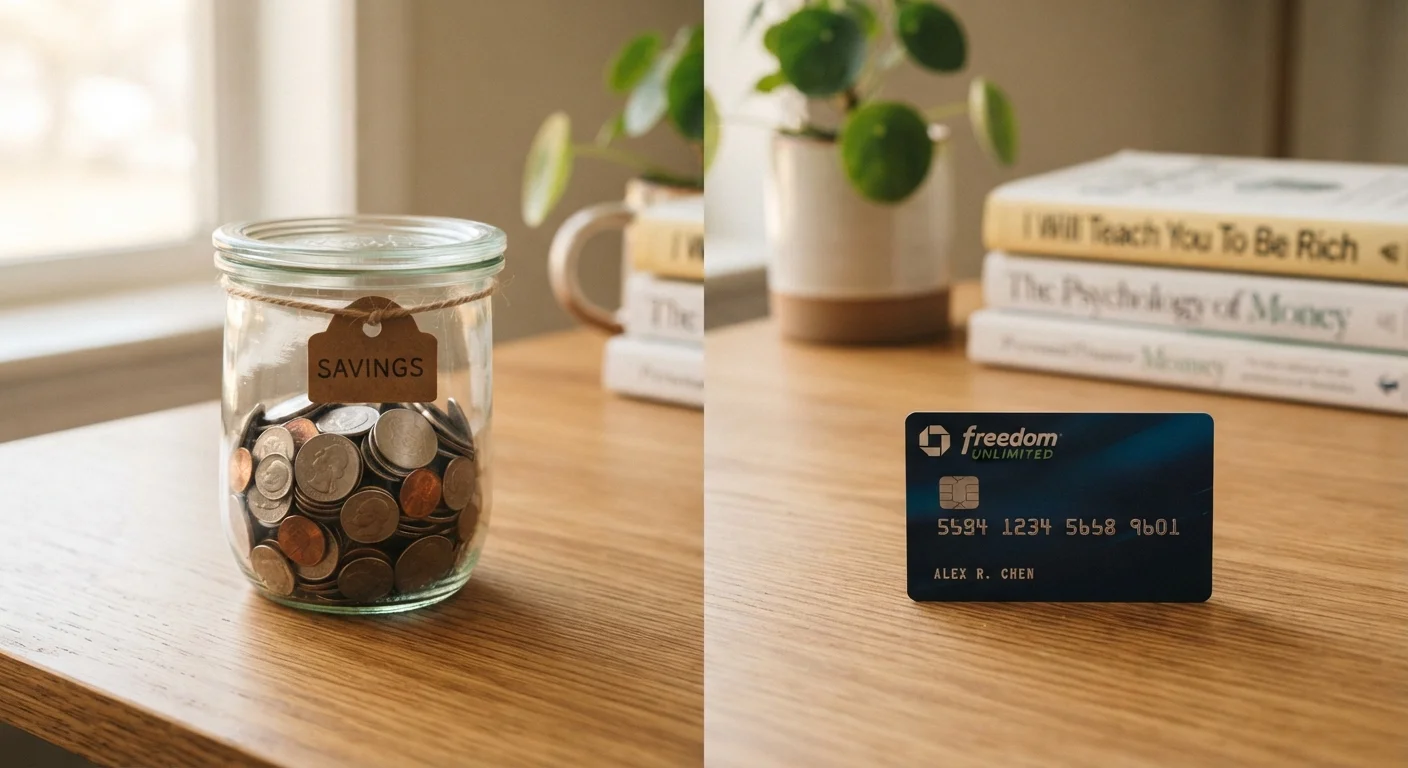
Why Savings and Credit Are Linked
Most people think of savings and credit as separate financial tasks — one is about setting money aside, the other is about borrowing. In practice, they operate as a system. The strength of one directly influences the other, and gaps in either can ripple through your entire financial life.
When you have a savings cushion, you are less likely to reach for a credit card or loan to cover an unexpected car repair or medical bill. When your credit profile is strong, lenders offer lower interest rates — meaning any debt you do carry costs you less, leaving more room in your budget to save. This feedback loop, whether working for or against you, shapes your financial wellbeing more than any single decision you make.
For a foundational overview of how each piece works individually, see our complete introduction to savings and credit.
57%
Americans unable to cover a $1,000 emergency from savings
According to Bankrate's annual emergency savings survey, a majority of U.S. adults would need to borrow or use credit to cover an unexpected $1,000 expense.
35%
Of your credit score determined by payment history
Under the FICO scoring model, payment history is the single most heavily weighted factor, making on-time payments the highest-leverage credit habit.
30%
Credit utilization's share of a FICO score
How much of your available revolving credit you use at any given time is the second largest factor in FICO credit scores, according to myFICO.com.
How Savings Influence Your Credit Profile
Savings do not appear directly on your credit report — but they shape your credit behavior in meaningful ways.
- Emergency funds reduce missed payments. A reserve account means you are less likely to miss a credit card or loan payment during a tight month. Payment history is the single largest factor in most credit scoring models, so protecting it protects your score.
- Savings lower credit utilization pressure. Credit utilization — the percentage of your available credit you're using — is a significant scoring factor. When you have savings to draw on, you're less likely to max out a credit card in a crunch, keeping utilization low.
- Savings signal financial stability to lenders. While savings balances themselves aren't factored into your credit score, lenders reviewing a loan application often consider assets alongside credit history. A savings cushion can strengthen an overall application.
Building the savings habit itself also reinforces disciplined money behaviors — the kind that support on-time payments and controlled borrowing. Our guide on savings habits that quietly erode progress covers patterns worth examining in your own routine.
How Credit Health Affects Your Ability to Save
The cost of carrying debt is the most direct way that credit health affects saving. A higher interest rate means a larger share of each payment goes toward interest rather than reducing your balance — money that cannot be redirected to savings.
“The interest rate you pay on borrowed money is one of the most powerful forces in personal finance. Over a lifetime, the difference between a good credit profile and a poor one can amount to tens of thousands of dollars in total interest paid.”
— Consumer Financial Protection Bureau, U.S. federal agency focused on consumer financial protection and education
Beyond interest costs, poor credit can increase expenses in less obvious ways. Some landlords, insurers, and utility providers factor credit into their terms. Over time, these additional costs reduce the amount available to set aside each month.
Conversely, maintaining strong credit through on-time payments and low utilization tends to keep borrowing costs down. That difference in interest paid, compounded over years of car loans, mortgages, or personal lines of credit, can amount to a meaningful sum. For a practical look at the habits that support this, see principles that support long-term credit health.
High-Interest Debt Erases Savings Gains
If you're carrying a credit card balance at 20% APR, any money sitting in a savings account earning 4–5% is effectively losing ground. The interest you pay on high-rate debt almost always outpaces what savings can earn. This doesn't mean you shouldn't save — but it does mean high-interest debt should be a priority alongside saving, not after it.
Building Both at the Same Time
A common misconception is that you must fully pay off debt before you can start saving, or that you should focus entirely on savings before worrying about credit. Neither extreme tends to serve people well.
A more sustainable approach recognizes that a small emergency fund and minimum on-time debt payments can coexist — and should. Even a modest savings buffer reduces the likelihood of adding new high-interest debt when something unexpected happens.
Start with a 'starter emergency fund' goal of $500 to $1,000 before aggressively paying down debt. This small buffer dramatically reduces the chance that one unexpected expense sends you deeper into high-interest debt.
Behavioral finance research consistently shows that people without any cash reserve are more likely to carry revolving credit balances, because each minor emergency gets charged rather than absorbed.
If you're building credit from scratch, a secured credit card used only for one predictable recurring charge — and paid in full monthly — generates positive payment history with minimal risk.
Using a small, fixed charge like a streaming subscription keeps the balance predictable and easy to clear, establishing a consistent payment record without tempting larger spending.
Once you have a basic cushion in place, additional surplus can tilt toward whichever carries a higher financial cost: high-interest debt (where the interest rate exceeds what savings would earn) is typically reduced first, but not at the expense of missing payments on other accounts. The budgeting basics hub offers straightforward frameworks for deciding where each dollar goes.
Common Tradeoffs and How to Think Through Them
Real financial decisions rarely come with obvious right answers. Here are the most common tradeoffs people encounter:
- Should I save or pay down debt?
- If the debt carries an interest rate higher than what a savings account would earn, paying it down is generally the more efficient financial move — but only after establishing a minimal emergency reserve and keeping all accounts current.
- Should I keep a credit card open if I'm not using it?
- Closing a credit card reduces your total available credit, which can raise your utilization ratio and may shorten your average account age — both factors that can affect your score. Keeping accounts open, even with zero balance, often makes sense.
- Is it worth taking on debt to build credit?
- Using credit responsibly — such as a secured card with a small balance paid in full each month — can help establish a credit history. But any strategy involving debt carries risk if the balance isn't managed carefully.
These decisions also show up in everyday choices. Our article on daily financial decisions that shape long-term habits explores how small, repeated choices compound into larger financial patterns.
Use the 'Round Up' Strategy for Passive Saving
Many banking apps offer automatic round-up features that transfer the spare change from each transaction into a savings account. While the individual amounts are tiny, the habit creates a savings contribution that requires no ongoing decision-making. Over months, these micro-contributions can add up to a meaningful buffer.
Putting It Into Everyday Practice
Improving the relationship between your savings and credit doesn't require a dramatic financial overhaul. A few consistent practices make a measurable difference over time:
- Automate at least one savings contribution per month, even if it's small. Automation removes the decision point and builds the habit.
- Set payment reminders or autopay for at minimum the minimum payment on every credit account. A single missed payment can affect your credit score significantly.
- Check your credit report periodically for errors. In the US, you are entitled to free reports from each of the three major bureaus annually at AnnualCreditReport.com. Errors can suppress your score unnecessarily.
- Know your utilization ratio. Aim to use less than 30% of your available credit at any time — lower is generally better for your score.
A structured monthly review helps you track both dimensions together. Our monthly financial health check gives you a practical checklist to do exactly that. You can also explore different places to keep your savings in our savings account types overview.
This article is for general informational and educational purposes only. It does not constitute personalized financial, tax, or legal advice. Please consult a qualified financial professional for guidance specific to your circumstances.