
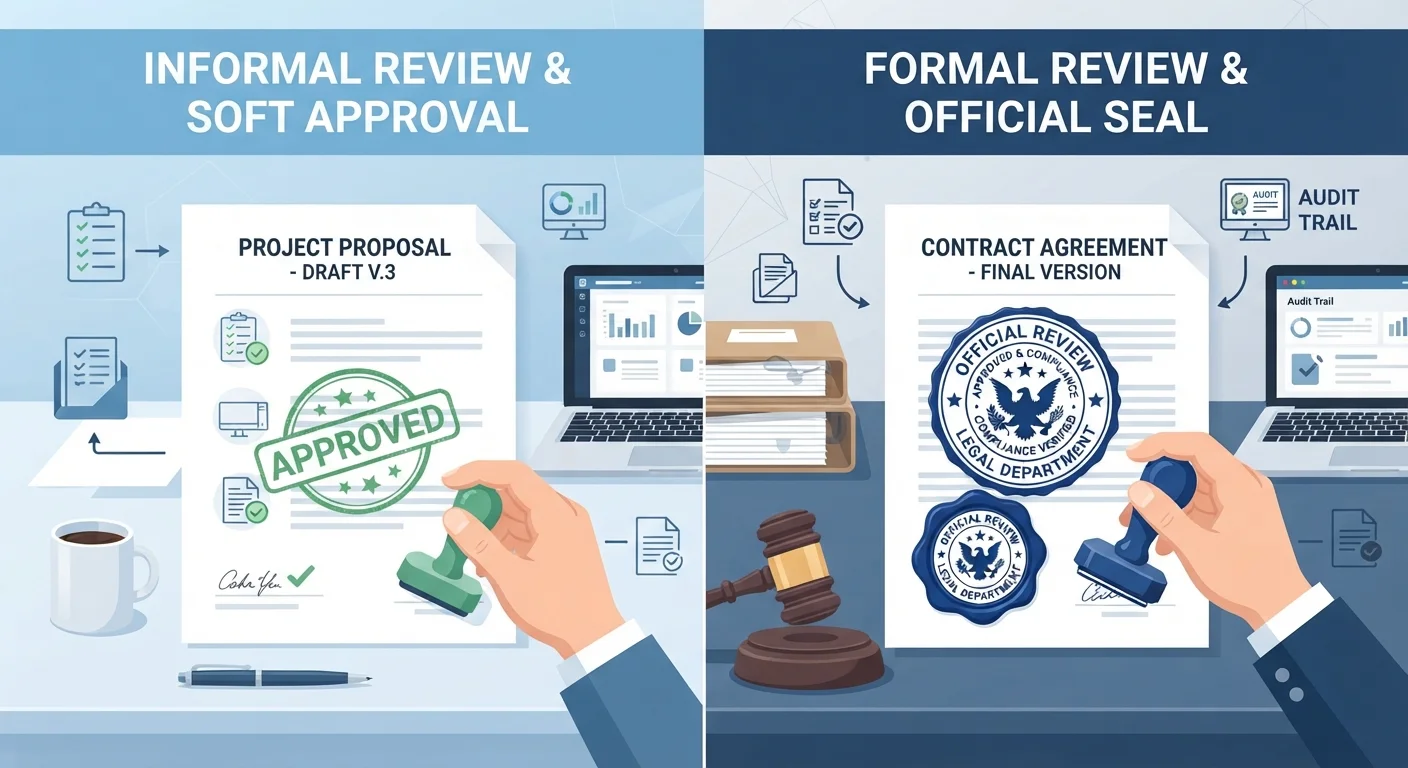
What Makes a Credit Check Hard or Soft?
Whenever someone accesses your credit report, it generates an enquiry. But not every enquiry works the same way. The fundamental distinction comes down to purpose and consent: did you formally apply for credit, or was the check background-level?
A hard enquiry (sometimes called a hard pull) happens when a lender or creditor reviews your full credit file to make a lending decision. This requires your explicit authorization. Common triggers include applying for a credit card, a personal loan, a mortgage, or an auto loan.
A soft enquiry (or soft pull) is a more limited look at your credit — often conducted without a formal application. Examples include a lender checking your file to pre-approve you for an offer, an employer running a background check, or you checking your own score. Soft enquiries do not require your authorization in the same way, and critically, they are not visible to other lenders reviewing your report.
To understand how enquiries fit into the broader picture of your credit profile, see our article on the five factors behind every credit score.
| Criterion | Hard Enquiry | Soft Enquiry |
|---|---|---|
| Triggered by | Formal credit application | Pre-qualification, background check, self-check |
| Requires your consent | Yes — explicit authorization needed | Not always required |
| Affects credit score | Yes — small, temporary reduction | No — zero scoring impact |
| Visible to other lenders | Yes — appears on your report | No — only visible to you |
| Stays on report | Up to 2 years | May appear on your copy, not lender copies |
| Counts against score for | Approximately 12 months | Not counted at all |
| Rate-shopping protection | Multiple enquiries grouped within 14–45 days | Not applicable |
How Each Type Affects Your Credit Score
The key practical difference is impact. Soft enquiries have zero effect on your credit score — full stop. You can check your own credit daily and it will never move the needle.
Hard enquiries, by contrast, are factored into your score. According to FICO, a single hard enquiry typically reduces a score by fewer than five points for most consumers — a modest, temporary dip. The enquiry remains on your report for two years, but most scoring models stop counting it against you after about twelve months.
<5 pts
Typical score drop per hard enquiry
FICO states that for most consumers, a single hard enquiry lowers a score by fewer than five points.
12 months
How long a hard enquiry affects your score
Hard enquiries remain on your credit report for two years but generally stop influencing your score after about one year.
14–45 days
Rate-shopping window for loan enquiries
FICO scoring models treat multiple mortgage or auto loan enquiries within this window as a single enquiry to protect consumers comparison shopping.
The impact matters more if your credit file is thin or if several hard enquiries pile up in a short period. Multiple applications within weeks can signal financial stress to lenders, which is worth being mindful of — especially before applying for a major loan like a mortgage.
One important exception: if you are shopping for a mortgage, auto loan, or student loan, major scoring models like FICO and VantageScore apply a rate-shopping window — typically 14 to 45 days depending on the model version. Multiple hard enquiries for the same loan type within that window are counted as one. This means comparison shopping for the best loan terms carries far less scoring risk than many people assume. This connects directly to a widespread misconception addressed in our piece on credit score myths that keep people from improving their finances.
Practical Strategies for Managing Enquiries
Understanding the difference lets you make smarter decisions before and during any credit application process.
- Use pre-qualification first. When exploring loan or credit card options, look for lenders who offer a pre-qualification step using a soft enquiry. This lets you see likely terms and eligibility without triggering a hard pull on your report.
- Group rate-shopping tightly. If you plan to compare mortgage or auto loan offers from multiple lenders, try to submit all applications within a two-week window to maximise the benefit of the rate-shopping rule.
- Monitor your own credit freely. Checking your own report — whether through AnnualCreditReport.com or a credit monitoring service — is always a soft enquiry. Regular self-checks help you catch errors or signs of fraud early, with no scoring penalty.
- Time major applications strategically. If your score is already under pressure from recent hard enquiries, consider waiting several months before applying for additional credit. New enquiries compound only modestly, but minimising unnecessary ones keeps your report clean.
For a fuller look at how lenders interpret everything on your report — not just enquiries — see how lenders use credit scores when you apply for credit. And if you want a grounded understanding of what your score is actually measuring, our guide on what a credit score actually measures — and what it doesn't puts it all in context.
Your Free Annual Credit Reports
Under federal law, U.S. consumers are entitled to a free copy of their credit report from each of the three major credit bureaus — Equifax, Experian, and TransUnion — through AnnualCreditReport.com. Accessing your own report this way is always a soft enquiry and has no effect on your credit score. Reviewing your reports regularly is one of the simplest ways to catch inaccuracies or unauthorised activity early.
This article is for general informational and educational purposes only and does not constitute personalised financial or legal advice. For guidance specific to your financial situation, consider consulting a qualified financial professional.