
What Financial Automation Actually Means
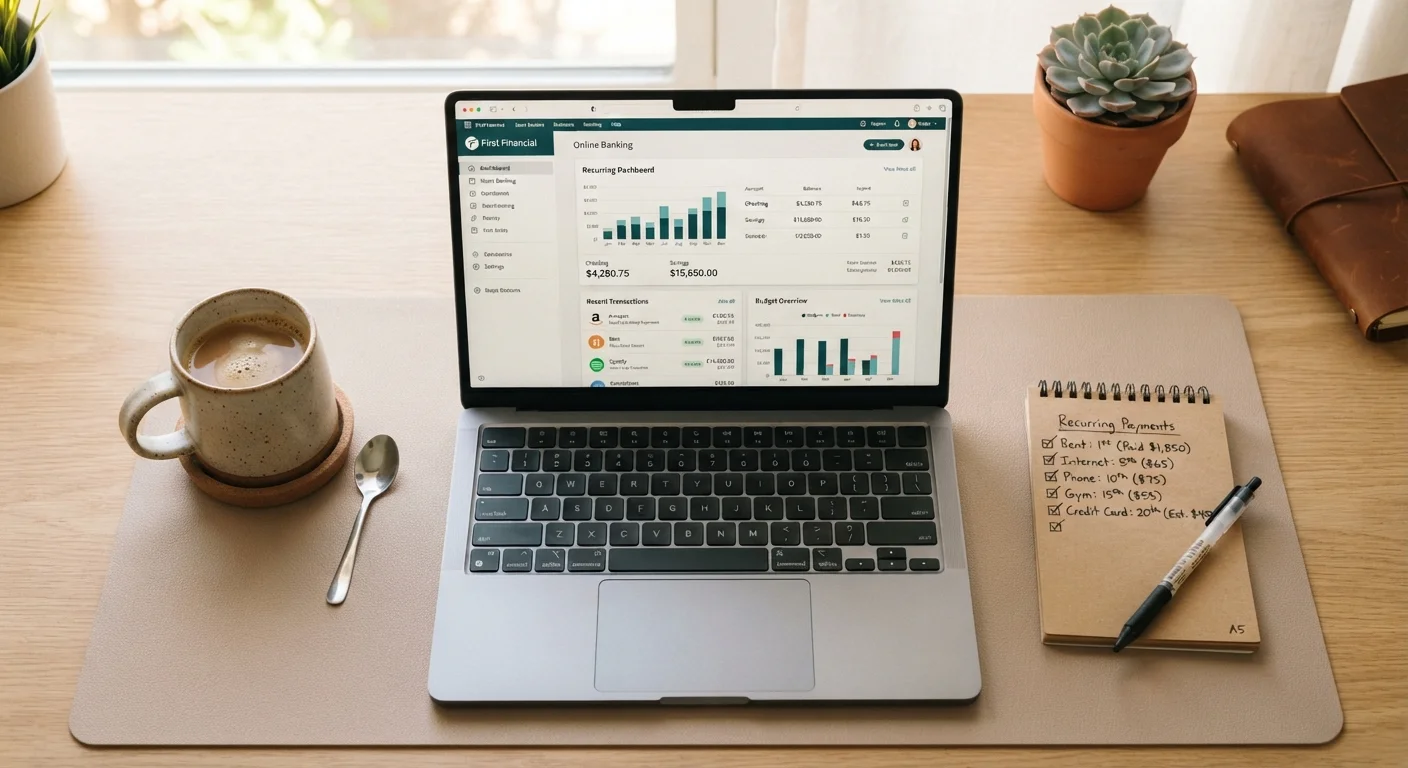
Automating your finances means setting up systems that move, pay, or save money on a schedule - without you having to manually trigger each transaction. Common examples include:
- Automatic bill payments: Your bank or a biller charges a set amount on a fixed date each month - covering rent, utilities, loan payments, or insurance premiums.
- Recurring transfers to savings: A scheduled transfer moves a portion of your paycheck into a savings or investment account shortly after payday.
- Autopay for credit cards: Your card balance - either the full amount or a minimum - is paid automatically from your checking account each billing cycle.
The appeal is straightforward: you establish the rules once, and money moves in the background. If you're new to how savings accounts and credit interact, the Savings & Credit introduction for financial beginners covers those foundations clearly before you set up any automation.
The Genuine Advantages
Done carefully, automation offers real, measurable benefits for most households.
Reduces missed or late payments automatically
Scheduled autopay removes reliance on memory, meaning bills get paid on time even during busy or stressful periods. On-time payment history is one of the most significant factors in your credit score.
Makes saving consistent and effortless
When a transfer to savings happens automatically after each paycheck, saving becomes the default rather than an afterthought. Over time, this consistency compounds meaningfully.
Lowers the daily mental load of money management
Fewer decisions to make each week means less decision fatigue. Automation handles routine tasks so your attention can go to bigger financial choices.
Reduces emotional spending of earmarked money
Money that moves to savings before you see it in your balance is less likely to be spent impulsively - a practical way to stay on track with savings goals.
Consistency is probably the biggest win. When a savings transfer happens automatically two days after payday, you never have a chance to spend that money first. This mirrors a principle financial educators call "paying yourself first" - treating savings as a non-negotiable expense rather than whatever's left over. For a deeper look at how this trade-off plays out, see the pros and cons of automating your savings.
Autopay also protects your credit. A single missed payment can stay on your credit report and affect your score, so automating at least the minimum due on credit accounts is a reasonable safeguard.
~80%
U.S. adults using at least one form of autopay
According to data from the American Payroll Association and consumer banking surveys, the large majority of U.S. adults have at least one bill set to automatic payment.
35%
Weight of payment history in FICO credit scoring
FICO, one of the most widely used credit scoring models, assigns 35% of your score to payment history - making on-time payments the single largest factor.
The Risks Worth Knowing
Automation doesn't run itself perfectly. Several things can and do go wrong - and they're easier to manage when you expect them.
Overdrafts if your balance runs low
Automated payments don't pause because your account is tight. If a bill processes before your paycheck arrives, you may face overdraft fees - which some banks charge per transaction.
Easy to lose track of what's being charged
Out-of-sight charges become genuinely out of mind. Cancelled services, duplicate charges, or rate increases can go unnoticed for months without active account monitoring.
Reduces your engagement with your own spending
Manual payments create a natural moment to review your finances. Full automation can erode awareness of where money goes, making it harder to spot shifts in your spending patterns.
Amount may no longer match what you owe
Fixed automated amounts can drift out of sync with reality - an insurance premium rises, a loan balance changes, or a utility rate adjusts, leaving you underpaying or overpaying.
One underappreciated risk is subscription creep. Because automated payments are invisible by design, it's easy to keep paying for services you no longer use. Subscriptions can quietly add up month after month - and autopay removes the natural moment of reconsideration that a manual payment would create.
Errors also happen. Billers occasionally charge the wrong amount, charge twice, or continue billing after you've cancelled a service. Without regular statement reviews, these mistakes can go unnoticed for months. Learning to read your bank statement without confusion is a practical skill that pairs directly with automation.
Autopay Doesn't Mean 'No Action Required'
Setting up autopay is not the same as resolving a billing dispute or catching an error. If a company charges you incorrectly, you're still responsible for contacting them - autopay simply ensures the charge went through, not that it was right. Always retain the ability to cancel or pause automated payments quickly if something goes wrong.
Keeping Automation Working for You
The goal is informed automation - not passive automation. A few habits keep the system healthy:
- Schedule a monthly review. Spend 10-15 minutes checking that all automated payments processed correctly, your balance stayed comfortable, and no unfamiliar charges appeared. The monthly financial health check offers a practical checklist for this.
- Maintain a buffer in your checking account. A small cushion - even $200-$300 - reduces the chance that an automated payment triggers an overdraft if your timing is slightly off.
- Audit recurring payments twice a year. List every automated charge and confirm you still want and use it. Cancel anything you don't.
- Update amounts when your situation changes. A pay raise, a new loan, or a change in financial goals all warrant revisiting how much you're directing where.
Automation shapes the daily financial decisions that form long-term habits - but only constructively when you stay engaged enough to catch problems early.
This article is for general informational purposes only and does not constitute personalised financial advice. For guidance specific to your financial situation, consider consulting a qualified financial professional.