
What Automated Savings Actually Means
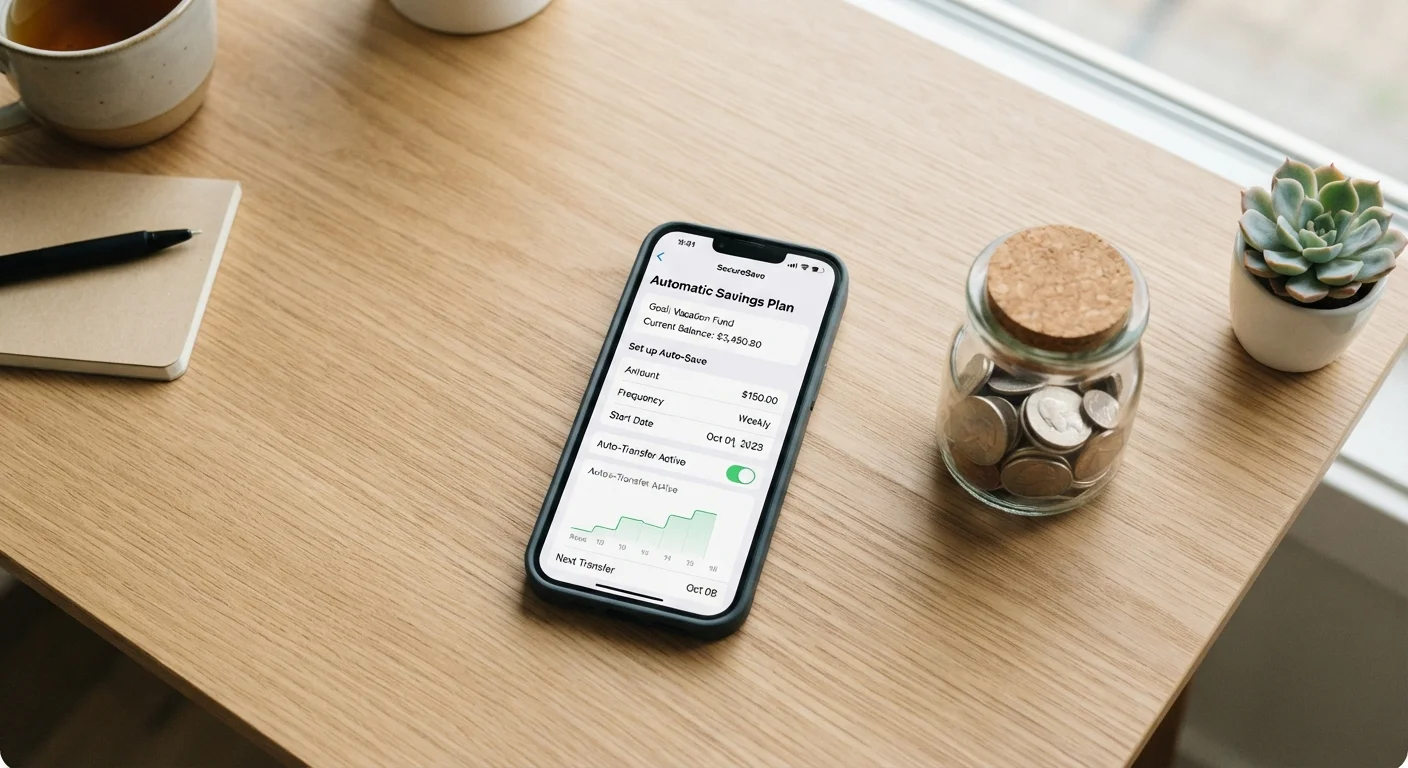
Automating your savings means setting up a recurring transfer — usually from a checking account to a savings account — on a fixed schedule, such as every payday. Rather than deciding each month how much to save, the process happens without any active input from you.
Many employers also allow direct deposit splits, sending a portion of each paycheck directly into a savings account before the remainder lands in checking. Banks and credit unions typically offer similar scheduled transfer tools at no cost.
The appeal is straightforward: money you never see in your spending account is money you are far less likely to spend. This is the same behavioral principle behind employer-sponsored retirement contributions. As the broader picture of financial automation shows, however, this convenience comes with trade-offs worth understanding before you set it up.
The Advantages of Putting Savings on Autopilot
Automation solves one of the most persistent problems in personal finance: the gap between intention and action.
Removes reliance on willpower each month
By making the transfer automatic, saving becomes the default rather than a recurring decision. This bypasses the mental friction that often derails good intentions.
Builds consistency without ongoing effort
Regular, predictable contributions accumulate steadily over time. Even modest amounts transferred every paycheck add up to a meaningful balance across a year.
Reduces the temptation to spend first
Money moved to savings before you interact with your checking balance is psychologically 'off the table.' This pay-yourself-first approach is a well-established savings principle.
Lowers the cost of financial mistakes
When saving happens automatically, a bad spending week doesn't wipe out the month's savings progress. The transfer occurs regardless of other financial decisions.
Easy to scale up over time
Once the habit is established, increasing the transfer amount — for example, after a raise — is a small, low-friction adjustment that accelerates savings growth.
These advantages are well-supported by behavioral economics research. When saving requires a deliberate decision each month, it competes with immediate spending needs and often loses. Removing that decision point is one of the most reliable ways to build a savings habit even when money feels limited.
Consistency also matters for long-term financial habits. Small, repeated actions — even $25 per paycheck — compound into meaningful balances over months and years.
73%
Americans who find saving harder without automation
A survey by the American Savings Education Council found that a majority of respondents reported greater difficulty saving consistently without automatic transfer tools.
$500–$1,000
Typical emergency fund starting target
Many consumer finance educators suggest a starter emergency fund in this range as an initial automation goal before building toward three to six months of expenses.
The Disadvantages Worth Taking Seriously
Automation is a tool, not a strategy. Without the right foundation, it can create new problems rather than simply solving old ones.
Overdraft risk if cash flow is tight
If your checking account balance runs low before a transfer date, you may incur overdraft fees. This risk is highest for people with irregular income or variable monthly expenses.
Can create a false sense of financial security
Seeing money go into savings automatically may feel like financial progress even when spending is exceeding income elsewhere. Automation does not diagnose or fix underlying budget problems.
Set-and-forget leads to stale settings
Life circumstances change, but automation stays the same until you update it. A transfer amount set years ago may no longer reflect your current income, expenses, or goals.
Does not substitute for an active budget
Automation handles one savings action but does not track spending, flag problem areas, or help prioritize competing financial goals. It needs a budget to work effectively around it.
Less flexible in financial emergencies
During a month with unexpected large expenses, an automated transfer can deplete funds you urgently need. Most people pause transfers manually, which requires remembering to do so.
One of the subtler risks is that automation can encourage a false sense of financial security. If money is going into savings automatically, it can feel as though your finances are under control — even when spending patterns are unsustainable. The habits that quietly erode savings progress often coexist with automated transfers.
Regular check-ins — at minimum quarterly — help ensure your automation settings still reflect your actual income, expenses, and goals. A solid budgeting foundation remains essential regardless of how much you automate.
Irregular Income Requires Extra Care
If your income varies month to month — as it does for freelancers, gig workers, or those paid by commission — fixed automated transfers carry higher overdraft risk. A practical workaround is to set a lower baseline transfer and manually top it up during higher-earning months. Some people use a percentage-based rule (such as saving a set share of each deposit) rather than a fixed dollar amount. Whatever approach you choose, aligning transfer timing and amounts with your actual cash flow is the priority.
How to Make Automation Work for You
The most effective approach treats automation as a starting point, not a finish line. A few practical principles help:
- Start with a realistic amount. Set transfers you can genuinely sustain without straining your checking account. You can always increase the amount as your income grows.
- Align transfer dates with your pay schedule. Transferring one to two days after payday reduces overdraft risk significantly.
- Keep savings in a separate account. Physical separation — even at the same bank — makes it less tempting to dip into the balance.
- Review your setup at least twice a year. Life changes: income shifts, new expenses, or new goals should prompt an update to your transfer amounts.
- Combine automation with active tracking. Consider how you track spending — whether through pen and paper, spreadsheets, or apps — and make sure your savings automation fits within that larger picture.
This article is for general informational purposes only and does not constitute personalised financial advice. Consider speaking with a qualified financial professional about decisions specific to your situation.