
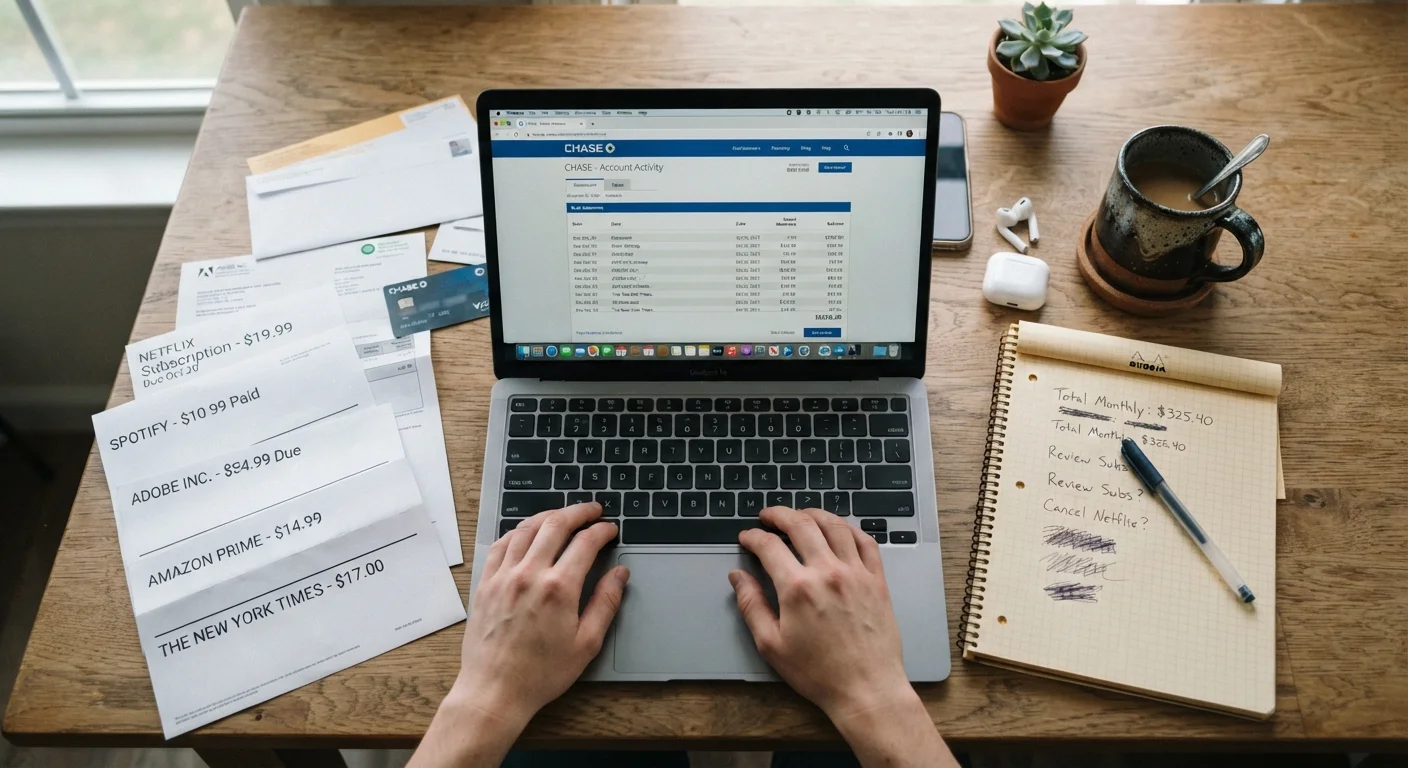
Why Subscriptions Are Easy to Lose Track Of
A streaming service here, a cloud storage plan there, a fitness app you downloaded in January - individually, each charge feels minor. But when $9.99 stacks on $14.99 stacks on $4.99, the monthly total can quietly climb well past $100 before most people realize it.
Unlike a single large purchase, subscriptions are designed to feel frictionless. Charges auto-renew, prices can rise with minimal notice, and free trials convert to paid plans if you forget to cancel. This is part of what makes them a common source of budget leakage - the kind explored in detail in tracking your real monthly cash flow.
The good news: a focused audit doesn't take long, and the savings can be immediate. Use this checklist to find every subscription you're paying for, evaluate whether each one earns its keep, and build a habit of reviewing them regularly.
Bank or Credit Card Statements (3 months)
The primary source for identifying all recurring charges billed to your accounts.
Spreadsheet or Budgeting App
Used to list, categorize, and total all subscriptions found during the audit.
Email Inbox Search
Surfaces subscription receipts and billing notices that may not appear on bank statements.
App Store Subscription Manager
Lets you view and cancel active in-app subscriptions billed through Apple or Google.
Calendar App
Used to set reminders for trial expirations, renewal dates, and future audit checkpoints.
Your Subscription Audit Checklist
Work through these steps methodically. The goal isn't to cancel everything - it's to make conscious, deliberate choices about where your money goes each month. As noted in our look at daily financial decisions that shape long-term habits, small recurring choices are among the most impactful patterns in personal finance.
Find Every Subscription You're Paying For
Evaluate Each Subscription
Take Action: Cancel, Pause, or Keep
Ongoing Review Habits
Canceling Doesn't Always Stop the Charge Immediately
When you cancel a subscription, most services continue access through the end of the current billing period rather than issuing a refund. Always confirm the cancellation date and check your next statement to verify the charge did not recur. If a charge appears after you've canceled, contact the company directly - and if unresolved, you may be able to dispute it with your bank or card issuer.
Building a Smarter Subscription Habit Going Forward
Once you've completed your audit, the goal is to prevent subscription creep from returning. A few straightforward practices can help:
- Set a calendar reminder each time you start a free trial so you can decide before it converts to paid.
- Review your bank and card statements monthly - not just for fraud, but for charges you've stopped noticing. This pairs naturally with a monthly budget review.
- Check your credit report periodically for recurring charges tied to cards you may have forgotten about - part of a solid monthly financial health check.
Be aware that autopay, while convenient, carries its own blind spots. Our guide on automating your finances covers what to watch for when recurring payments run in the background. The same attentiveness that helps you manage subscriptions applies to other ongoing costs - like the hidden ongoing costs of pet ownership that many households also underestimate.
This article is for general informational and educational purposes only and does not constitute personalized financial advice. For guidance specific to your situation, consider consulting a qualified financial professional.