
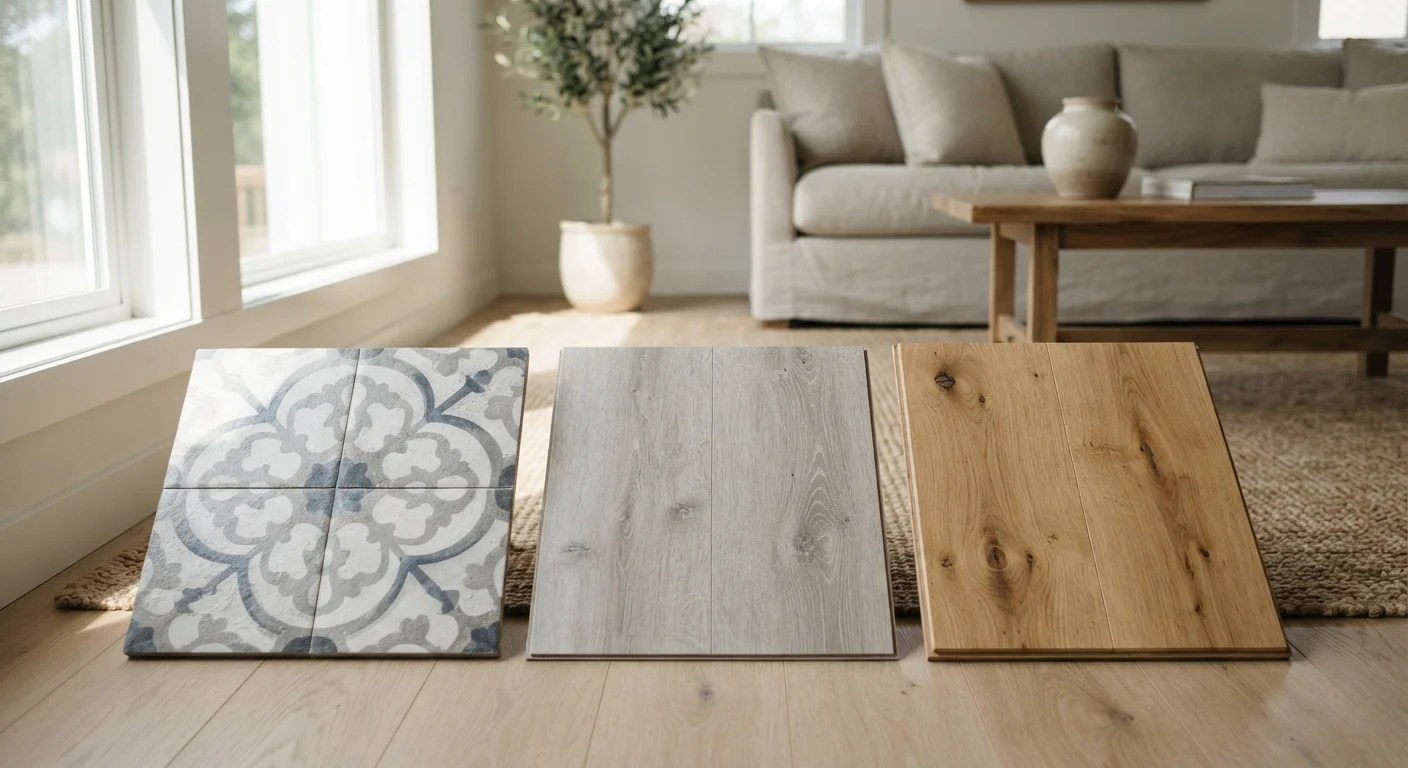
Why Flooring Choice Matters More Than You Might Think
Flooring touches every room in your home and influences everything from how a space feels underfoot to how easy it is to clean after a spill. Choosing the wrong material for a room's conditions - installing hardwood in a moisture-prone bathroom, for example - can lead to warping, damage, and costly replacement down the line.
This guide lays out the practical differences between tile, laminate, and hardwood so you can make an informed decision based on how each room in your home is actually used. For a broader look at home improvement decisions, see our guide for first-time homeowners.
| Tile | Laminate | Hardwood | |
|---|---|---|---|
| Water resistance | Excellent - fully waterproof | Moderate - not for wet areas | Poor - moisture causes damage |
| Durability / lifespan | 50+ years with care | 10-25 years | 50+ years; refinishable |
| Comfort underfoot | Hard and cold | Warmer, slight give | Warm and solid |
| DIY-friendly installation | Moderate - grout and adhesive required | High - click-lock systems available | Moderate - nailing or gluing required |
| Refinishable | No | No | Yes - multiple times |
| Typical cost range | Mid to high | Low to mid | Mid to high |
| Best room types | Bath, kitchen, laundry | Bedroom, living room | Living room, bedroom, hallway |
Tile: Durable, Waterproof, and Hard Underfoot
Ceramic and porcelain tile are the most water-resistant flooring options available for residential use. This makes them the standard choice for bathrooms, kitchens, mudrooms, and laundry rooms - anywhere liquid exposure is frequent or likely.
Tile is extremely durable under heavy foot traffic and resists scratches well. It doesn't absorb moisture, doesn't harbor allergens, and is straightforward to clean. However, tile has notable downsides: it's cold and hard underfoot, making it uncomfortable for prolonged standing without anti-fatigue mats. Grout lines between tiles can stain and require periodic sealing to stay clean.
Installation is more labor-intensive than laminate. Tile requires a flat, solid subfloor - often cement backer board - and proper adhesive and grouting. Mistakes in installation can lead to cracked tiles or uneven surfaces. For most homeowners, professional installation is worth considering for tile projects covering large areas.
Tile Installation Mistakes Can Be Costly
Improperly prepared subfloors are the most common cause of cracked or loose tiles. If your subfloor has flex or unevenness, tile adhesive alone won't compensate - the underlying surface must be solid and level first. For large tiling projects or areas with complex layouts, consulting a licensed tile installer can save significant expense down the line.
Laminate: The Versatile, Budget-Friendly Middle Ground
Laminate flooring is a multi-layer synthetic product with a photographic top layer that can convincingly mimic wood grain, stone, or tile at a fraction of the cost. It's a popular choice for living rooms, hallways, and bedrooms where appearance matters but budget is a real constraint.
Modern laminate is significantly more durable and moisture-resistant than earlier versions, though it still shouldn't be used in areas with standing water risk. Many laminate products feature a click-lock installation system that doesn't require adhesive, making it one of the more accessible DIY flooring projects for homeowners with basic tools.
The key limitation: laminate cannot be refinished. Once the surface layer is worn, scratched beyond repair, or damaged, the planks must be replaced. Its lifespan typically ranges from 10 to 25 years depending on traffic and care - shorter than well-maintained hardwood.
Acclimate Laminate Before Installing
Before laying laminate planks, leave them in the room where they'll be installed for at least 48 hours. This allows the material to adjust to the room's temperature and humidity, reducing the risk of buckling or gapping after installation. Keep the room at normal living conditions - not empty and unheated - during this period.
Hardwood: The Long-Term Investment
Solid hardwood flooring is made from a single piece of milled timber - oak, maple, hickory, and walnut are common species in the US market. It's prized for its natural appearance, warmth underfoot, and longevity. A well-maintained hardwood floor can last for decades and be sanded and refinished multiple times to restore its surface.
Hardwood is sensitive to moisture and temperature fluctuations. It should not be installed below grade (in basements), and it requires acclimation to the room's humidity before installation. In regions with wide seasonal humidity swings, hardwood can expand and contract noticeably, which can cause gapping or cupping if not properly managed.
Engineered hardwood - a real wood veneer over a plywood core - offers somewhat better moisture resistance and dimensional stability, making it suitable for a wider range of climates and subfloor types, including some below-grade applications. If you're thinking about how flooring works within a larger design overhaul, our article on open-plan living trade-offs explores how room layouts affect material decisions.
Choosing the Right Floor for Each Room
The most reliable way to narrow your choice is to match flooring properties to your room's specific conditions:
- High moisture areas (bathrooms, kitchens): Tile is the safest choice. Avoid solid hardwood entirely.
- Living rooms and dining rooms: Hardwood or laminate both work well. Hardwood adds more resale value; laminate costs less upfront.
- Bedrooms: All three options can work here. Comfort underfoot often tips the decision toward hardwood or laminate over tile.
- Basements: Tile or engineered hardwood are generally safer choices than solid hardwood or standard laminate due to ground moisture risk.
- High-traffic hallways: Tile or hardwood hold up better to long-term wear than laminate.
Pairing your flooring decision with the right wall finish can also change how a room reads overall. Our guide to paint finish types explains how surface sheen affects durability and appearance, room by room.