
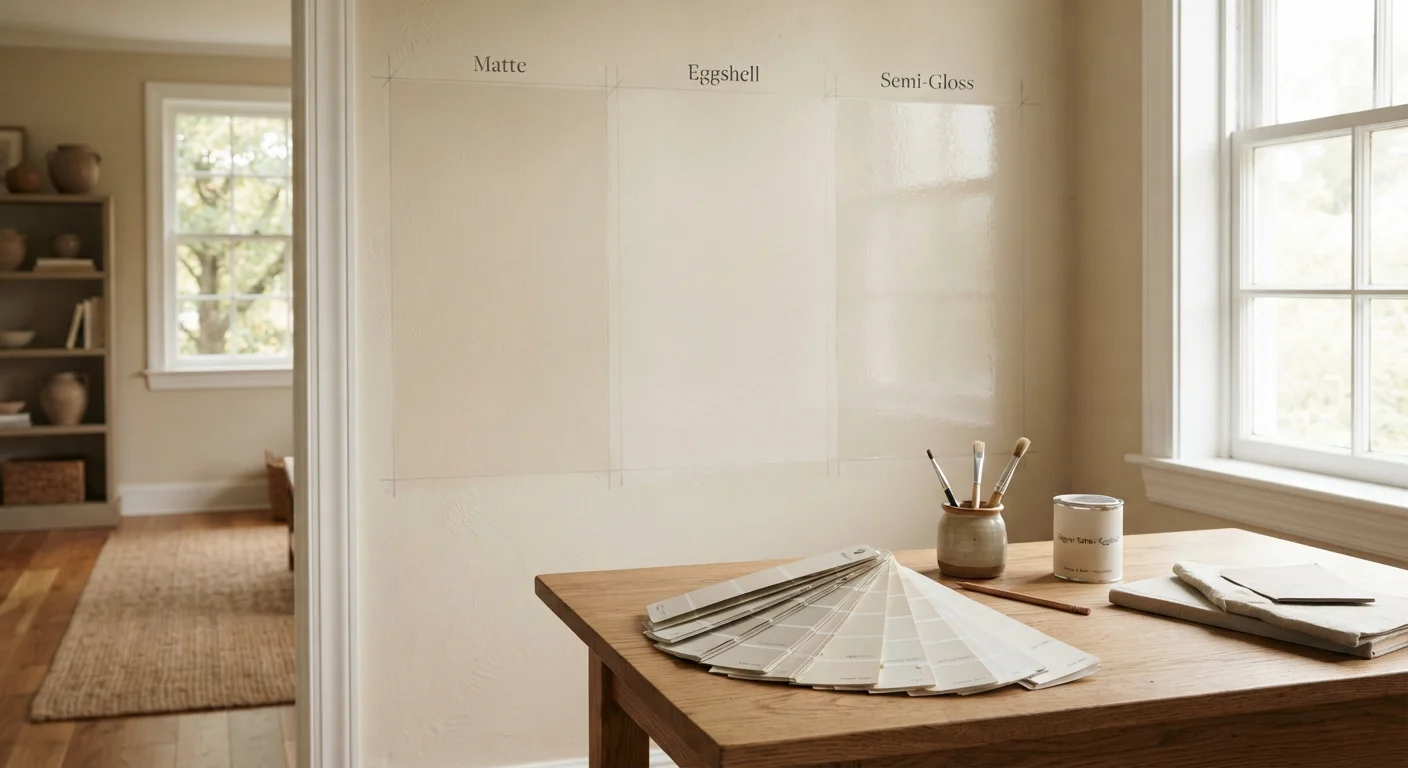
Why Paint Finish Matters More Than Most People Think
When most homeowners pick paint, they focus almost entirely on color - and overlook finish. But finish (also called sheen level) determines how light reflects off a wall, how easy the surface is to clean, and how long the paint holds up in demanding spaces. Using the wrong finish in the wrong room can mean walls that scuff easily, shine in unflattering ways, or trap moisture. Getting it right is straightforward once you understand what each finish is designed to do.
| Number of standard finish types | 5 (flat, eggshell, satin, semi-gloss, high-gloss) |
| Most forgiving finish for imperfect walls | Flat / Matte |
| Most washable everyday finish | Satin |
| Standard finish for trim and doors | Semi-Gloss |
| Recommended ceiling finish | Flat (ceiling-specific paint) |
| Best finish for children's rooms | Satin - scrubbable and durable |
If you're also planning to change your flooring while redecorating, see our flooring comparison guide for a similar breakdown of practical differences.
The Five Main Finish Types, Explained
Paint finishes run on a spectrum from completely flat to highly reflective. Here's what each one offers:
Sheen Level
The degree of light reflectivity in a paint finish, ranging from flat (no shine) to high-gloss (mirror-like). Higher sheen generally means more durability and easier cleaning.
Flat / Matte Finish
A non-reflective paint finish that absorbs light. It conceals wall imperfections well but is not very washable or moisture-resistant.
Eggshell Finish
A paint finish with a very low, soft sheen resembling the surface of an eggshell. It offers slightly more durability than flat and is a popular choice for main living areas.
Satin Finish
A smooth, velvety finish with moderate sheen. It resists moisture and can be wiped clean, making it well-suited to kitchens, bathrooms, and children's spaces.
Semi-Gloss Finish
A noticeably shiny, hard-wearing finish that repels moisture and is easy to scrub. Commonly used on trim, doors, and high-humidity rooms.
High-Gloss Finish
The shiniest and most durable paint finish, resembling a lacquered surface. It requires thorough surface preparation because it highlights every imperfection.
Flat / Matte
Flat and matte finishes absorb light rather than reflecting it. They hide surface imperfections - uneven drywall, minor dings, patch repairs - better than any other finish. The trade-off: they're the hardest to clean and the least moisture-resistant. Best for: adult bedrooms, formal dining rooms, low-traffic ceilings, and any wall with flaws you'd rather not highlight.
Eggshell
Named for the subtle, soft sheen of an eggshell, this finish sits just above flat. It's slightly more washable and holds up better in moderate-traffic areas while still keeping walls looking soft. Best for: living rooms, hallways, and bedrooms that see more use.
Satin
Satin has a smooth, velvety appearance with a noticeable but not glaring sheen. It's durable, moisture-tolerant, and easy to wipe down - making it one of the most versatile finishes available. Best for: kitchens, bathrooms, children's rooms, laundry rooms, and trim work.
Semi-Gloss
Semi-gloss reflects significantly more light and creates a harder, more durable surface. It repels moisture and is easy to scrub, but it will make surface imperfections more visible. Best for: trim, doors, window casings, kitchen cabinets, and bathrooms with high humidity.
Gloss / High-Gloss
The shiniest and most durable option. High-gloss is almost glass-like and can be wiped down repeatedly. However, it magnifies every imperfection and requires very careful surface preparation. Best for: furniture, cabinetry, and occasional dramatic accent applications where thorough prep is possible.
Room-by-Room Recommendations
5
Distinct finish sheen levels used in home painting
From flat to high-gloss, each finish level is designed for specific performance characteristics and room conditions.
Semi-Gloss
Most common finish for trim, doors, and cabinets
Industry painting guides consistently recommend semi-gloss for woodwork and trim due to its hardness and moisture resistance.
Here's a practical room guide to help you decide quickly:
- Living Room: Eggshell or matte for a relaxed, elegant look with moderate durability.
- Kitchen: Satin or semi-gloss - grease and moisture resistance is essential.
- Bathroom: Satin or semi-gloss to handle humidity and allow easy cleaning.
- Bedroom (adults): Matte or eggshell for a calm, non-reflective finish.
- Children's Room: Satin - it can be scrubbed when crayons and handprints appear.
- Hallways and Entryways: Eggshell or satin, since these high-traffic zones take regular scuffs.
- Trim, Doors, and Baseboards: Semi-gloss is the standard choice across almost every room.
- Ceilings: Flat ceiling paint - no sheen is needed and it hides imperfections well.
Sheen Shows Surface Flaws More Clearly
The higher the sheen level, the more light a surface reflects - and the more visible any dents, cracks, or patching become. If you're painting over repaired drywall or older walls with texture variations, stick to eggshell or matte until those surfaces are properly smoothed. Sanding and thorough prep work before applying a semi-gloss or gloss finish will make a significant difference in the final appearance.
Before any painting project, it's also worth checking whether your walls need a primer coat. Our guide on when priming is essential can save you from a finish that peels or looks patchy.
And if you notice peeling, fading, or chalky residue before you start, read about warning signs your home needs repainting so you know what you're actually dealing with.