
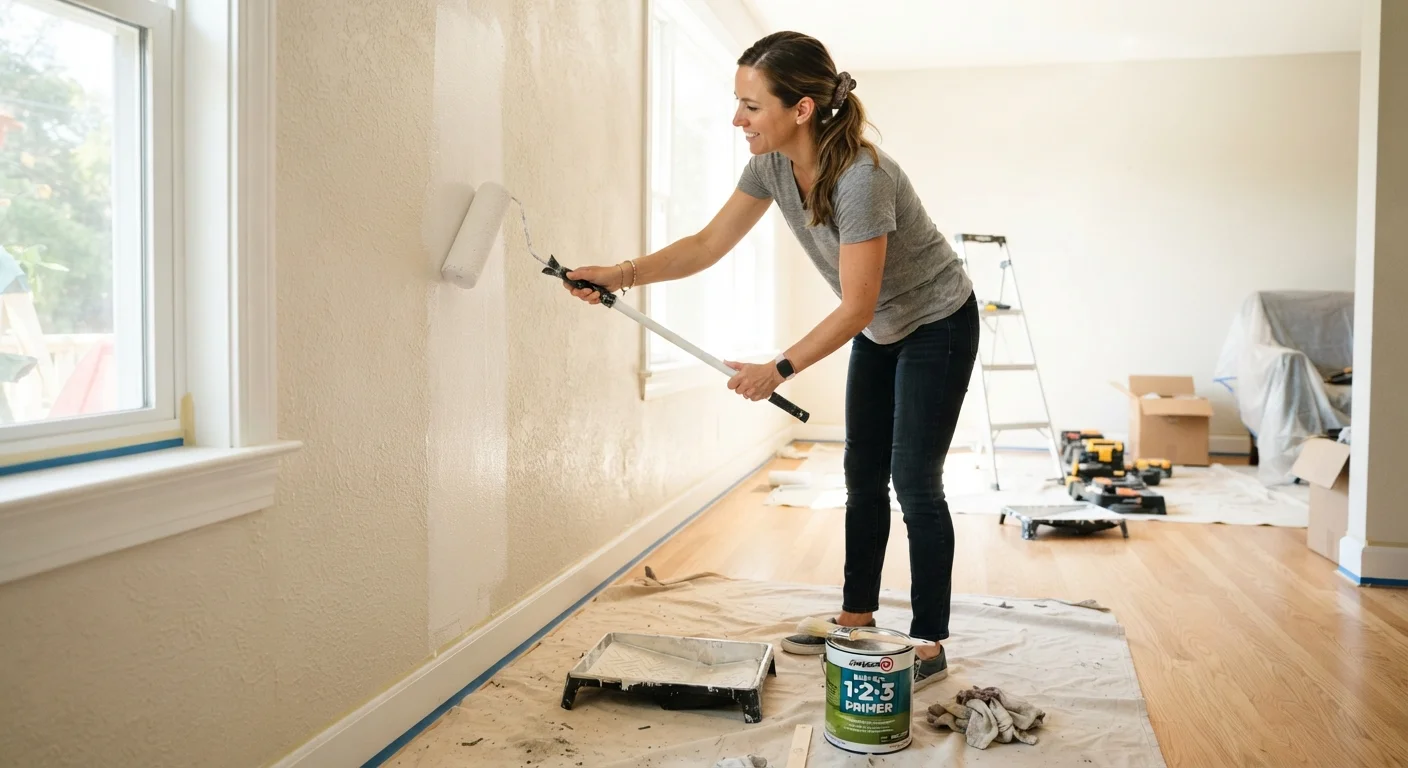
What Primer Actually Does
Primer is a preparatory coating applied before paint. Its job is not to add color - it's to create a stable, consistent surface the topcoat can grip. Without that foundation, paint can peel, blotch, absorb unevenly, or fail to hide what's underneath.
There are three main types: water-based (latex) primers for most interior drywall and wood projects, oil-based primers for stubborn stains and bare wood with high tannin content, and shellac-based primers for severe stains, smoke damage, or odor sealing. Choosing the right type matters as much as deciding to prime in the first place.
Understanding primer helps you make smart decisions rather than defaulting to either always priming or always skipping it. For a broader look at the planning side of a paint project, see our room-by-room readiness check before you start.
When Priming Is Genuinely Essential
There are specific conditions where skipping primer almost guarantees a poor result:
Always prime new or bare drywall before painting.
Uncoated drywall is extremely porous and will soak up topcoat paint unevenly, creating a blotchy, flat appearance called 'flashing.' Primer seals the surface so paint applies uniformly.
Prime bare or raw wood before applying any topcoat.
Wood grain absorbs paint unevenly, and many species release tannins that bleed through and discolor light-colored paint. An oil-based or shellac primer locks in those compounds before they cause problems.
Use a bonding primer on glossy or slick surfaces.
Standard paint has difficulty adhering to high-gloss finishes, tile, or previously painted metal. A bonding primer creates a mechanical grip that prevents peeling.
Apply a stain-blocking primer before painting over water stains, smoke, or permanent marker.
Water and smoke stains are highly soluble and will bleed through ordinary paint no matter how many coats you apply. Stain-blocking formulas chemically seal the contamination in place.
Prime when making a dramatic color change, especially going from dark to light.
Covering a deep, saturated color with a light one without primer usually requires four or more topcoats to achieve solid coverage - primer gets you there in fewer, more even applications.
If you're noticing the paint on your walls has already begun failing - peeling, fading, or chalking - that's often a sign primer was skipped or the surface wasn't properly prepared. Our article on warning signs your home needs repainting explains what to look for before things get worse.
When You Can Safely Skip Primer
Not every paint job needs a dedicated primer coat. Here are the situations where you can reasonably move straight to paint:
- Previously painted surfaces in good condition: If the existing paint is clean, fully adhered, and not glossy, a quality topcoat can bond directly without primer.
- Same or similar color repaints: Repainting a room roughly the same color on sound walls generally doesn't require primer.
- Using self-priming or paint-and-primer-in-one products: These work well on surfaces that have been painted before and are in good shape. They are not a substitute for primer on bare or problem surfaces, despite the label.
A Simple Test for Surface Adhesion
Before deciding whether to prime, press a strip of painter's tape firmly onto the surface and pull it away quickly. If paint or material lifts off with it, the surface isn't stable enough to skip primer. This test takes ten seconds and can save you hours of rework.
Paint finish also plays into this decision. High-sheen finishes require better surface prep than flat finishes. For guidance on choosing the right finish for each room, see paint finish types and where each one belongs.
Quick Wins to Get Your Paint Job Right
Before you open the first can, take a few minutes to make decisions that prevent rework:
For first-time homeowners still getting comfortable with improvement projects in general, our starting point for first-time homeowners covers the foundational concepts that make tasks like painting feel less intimidating.